
Photo: Kyiv-Pechersk Lavra National Reserve
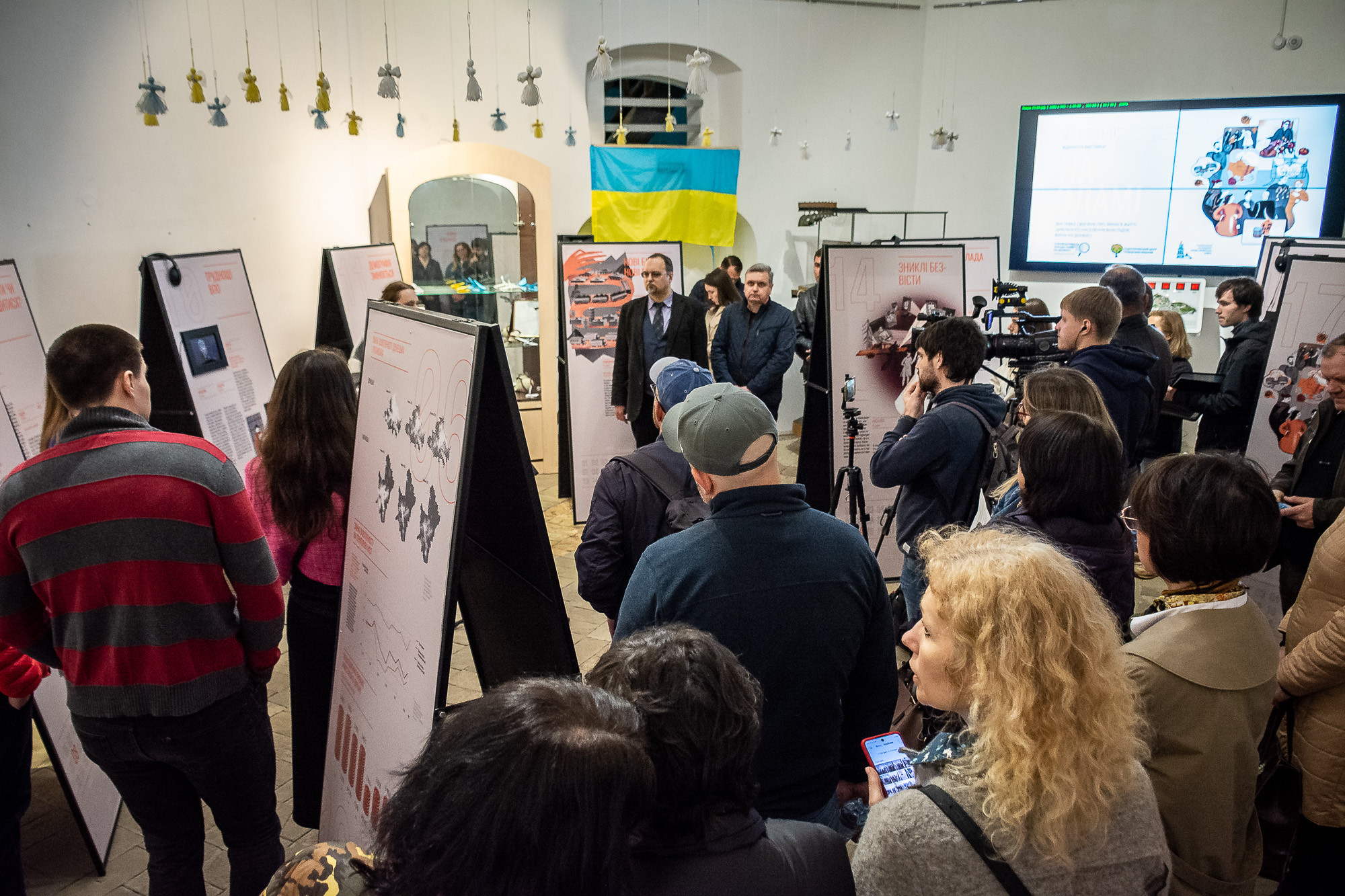
On April 25, the Eastern Ukrainian Center for Civic Initiatives, with the support of the Kyiv-Pechersk Lavra National Reserve, presented the updated traveling exhibition “On the Rift” in the Reserve’s Great Bell Tower.
“On the Rift” is an exhibition about changes in the life of the civilian population caused by the war in Donbas since 2014. It is also an artistic space created to conceptualize the topic of the war in Ukraine and its impact on the civilian population.
The exhibition has been traveling around the country since 2019 and has visited more than 37 cities of Ukraine. In the Monastery’s Bell Tower, Kyiv residents had a chance to see the updated exhibition. The new stands drew attention to the transition from peaceful life to war, sexual violence during the war, and difficulties of finding relatives who had disappeared. “On the Rift” also raises the issue of restoring justice for victims.
These issues were discussed by the opening event attendees, including survivors of severe human rights violations.
Lack of medical care in captivity
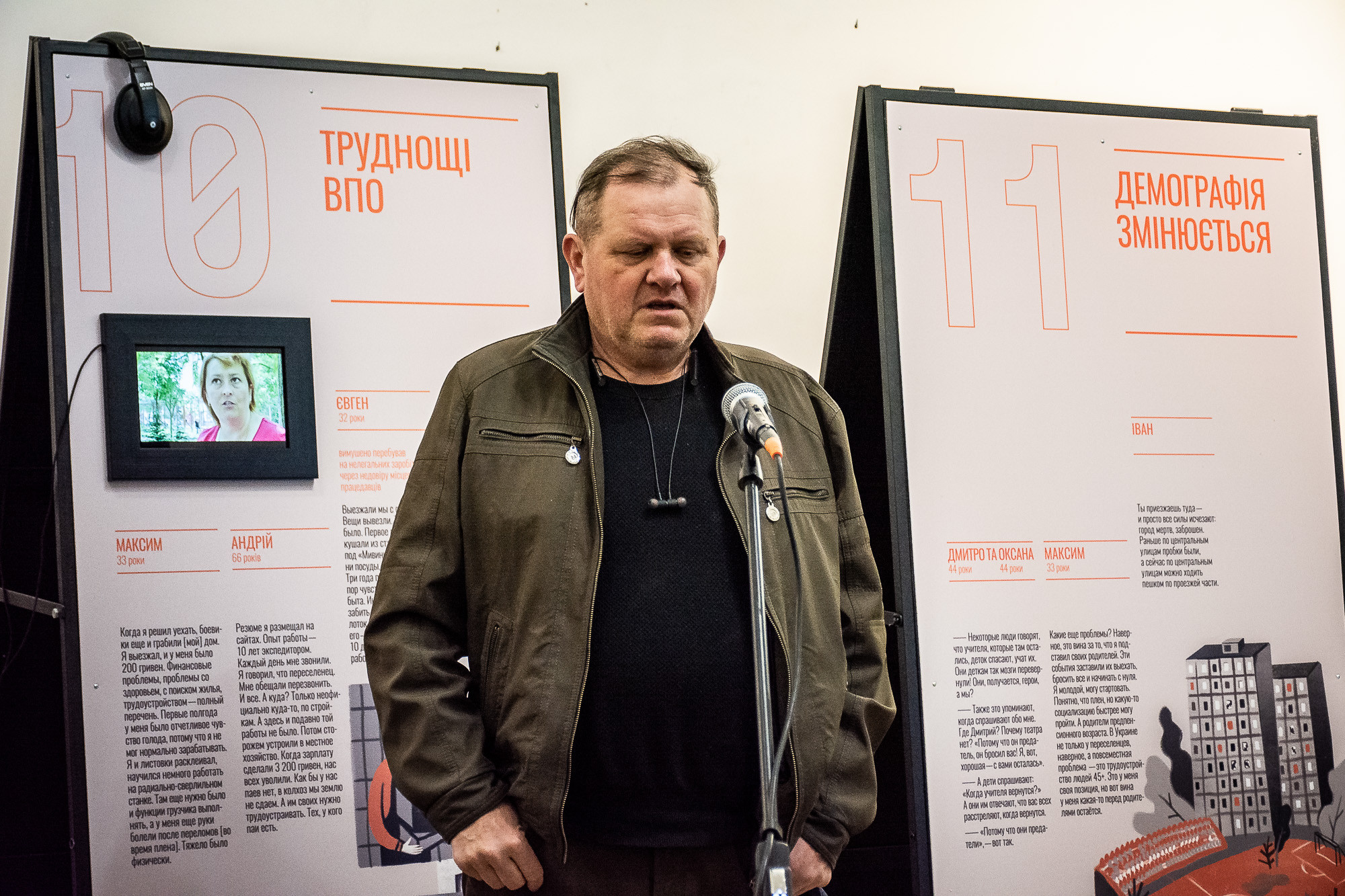 Valerii Sokolov, a representative of the NGO “The 29th December,” an association of former prisoners, emphasized the need to release from captivity civilians who have been there for several years and have health problems:
“Ukrainian prisoners deprived of proper medical care die every day from terrible physical torture. The beatings may result in strokes, heart attacks, or even inability to walk. There are insulin-dependent people and people with metabolic disorders among the prisoners. They face a risk of a rapid weight loss that may reach 40 kg. Ukraine should make more efforts and have these prisoners exchanged as well.”
The man said that illegally imprisoned Ukrainians are forced to write requests for investigations of fabricated cases against them under Russian law, in order to prevent any attempt by Ukraine to have them freed.
Sexual violence is a characteristic feature of Russian aggression
During the discussion, human rights defenders also raised another problem related to the Russian captivity – sexual and gender-based violence.
“Sexual and gender-based violence is a characteristic feature of the Russian aggression. It didn’t arrive with the full-scale invasion. It has been used since 2014. At the “Invisible Scars” stand you can see a map of 18 places of deprivation of liberty in the occupied part of Luhansk Region and 39 places of deprivation of liberty in the Donetsk Region, where such violence crimes have been regularly committed since 2014,” said Nadiya Nesterenko, an analyst with EUCCI.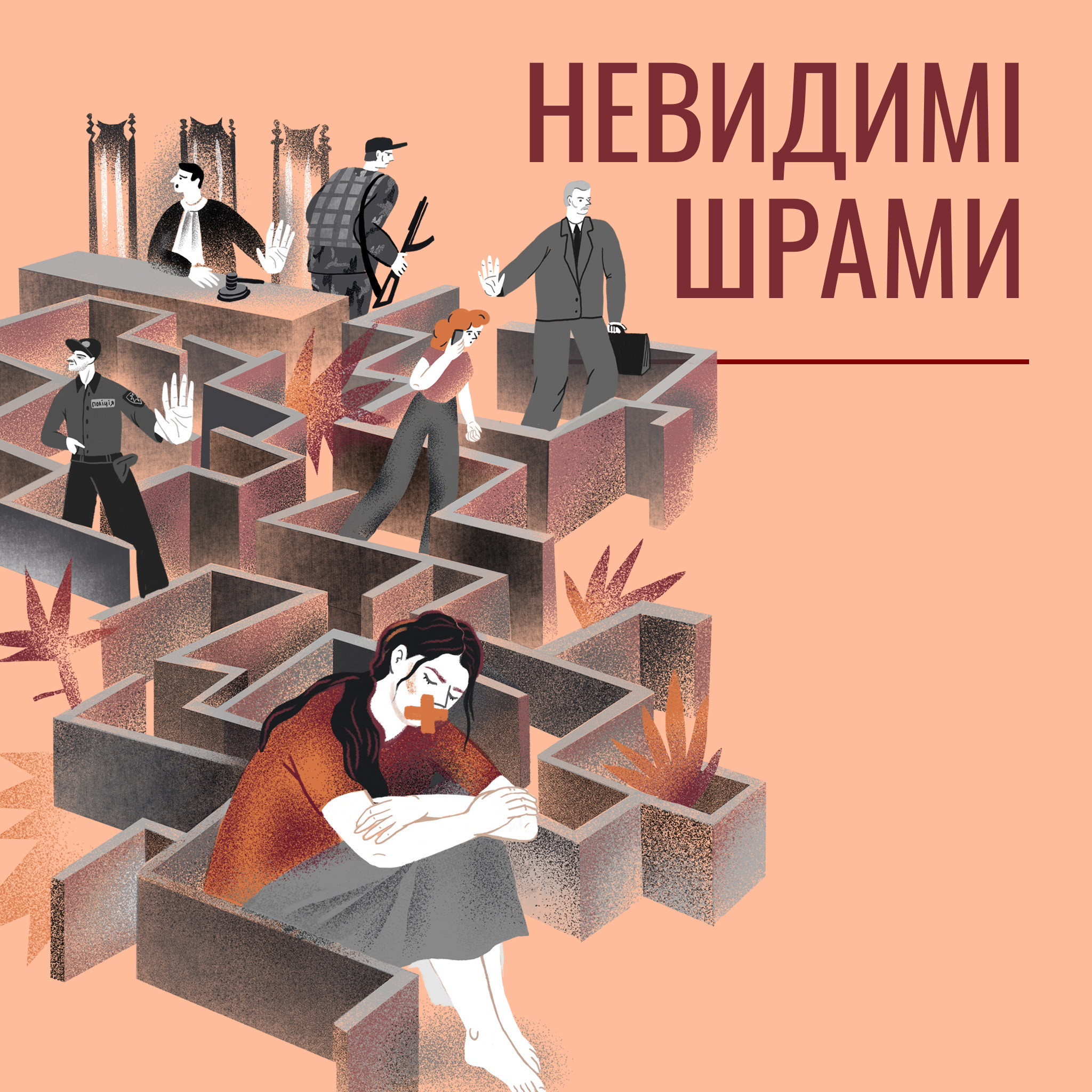
Halyna, a survivor and a representative of the NGO “SEMA UKRAINE,” a network of women who suffered from gender and sexual violence during the war in Ukraine, shared her experience. She moved from Donetsk Region to Kyiv Region in 2014. And that’s where the full-scale invasion took place.
“One day, two young Russian soldiers came to me with an inspection. They looked around and told me to draw the letter “V” on my house and the fence. I refused and heard “Undress” in response. I couldn’t believe it, but the terrorist with all his aggression forced me to undress, took me outside, made me walk naked around my house, brought me into the house and started beating, torturing and raping me.”
The woman needed medical help, but she couldn’t ask anyone to give it to her. At that time, there was no communication, electricity, or heating in the house.
“I want the whole world to know about the sexual abuse that Ukrainian women are subjected to at the hands of Russian terrorists! All of them must be punished!” - she went on, telling about the crimes committed by the Russian invaders both in 2014 and from 2022.
The DNA bank is a hope for the families of the missing
The stand dedicated to missing persons emphasizes the need for greater efforts by the government in searching for the missing. Families complain about violations that take place during the identification of bodies. Liudmila Belenka, the mother of the missing volunteer Roman and a member of “Nadia” (Hope) Association of Missing Persons’ Families, said that she and the families of the missing persons hope to get support from the International Commission on Missing Persons, which had proposed to create a DNA bank in Ukraine for relatives of the missing persons. The idea is to take several samples of biomaterial from different members of the same family. Liudmila and other relatives of the missing are convinced that this will help to identify bodies more quickly in the future.
“Every family, every mother wants one thing – to find their loved one alive. The war takes thousands of lives, and we do realize that we may not wait to see our loved ones come back alive. The government must guarantee families the right to know the truth,” Liudmila Bilenka said.
Kostiantyn Krayniy, Deputy General Director for Scientific Research from the Kyiv-Pechersk Lavra National Reserve noted: “It is very symbolic to open the traveling exhibition ‘On the Rift’ in the walls of the Bell Tower, because for the last year it has also served as a shelter during air raids. The war has been ravaging our lands for the tenth year already, so the issues raised in the exhibition were relevant even before the full-scale invasion, and now they have acquired even greater meaning.”
The exhibition idea was born at the Eastern Ukrainian Center for Civic Initiatives in 2017. To prepare the content for the exhibition, the documenters from the “Vostok-SOS” Charity Foundation, the Human Rights Center “Alternative”, the Young Transcarpathian Educators, the Civic Committee for the Protection of Citizens’ Constitutional Rights and Freedoms, and the Eastern Ukrainian Center for Civic Initiatives, which all are members of the Human Rights Coalition “Justice for Peace in Donbas,” interviewed the contributors.
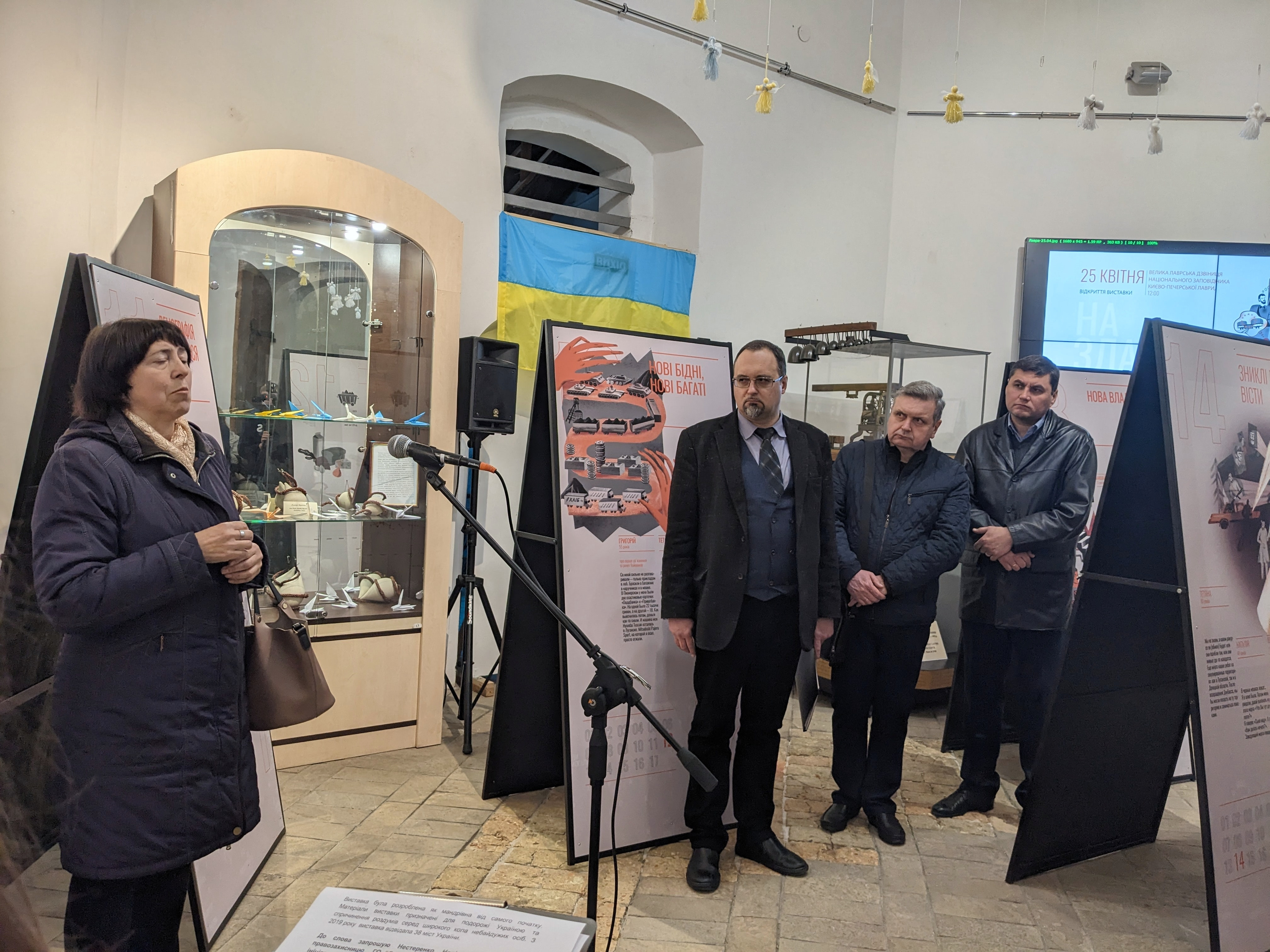
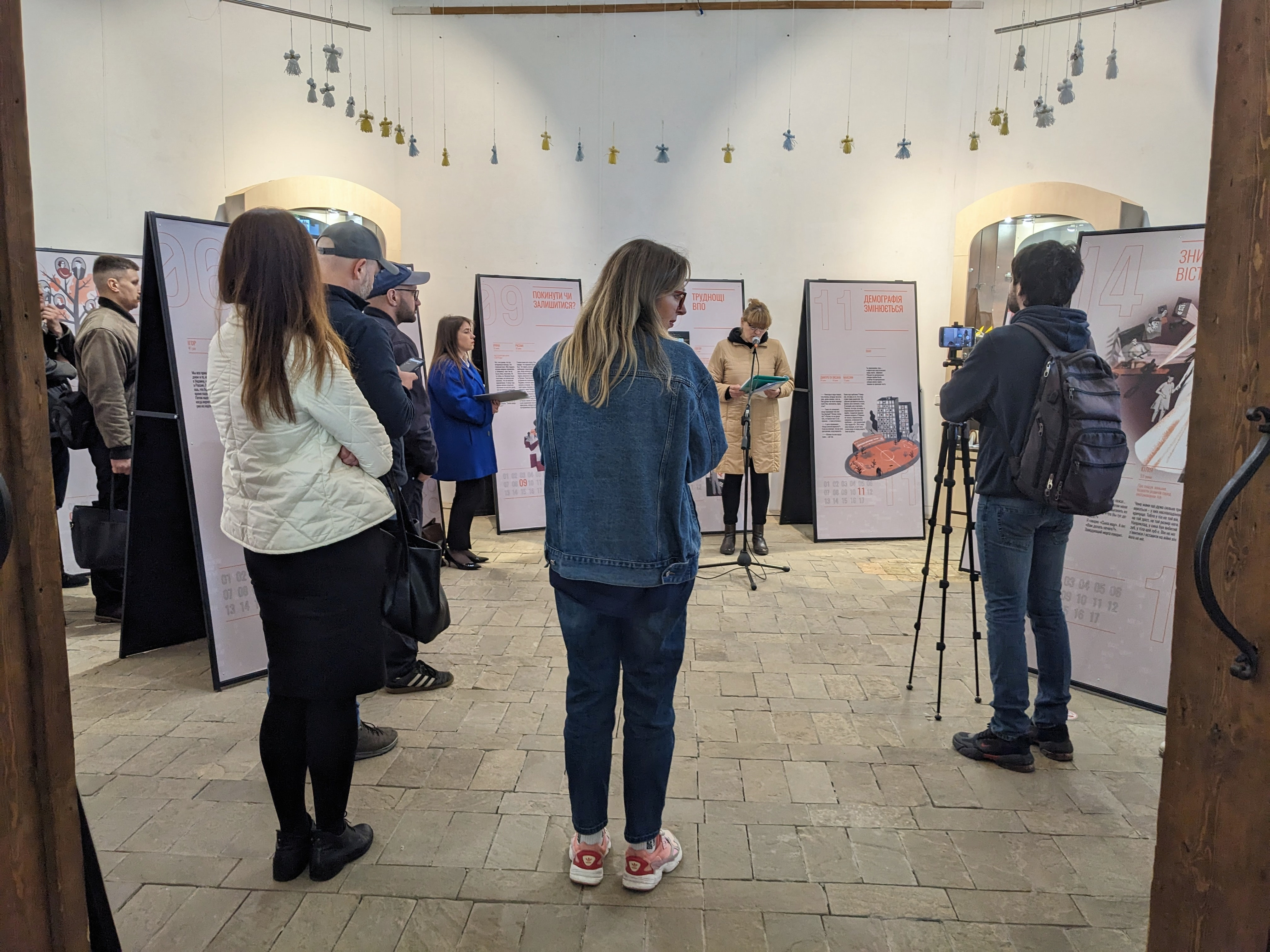
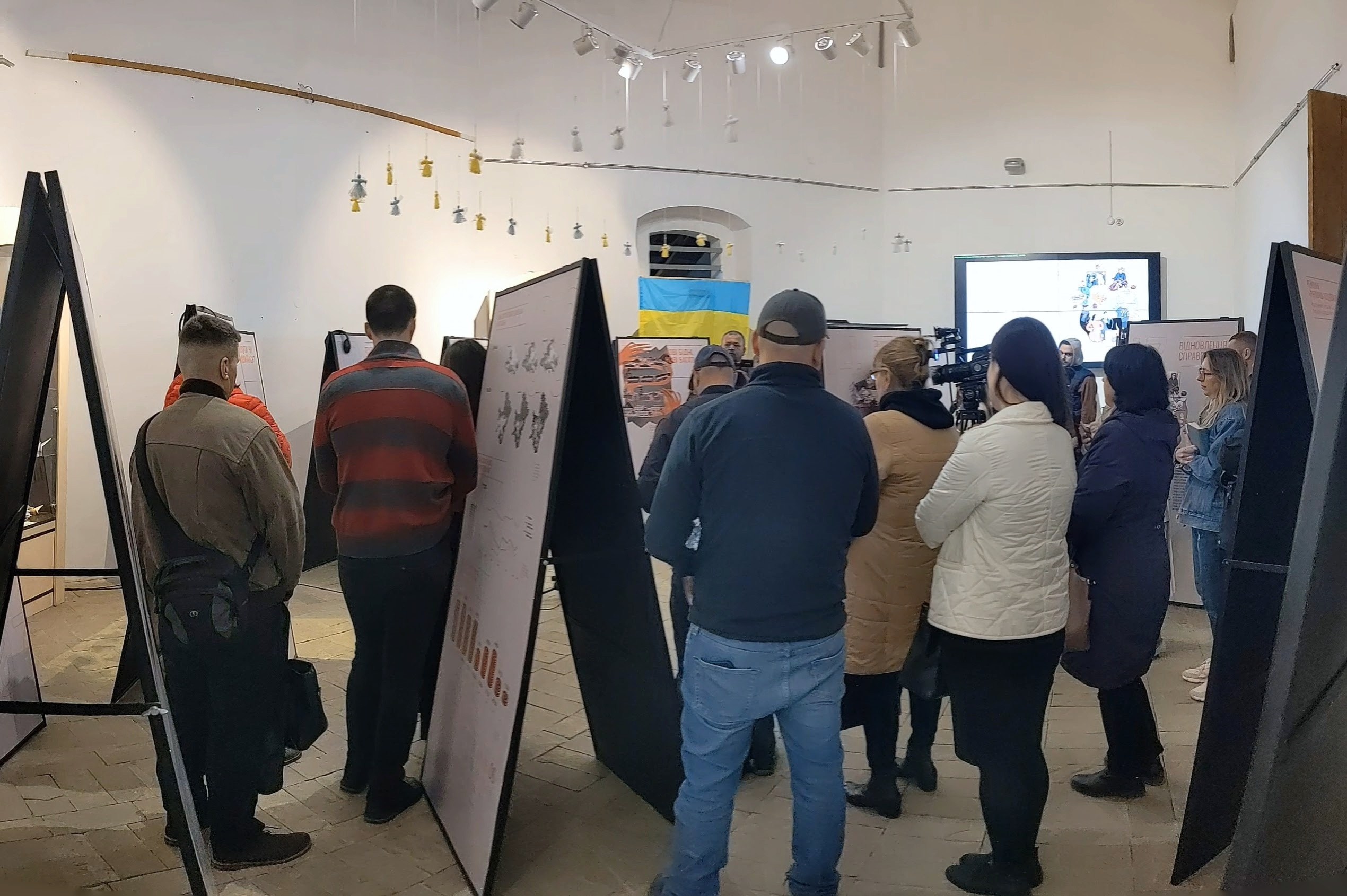
The presentation of the exhibition “On the Rift” took place within the framework of the project “Empowering civil society for a transformation of commemorative culture - non-violent contributions to deal with Russia's war against Ukraine”. The project is part of the Civil Peace Service funded by the German Federal Ministry for Economic Cooperation and Development. It is implemented by the German NGO Kurve Wustrow and the Eastern Ukrainian Center for Civic Initiatives.
