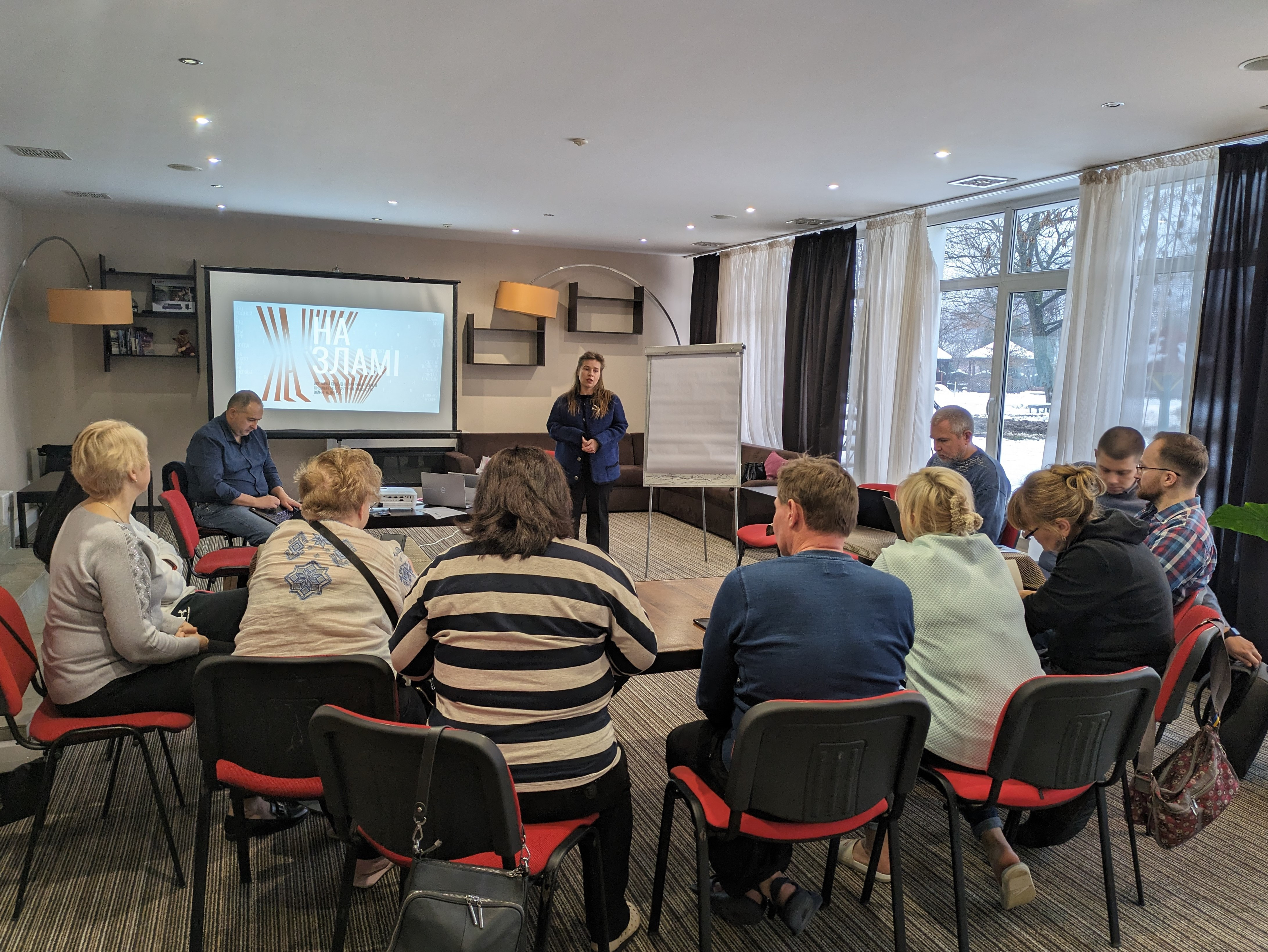
On 8–10 December, NGO “Eastern Ukrainian Center for Civic Initiative” held an annual meeting with partners as part of the project “Strengthening Civil Society to Transform the Culture of Remembrance: Nonviolent Efforts to Counter Russia’s War Against Ukraine”.
The meeting was attended by lawyers, volunteers, former prisoners of war and representatives of other categories of victims of the war in Ukraine who participate in public events within the project.
In particular, representatives of the Public Committee for Protection of Citizen’s Constitutional Rights and Freedoms, SEMA Ukraine, NGO “The 29th December,” an association of former prisoners, and “Nadia” (Hope) Association of Missing Persons’ Families were present.
Together, they discussed joint opportunities for education and advocacy in 2024, this year’s books presentations and exhibitions.
One of the tasks set during the meeting was to inform the public that the war in Ukraine began in 2014, and the full-scale invasion was just another stage of Russian aggression.
“I would like to draw your attention to a dangerous trend in government policy. Unfortunately, this approach can also be traced in the activities of certain international organisations. This is an artificial division of people into those who suffered from the war before and after 2022. Such a division prevents access to assistance programmes for those who faced Russian aggression before 2022 and creates artificial obstacles for such people to exercise their right to reparations after the victory over Russia,” says Volodymyr Shcherbachenko, head of NGO “Eastern Ukrainian Center for Civic Initiative”.
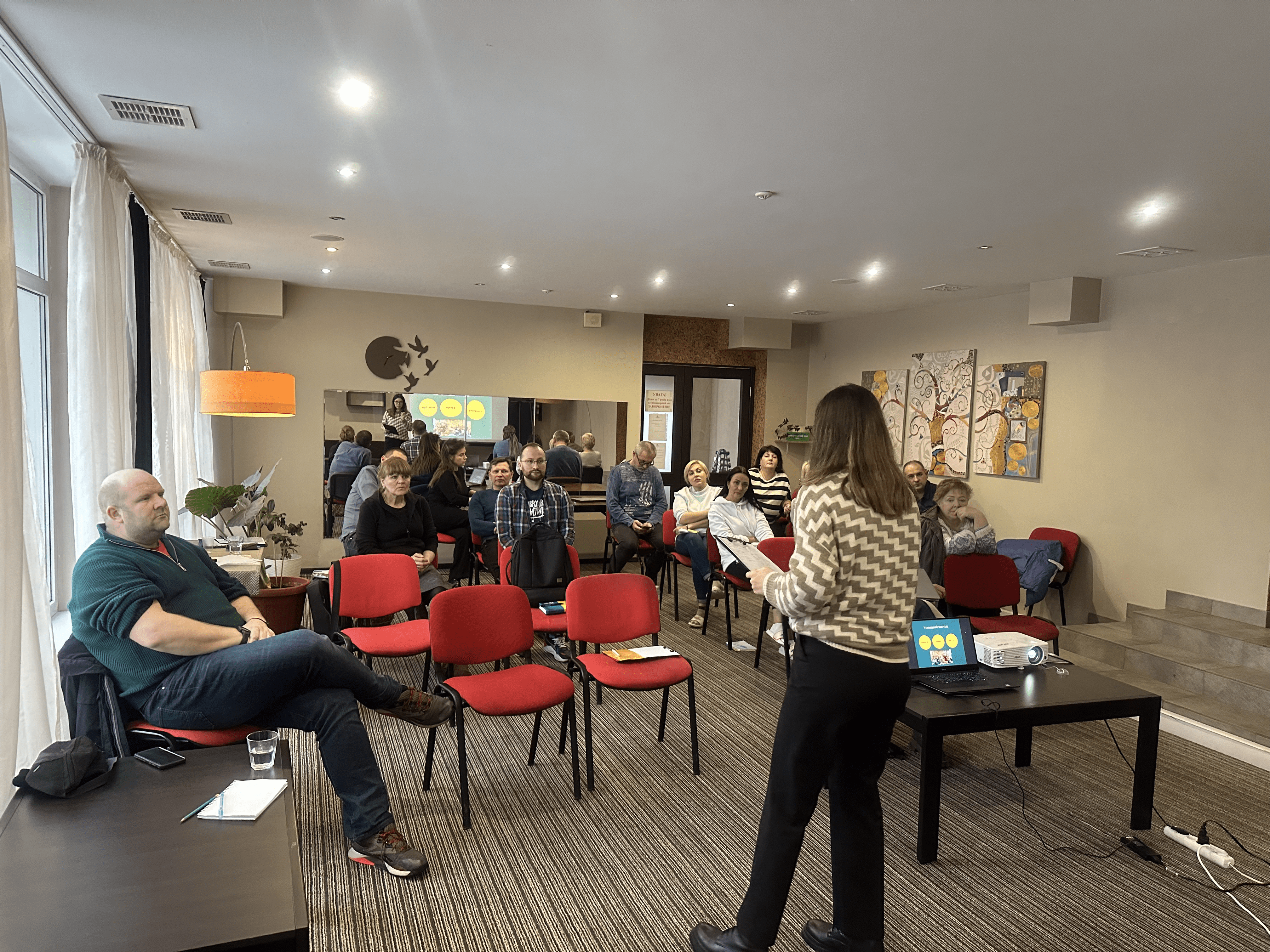
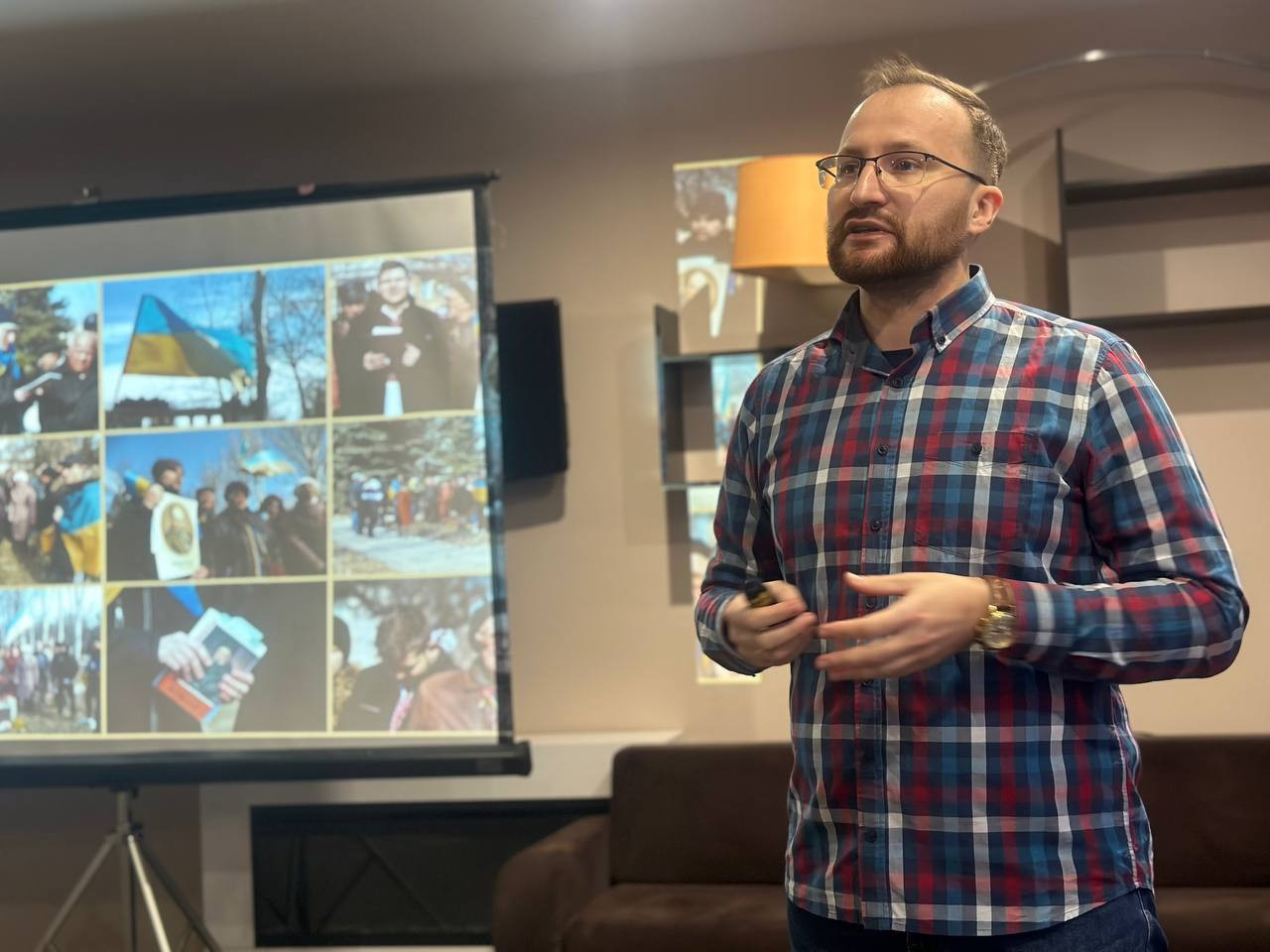
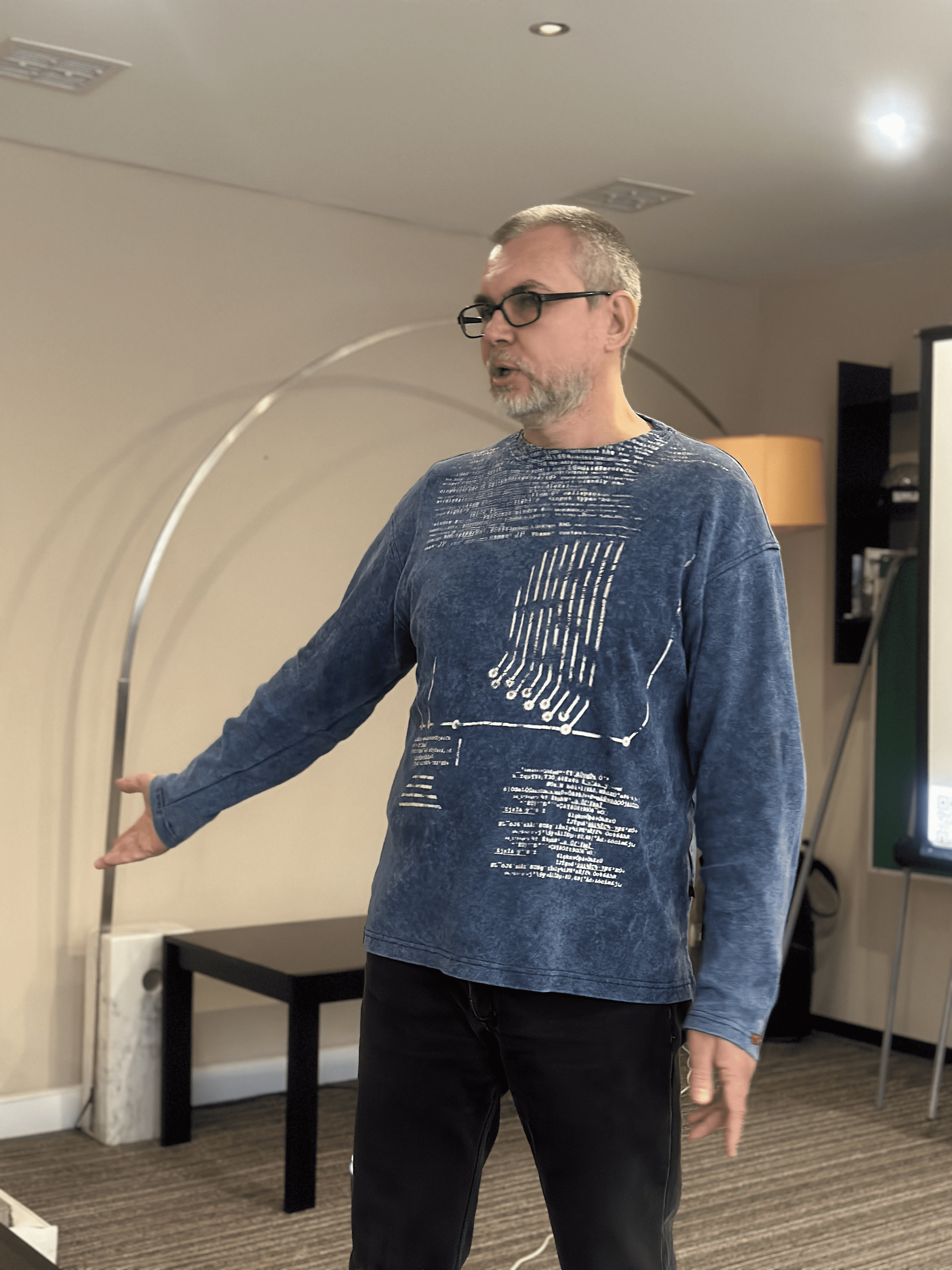
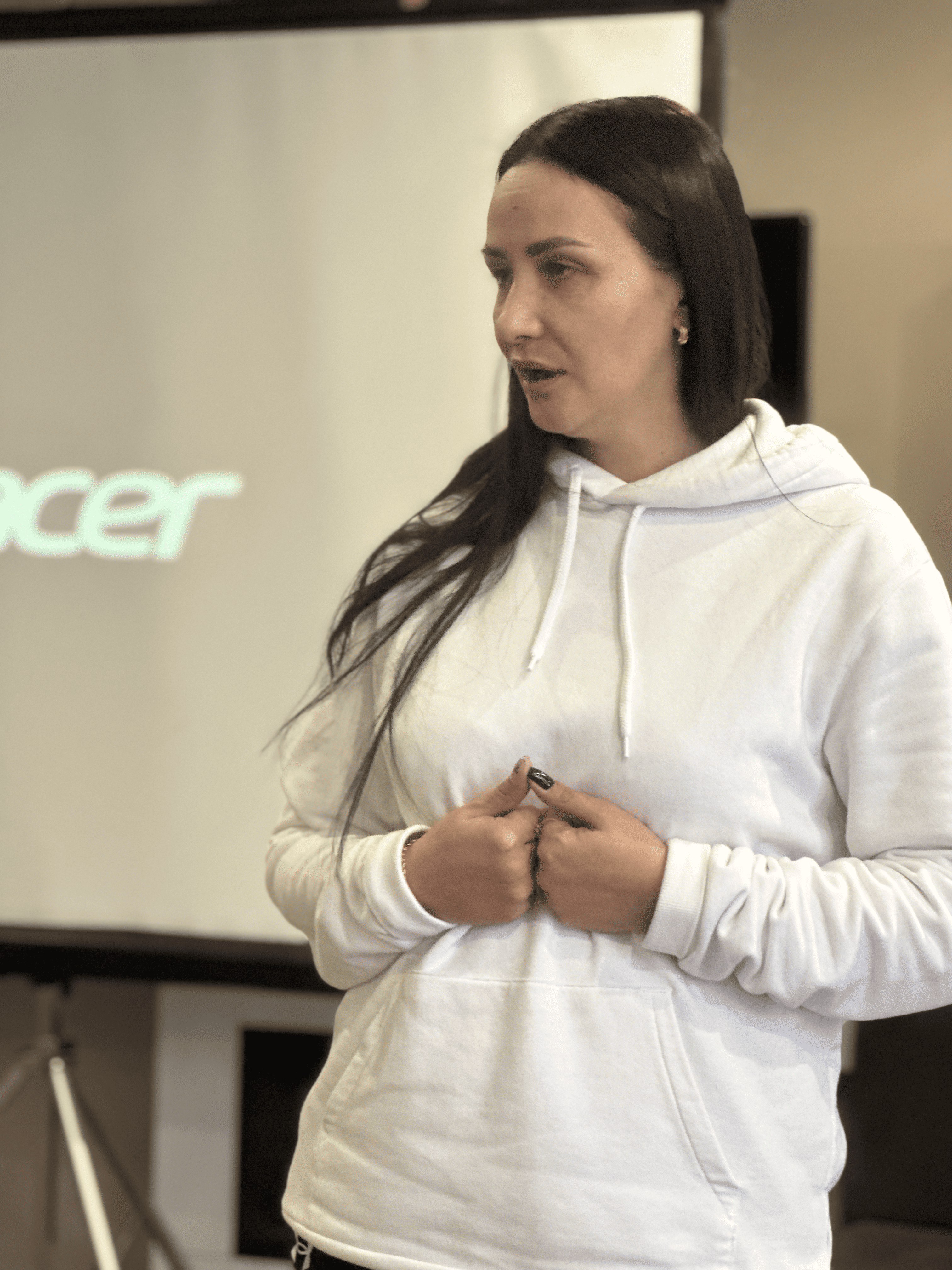
An important component of the meeting was a training on public speaking. The participants learnt how to make influential speeches and engage listeners in support of their ideas.
The training was conducted by the representatives of the “Koma” (Comma) Oratory Club. The trainers talked about the basics of public speaking, the structure of a speech, working with voice and body language, and shared the mechanisms of speaking to a difficult audience.
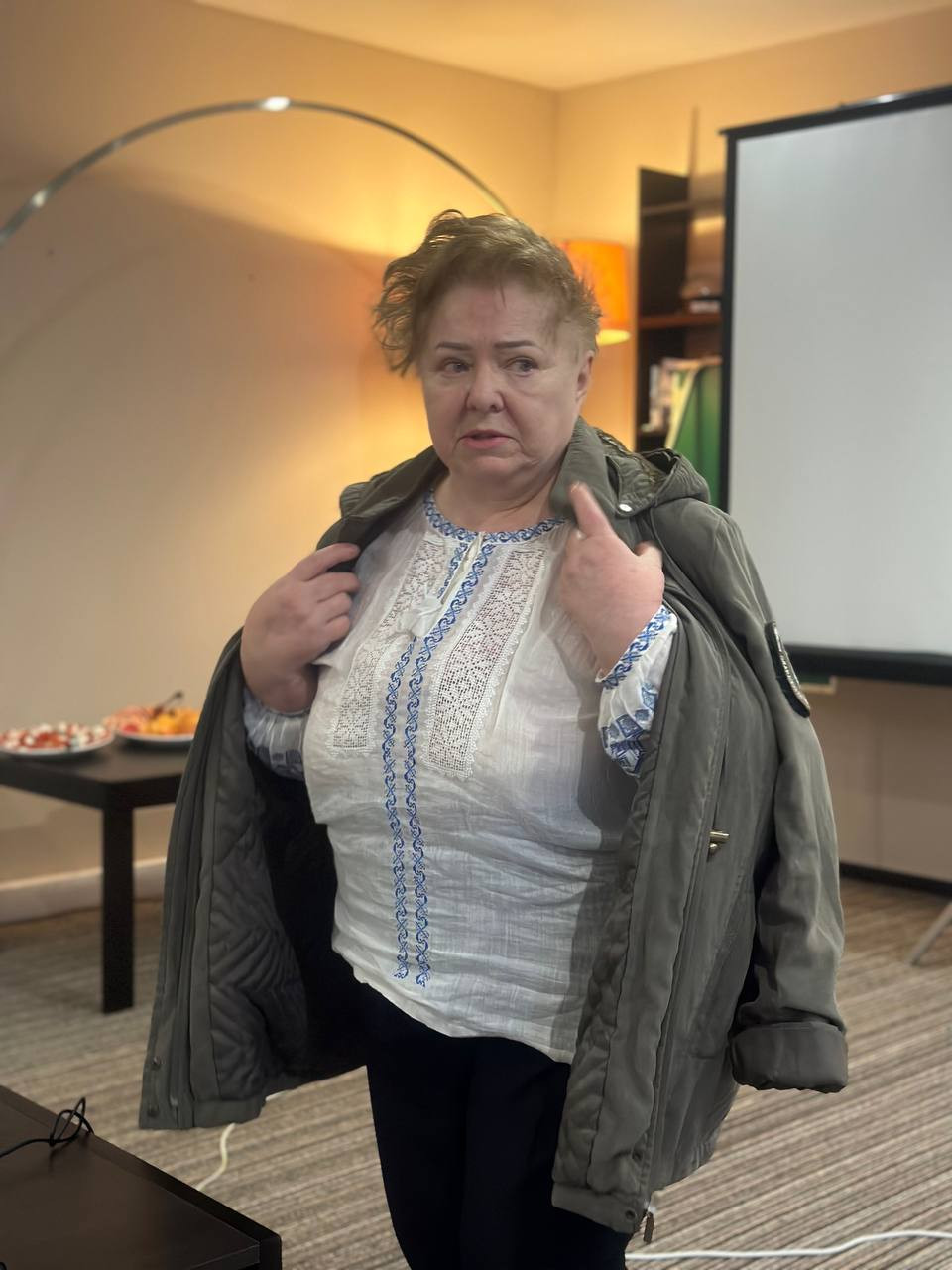
“I would like to get to Ukrainians the problem of deported children and children under occupation. Why am I going to talk about this? Because I have faced it directly. I was in captivity for almost two years, and my children were placed in foster care under occupation. When I was able to get in touch with my children after the exchange, I heard the most terrible thing for me: ‘Russia is a great and big country that helps us’. It hurt me, and I said: ‘My dear, Russia separated you and me and did a lot of bad things’. And I realised that he did not hear me. I realised that over these almost two years, Russian propaganda had taken its toll on my son’s mind.”
“The simple fact is that 20% of Ukraine’s territory is occupied. Sometimes we hear in the news that an ammunition storage facility was blown up in the occupied territories, or a high-ranking collaborator was eliminated, or a rocket hit exactly the location where the occupiers gathered to celebrate something. Then we realise that it was the result of cooperation between the Armed Forces of Ukraine and Ukraine’s special services with a developed agent network. Who are these people? They are “eyes and ears” of our special services on the occupied territories, support and logistics for sabotage operations, and subversive activities at the occupiers’ enterprises and institutions. They are detained for this. Hundreds and thousands of our fellow citizens are defending the state, risking their lives. Dozens and hundreds of them are in captivity. This is also a fact,” we share with you excerpts of the speeches prepared by the participants.
To listen to them in full, please follow the announcements of our events.

.png)
The project “Strengthening Civil Society to Transform the Culture of Remembrance: Nonviolent Efforts to Counter Russia’s War Against Ukraine” is implemented by the NGOs Kurve Wustrow (Germany) and the “Eastern Ukrainian Centre for Civic Initiative” (Ukraine) together with partners and with the support of the Federal Government of Germany.
