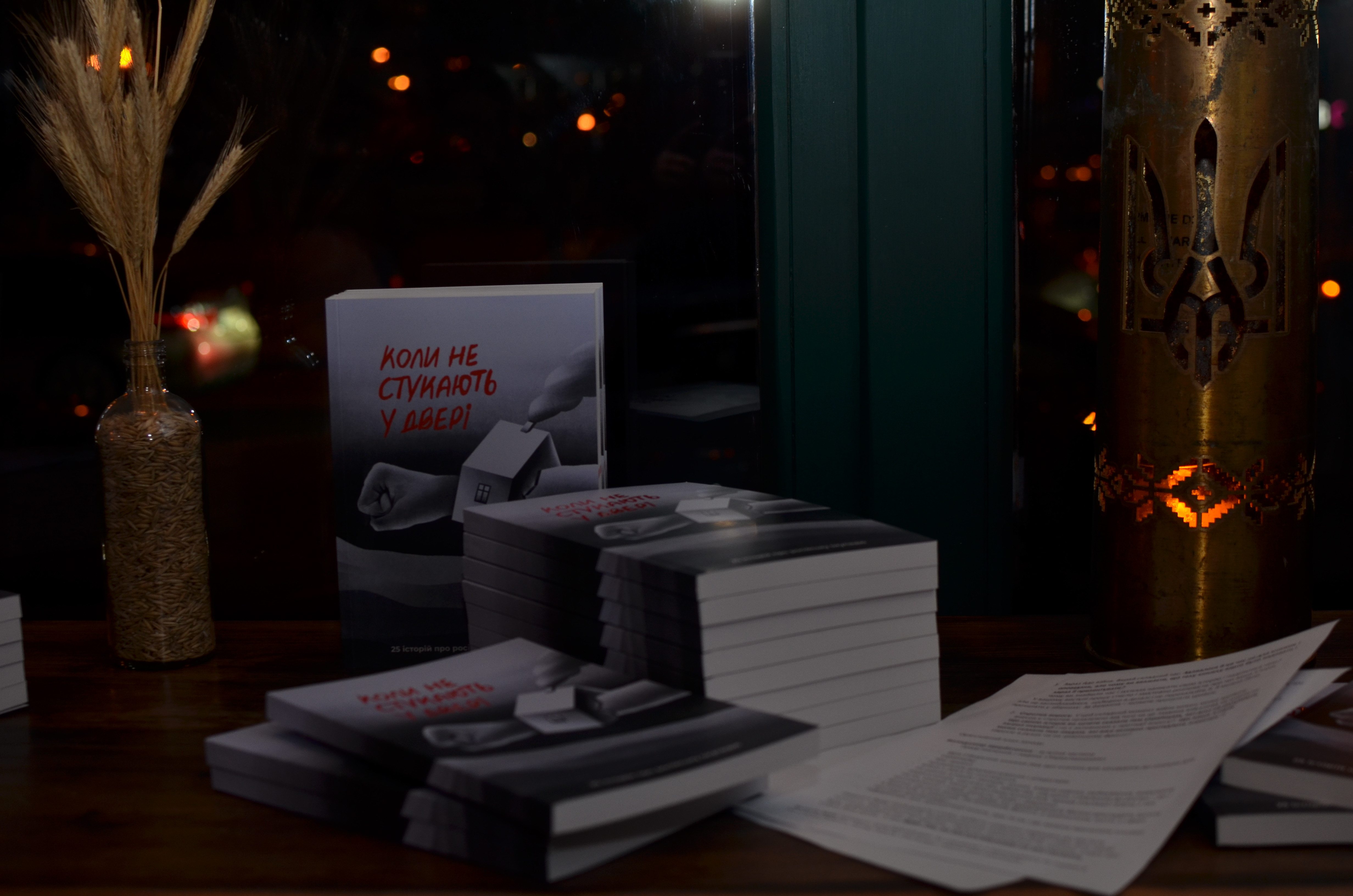
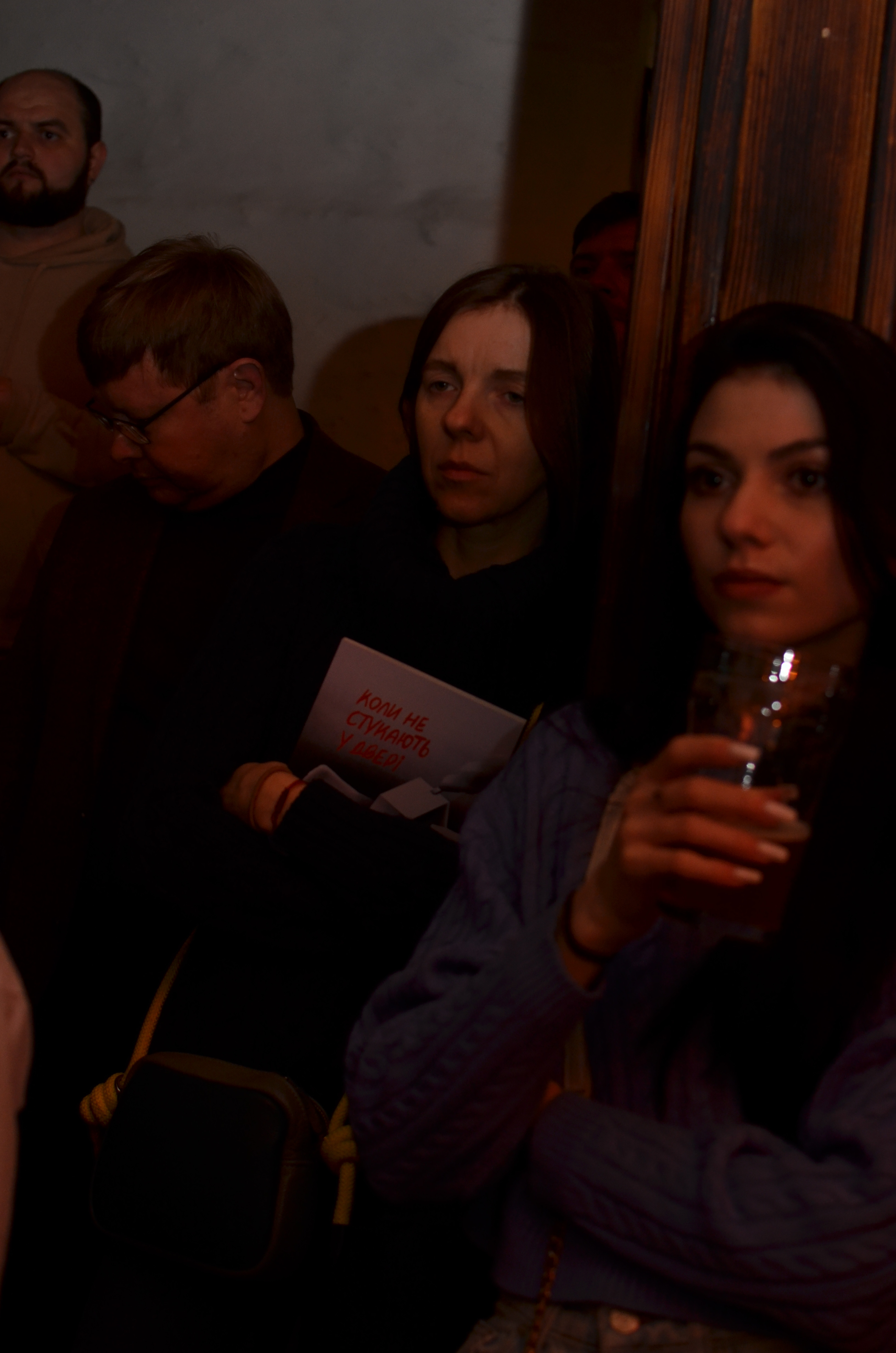
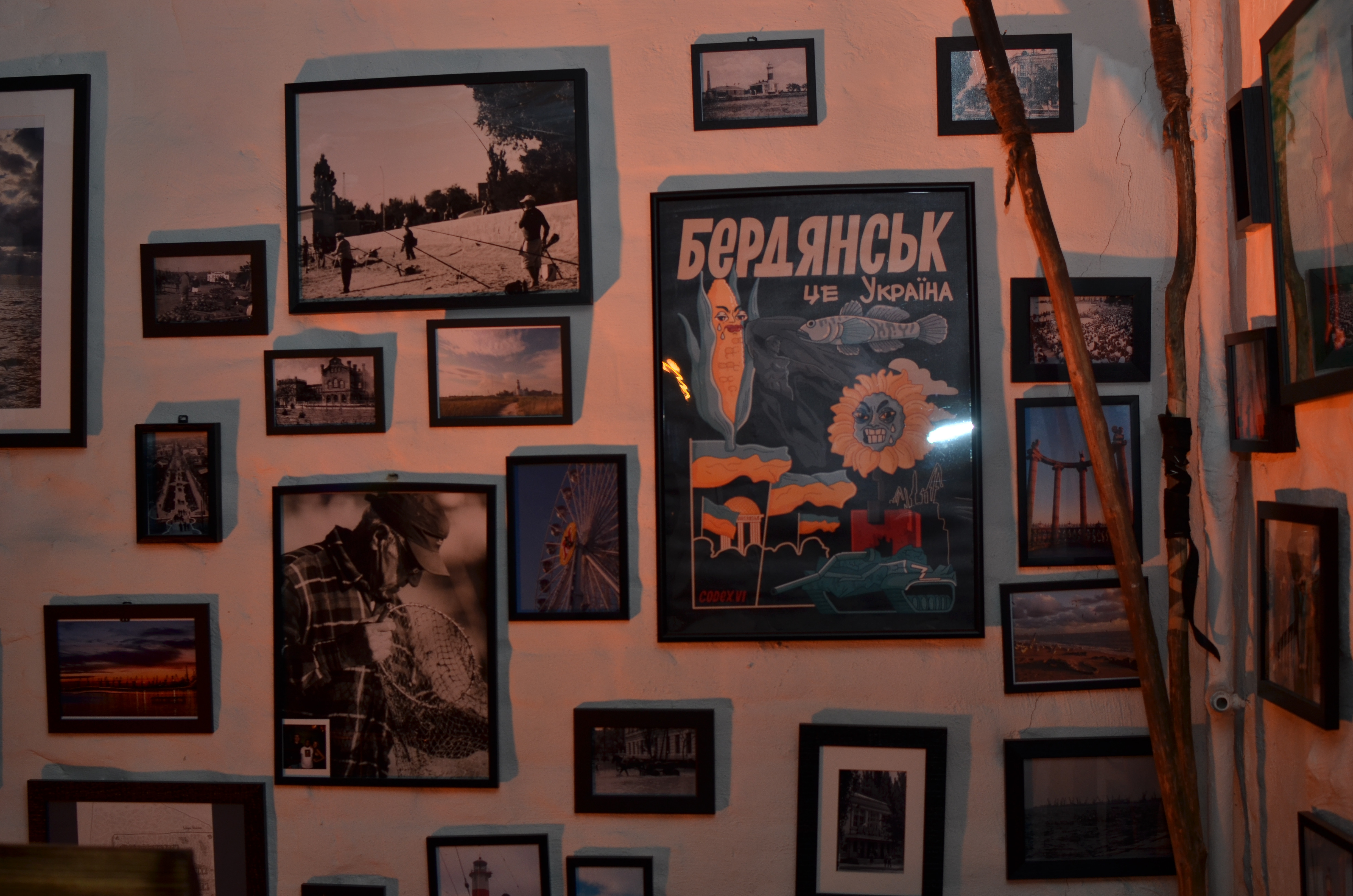
When They Don’t Knock on the Door: 25 Stories About the Russian Occupation” at “Kharakternyky” bar in Kyiv. The location is symbolic, as the bar was founded by the IDPs from Berdiansk.
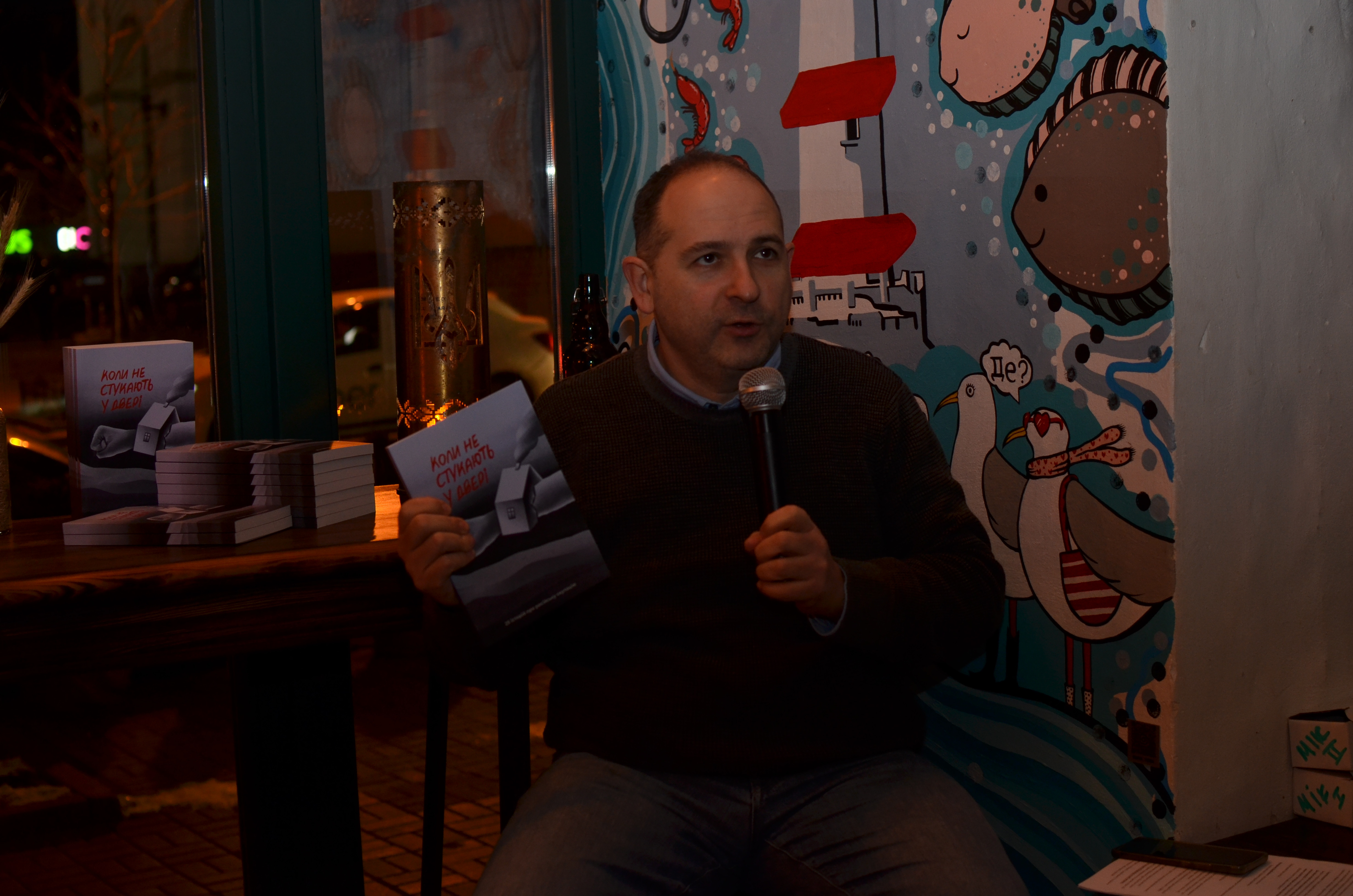
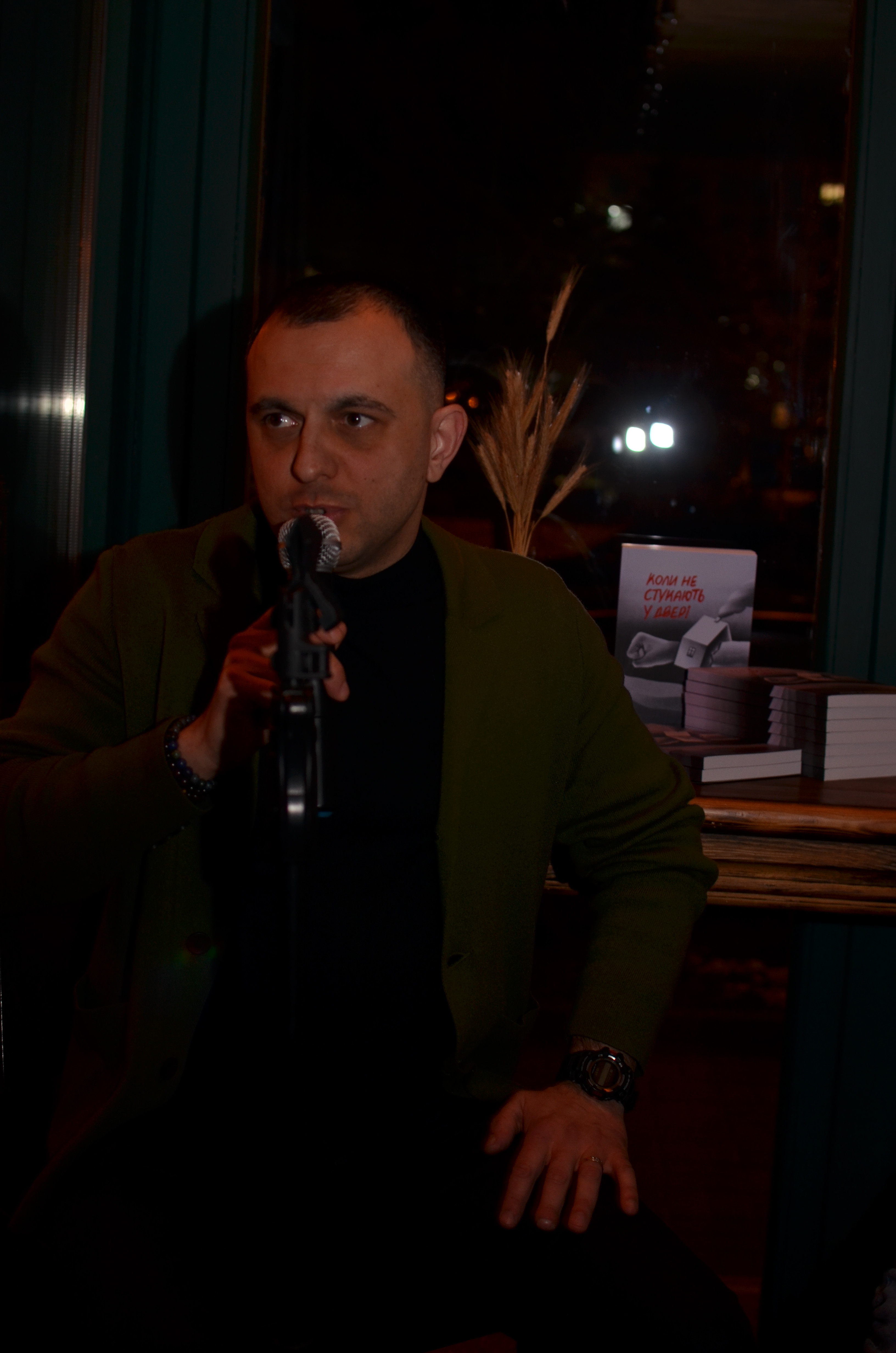
“The book ‘When They Don’t Knock on the Door’ contains stories of Ukrainians describing their experiences of living under Russian occupation and those living close to the front line. The publication brings together the memories of residents of Zaporizhzhia, Kyiv, Luhansk, Kharkiv, Kherson and Chernihiv Oblasts, covering the period from 2014. The book aims to preserve the history of the war as seen by ordinary Ukrainians and explain the world why Ukrainians do not want to live under Russian occupation”, said Volodymyr Shcherbachenko, Head of EUCCI, the organisation that initiated the book’s publishing.
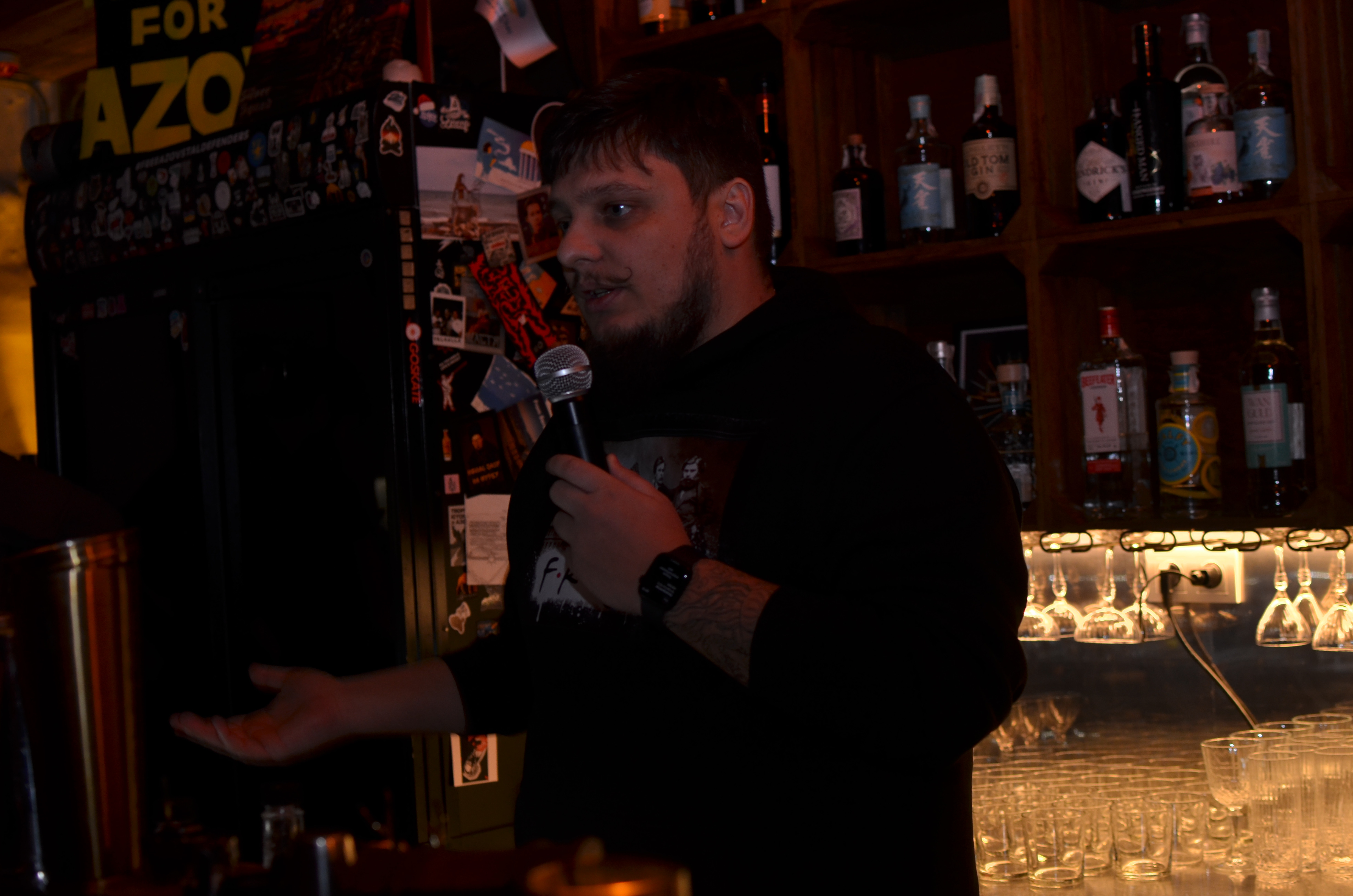
At the beginning of the event, Ivan Zalohin, one of the authors, spoke about his life under occupation in Luhansk as a teenager.
“Donate so that your children can avoid this. Our home is important to us, and we do not want to live under Russia”, he urged.
Natalia Huran, another author, talked about her life under occupation in Bucha and made an ironic remark about the Russian military:
“What can you expect from people who destroy flower beds near the buildings because ‘who permitted you to live beautifully’?”
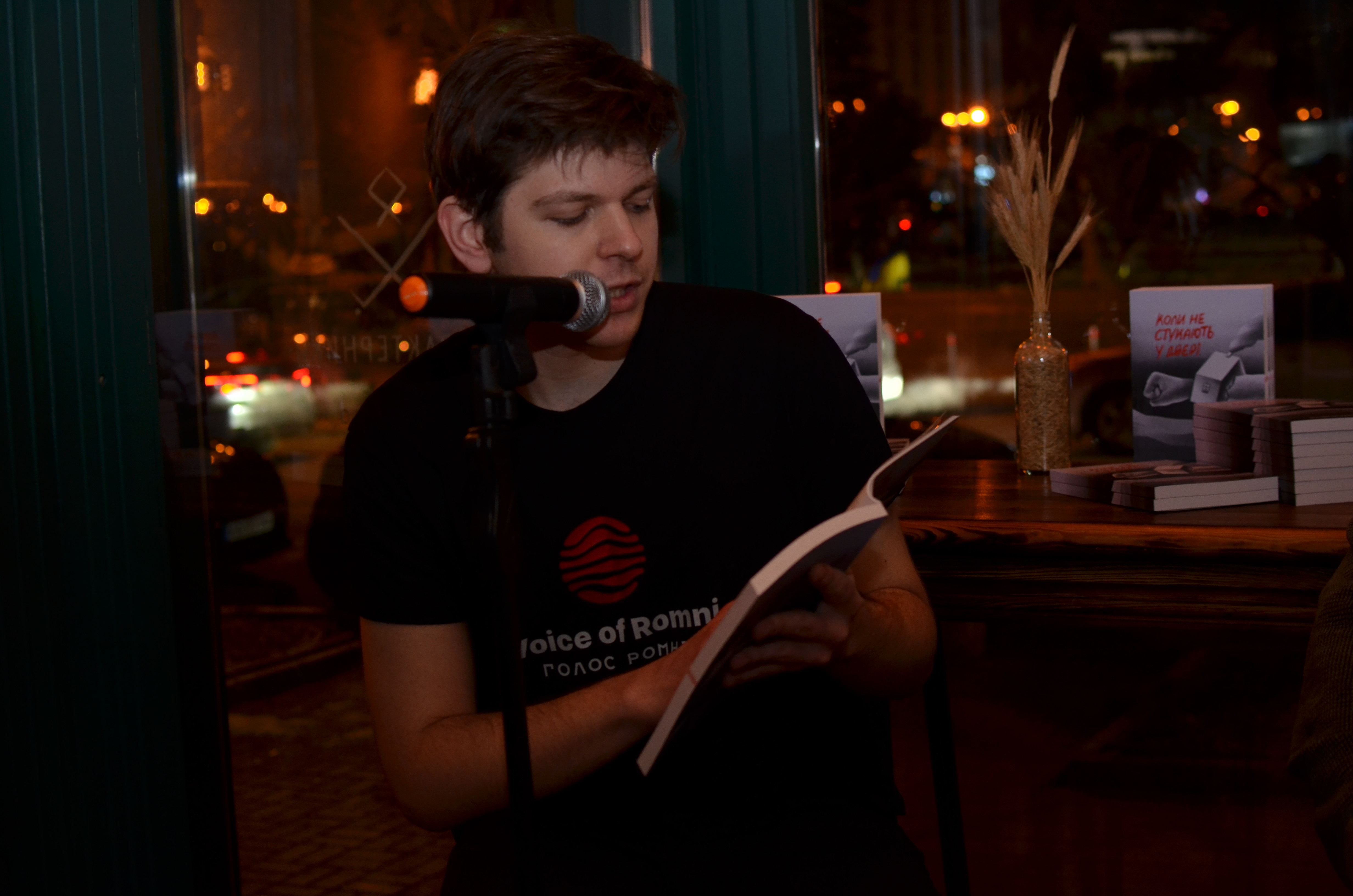
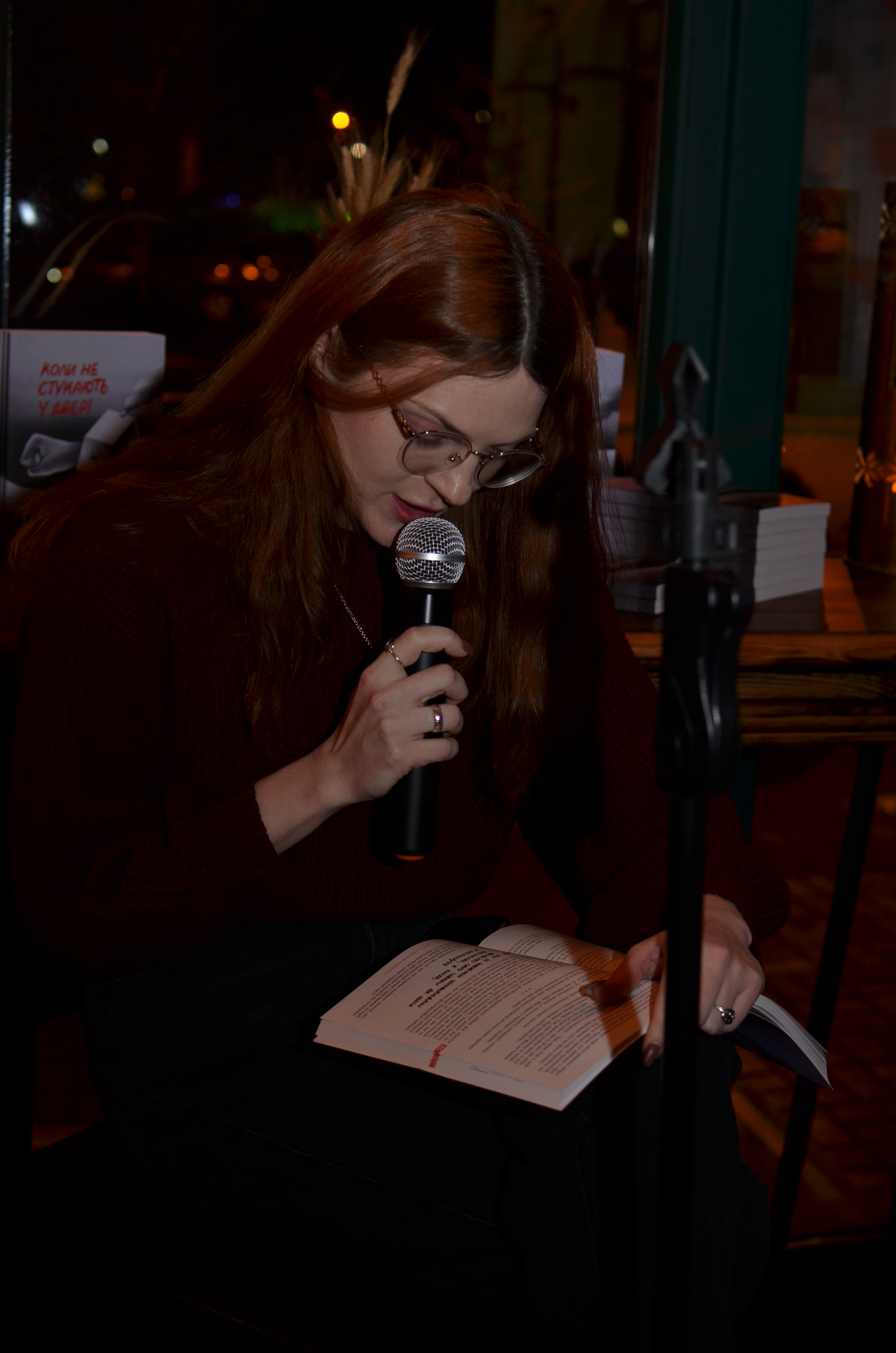
There were also stories from Berdiansk, in particular, author Tetiana Cherepanova read an excerpt from her story:
“My husband had already known what happened under occupation in Donetsk Oblast since 2014 and knew the history well enough to understand what filtration camps were. One evening, he said that we would be forced to flee, even if on foot, because the future of a Ukrainian language teacher and a Ukraine history teacher under occupation is well known. Our colleagues were already being persuaded to collaborate. Our refusal to cooperate with the occupiers and its consequences were only a matter of time.”
Another author from Berdiansk, Oleksandr Pylypenko, recalled how military vehicles began to pass by his house. He told how he and his former colleague guarded the city hospital, as there were no law enforcement officers left in the city, and later gathered a group of volunteers from his neighbourhood to counter night- time looters. Nowadays, they are keeping record of collaborators in order to restore justice after the city returns to Ukrainian control.
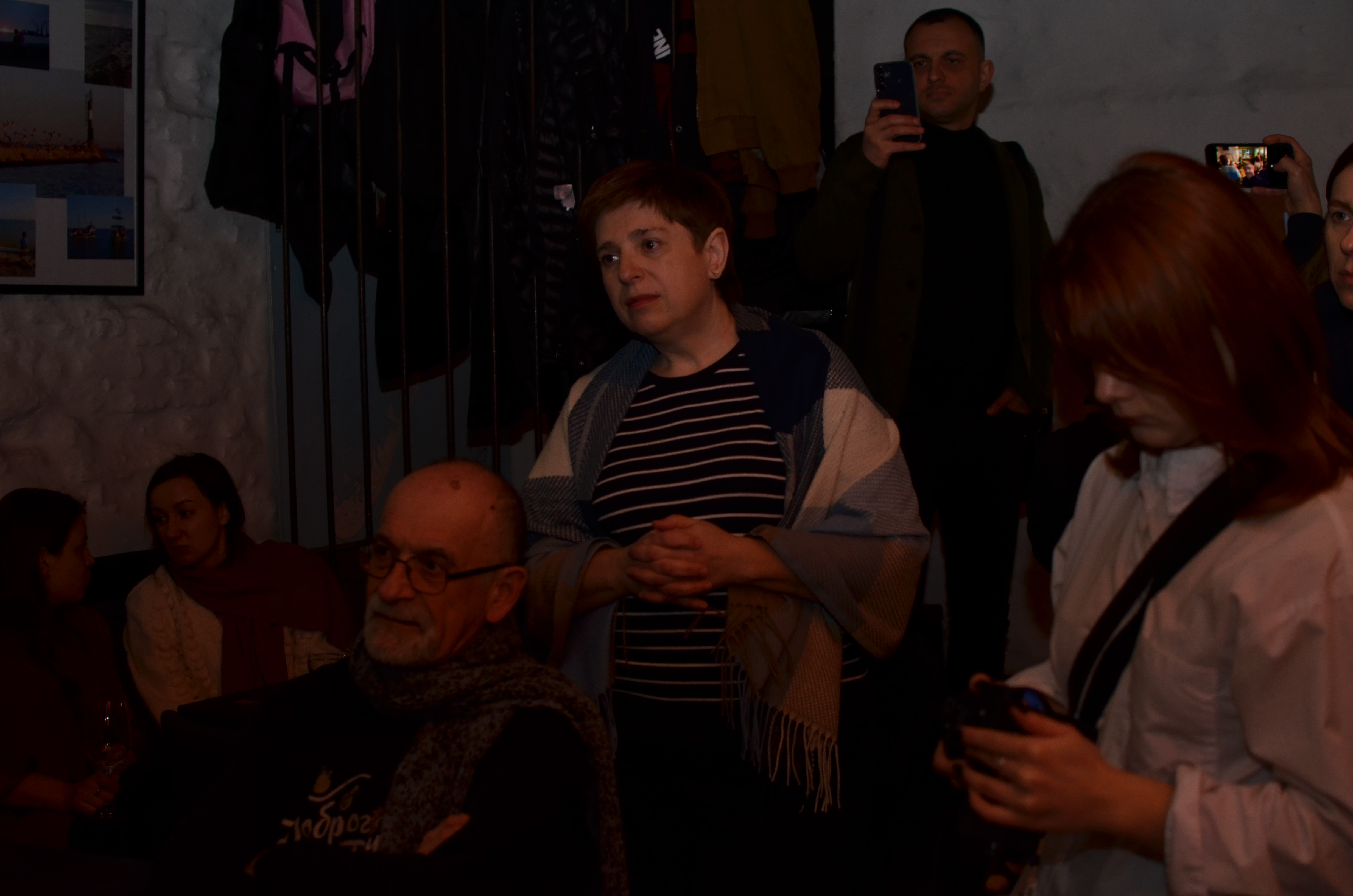
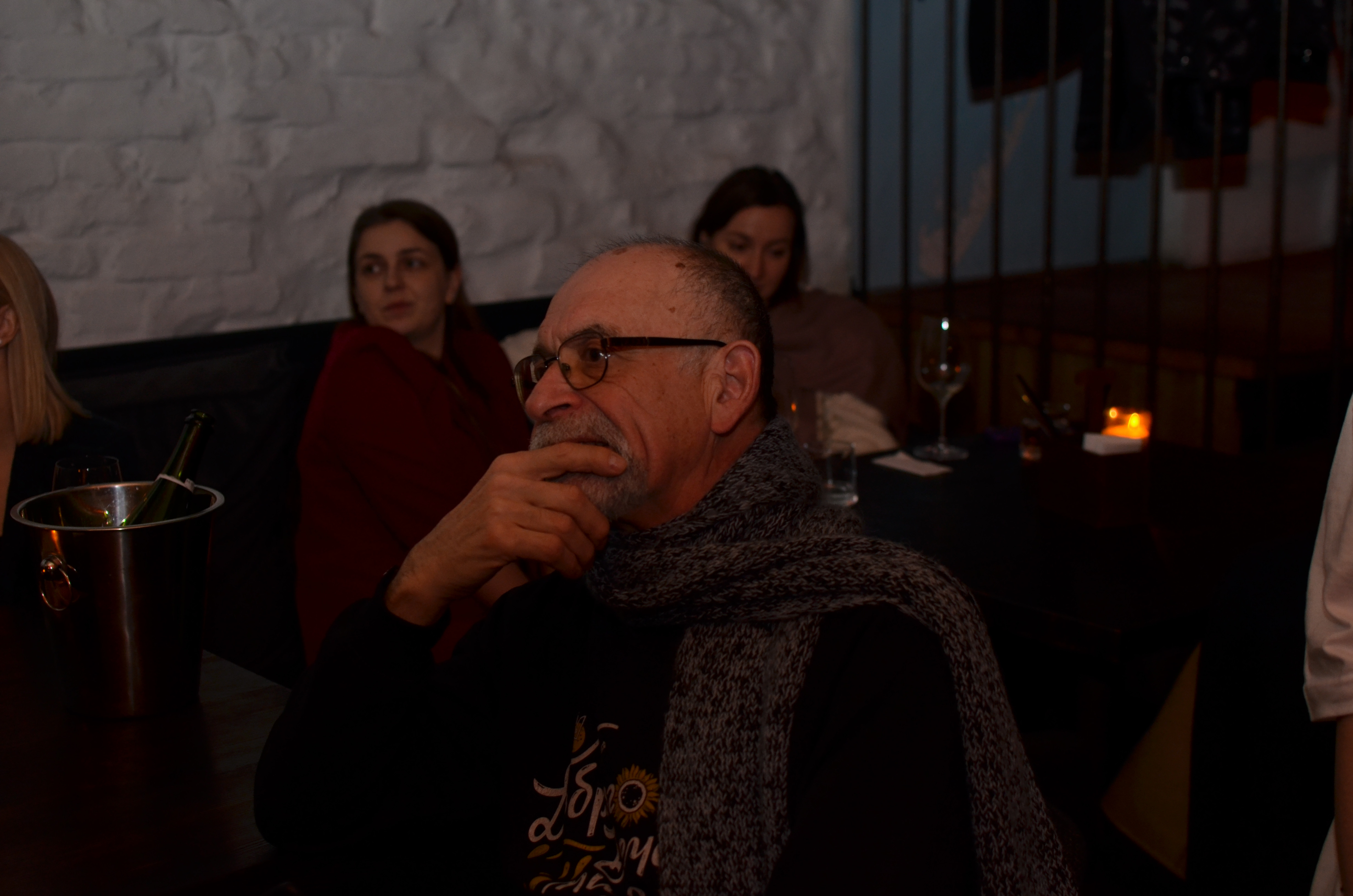
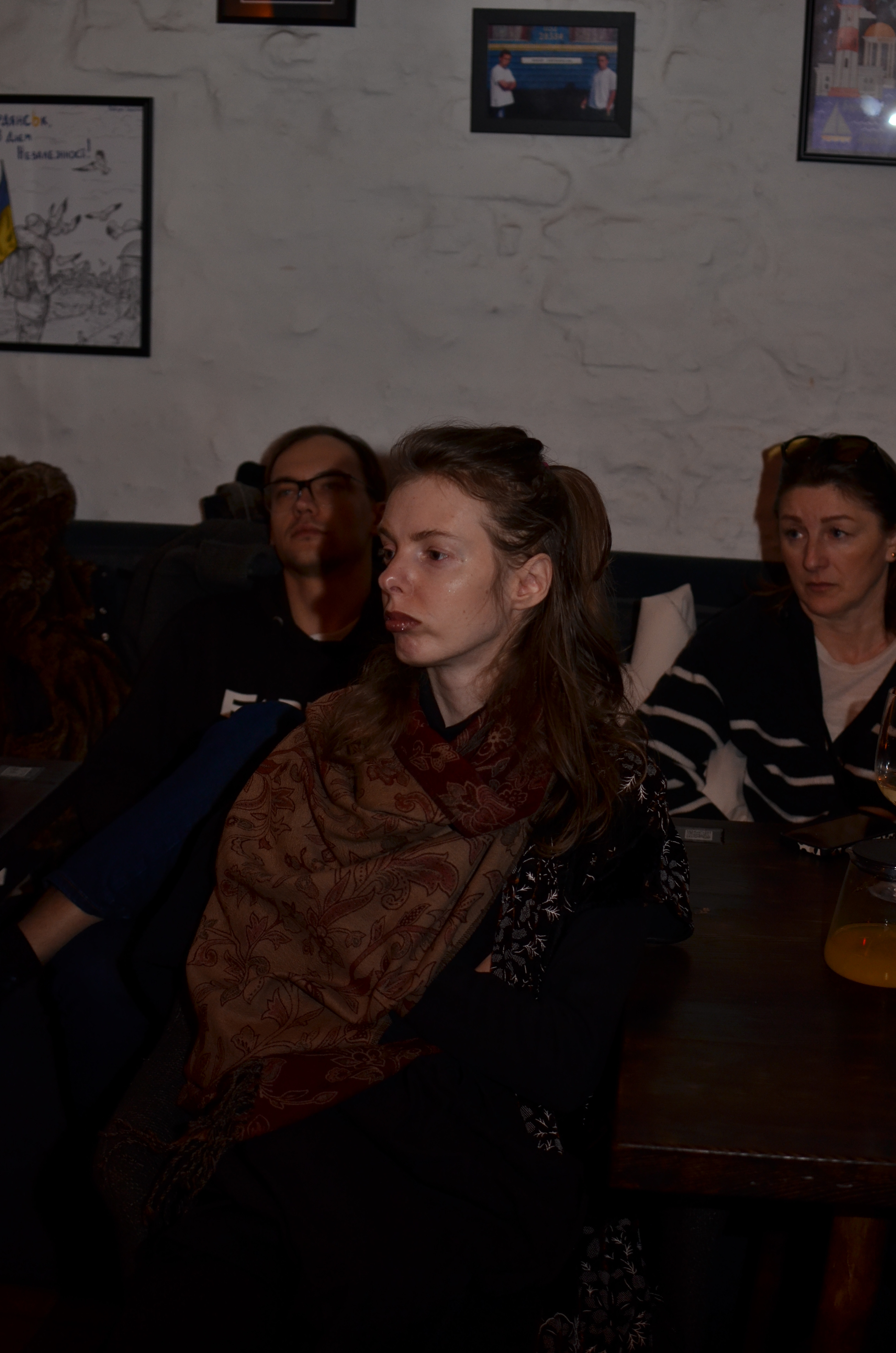
The participants shared their stories of the occupation and talked about the importance of civilians openly sharing their war experiences to show the world that it affects everyone.
The participants also appreciated the chance to attend such an event in an unusual format. In turn, Ivan, the owner of the “Kharakternyky” bar, noted that this space is open to initiatives and assistance in organising fundraisers for the military, emphasizing the importance of joining forces.
This book was prepared as part of the project “Empowering civil society for a transformation of commemorative culture - non-violent contributions to deal with Russia's war against Ukraine” by the Eastern Ukrainian Center for Civic Initiatives with the support of Kurve Wustrow – Centre for Training and Networking in Non-Violent Action as part of the Civil Peace Service (CPS).
