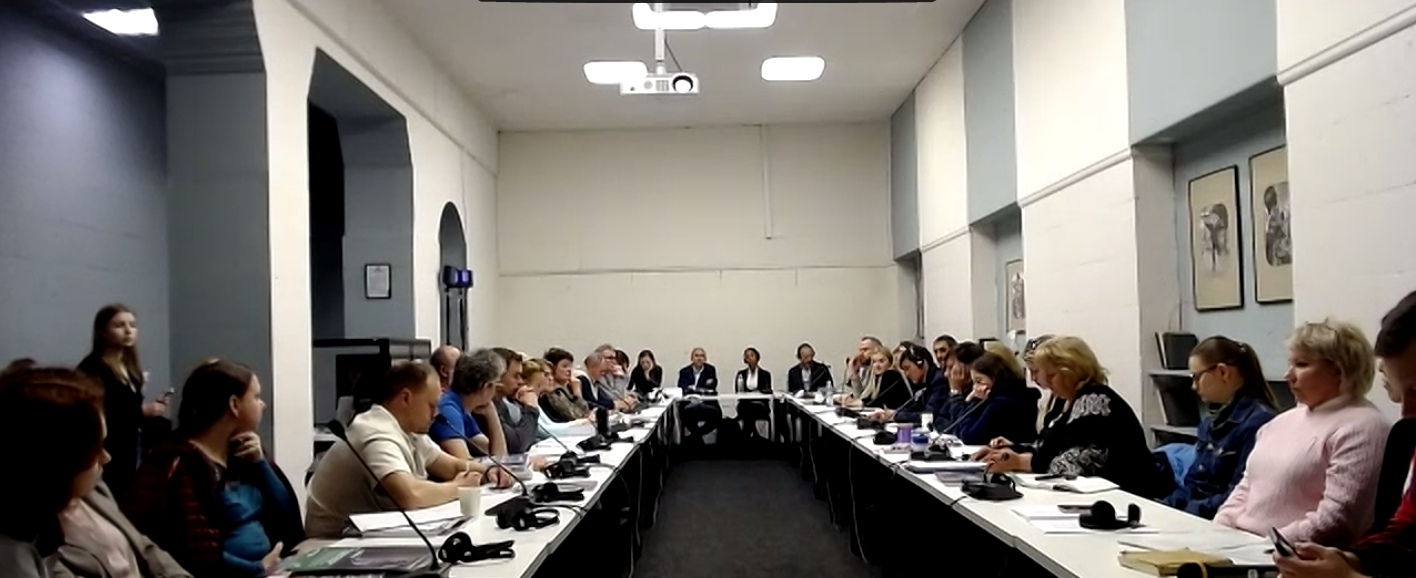
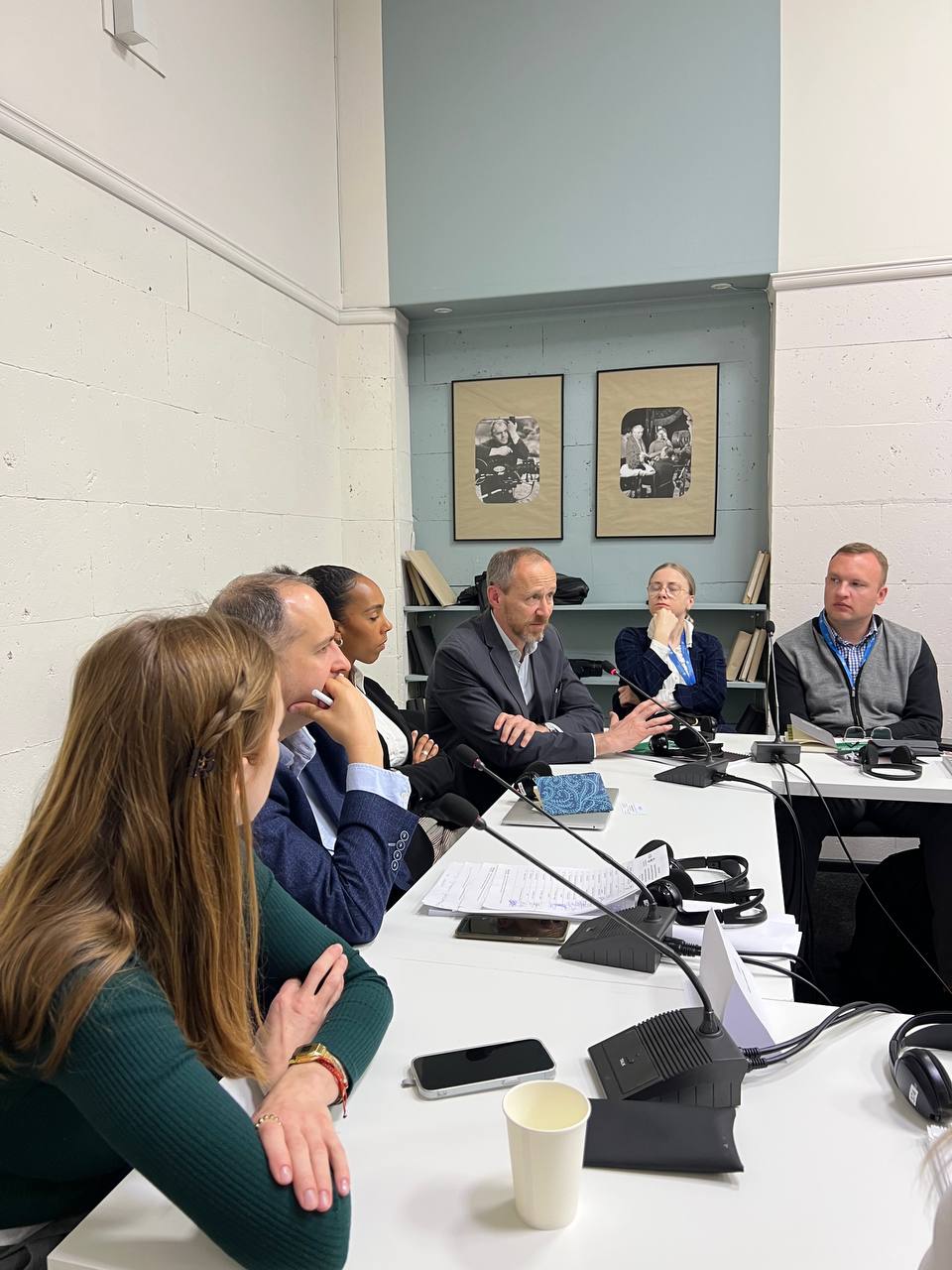
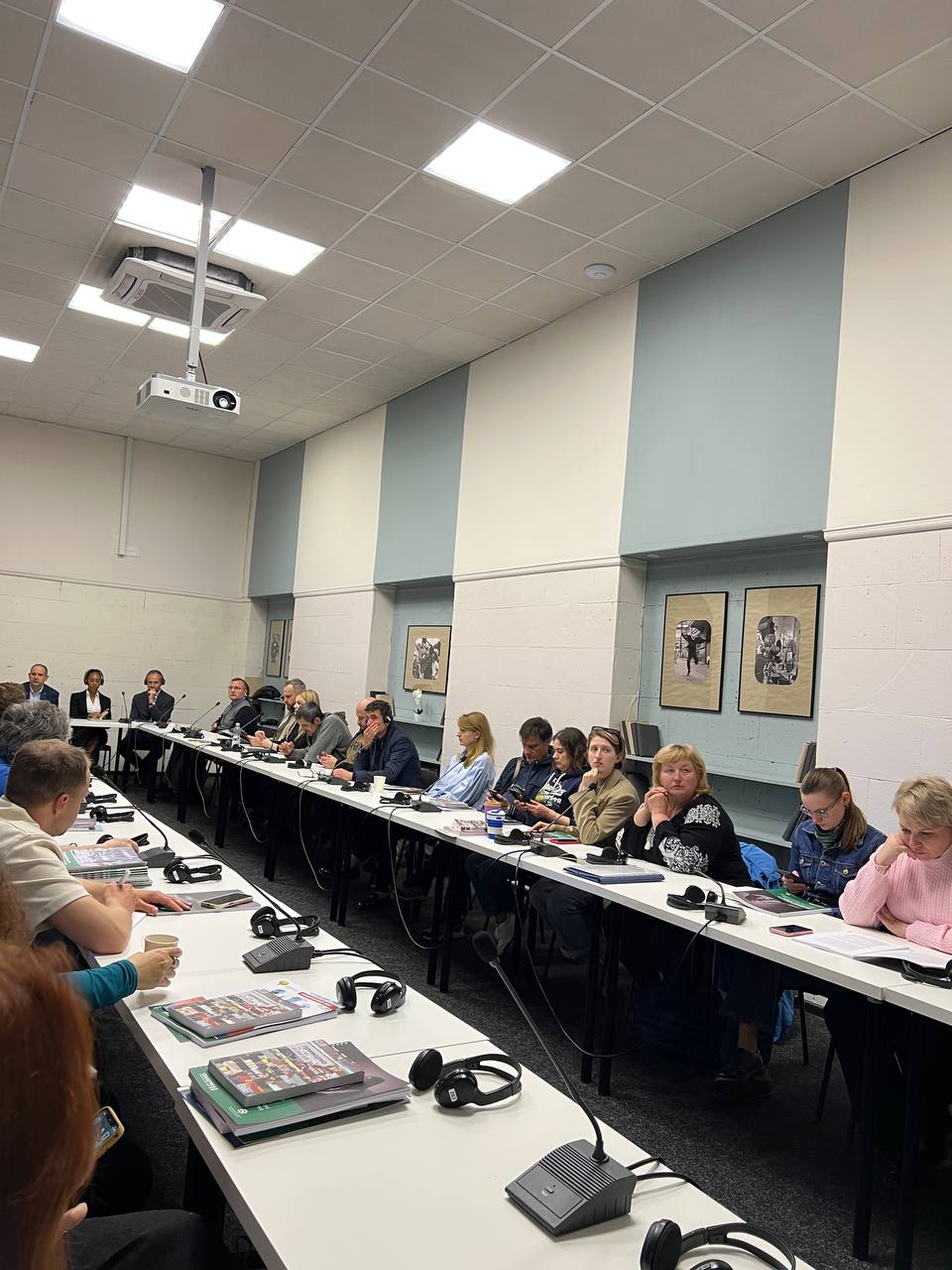
On 5 May, the Eastern Ukrainian Center for Civic Initiatives, together with the Ceasefire Centre for Civilian Rights, presented in Kyiv the report ‘From Social Protection to Reparations for Ukraine: Lessons Learned from the Case of Civilian Detainees under Russia’s Armed Aggression’.
The study is based on more than 500 interviews with victims, focus group results, analysis of Ukrainian legislation, and case law of victims’ attempts to obtain assistance from the state.
The first part of the report focuses on analysing current mechanisms for assisting civilians who have survived captivity. The second part highlights the views of people who have survived such hardships on a wide range of issues, including various forms of reparations.
The event was attended by representatives of Ukrainian and international NGOs, associations of victims, and representatives of state authorities.
May Thomson, an expert on reparations at the Ceasefire Centre for Civilian Rights, noted:
“In addition to analysing the experiences of those who have been in captivity and the problems they face after being released, we advocate for these funds to be paid out from international funds. We have already presented this report to the UN Human Rights Council and will defend the idea of such payments in front of the governments of other states.”
The head of EUCCI, Volodymyr Shcherbachenko, stressed that it is important to establish mechanisms to support war victims in advance:
“Citizens need state assistance to feel that justice is restored. They need this assistance now, while they can still use it, and not after their death. The current situation is shameful: the state is leaving many of its citizens (both civilians and military personnel), who were deprived of their freedom because of their clear civic position and actions in defence of Ukraine, without support. Such a policy is unacceptable.”
The discussion that followed focused on the issue of improving state support mechanisms. According to the study, there are a number of issues in the work of the Commission on Deprivation of Personal Liberty as a Result of Armed Aggression against Ukraine under the Ministry of Reintegration of the Temporarily Occupied Territories of Ukraine (under the Ministry of Development of Communities and Territories of Ukraine as of 16.01.2025). The Commission’s decisions are the basis for the state to decide whether to provide financial support to Ukrainian citizens who have been deprived of their liberty by the aggressor country.
EUCCI’s lawyer Yulia Chistyakova noted that the main problem is that the legislation regulating the victim status was adopted before the full-scale invasion began and does not currently reflect the new realities. Another problem is the lack of transparency in the Commission’s work. There are numerous complaints that it does not provide reasoned decisions in cases of refusal, nor does it explain how Ukrainians released from captivity can rectify the situation after their applications are rejected. The procedure of collecting documents and proving eligibility is overly bureaucratic, complex, and emotionally draining for people who have just regained their freedom. One more important aspect is the lack of information, since former prisoners have to find out for themselves how the state can help them.
There were victims present who shared their experiences of interacting with the Commission.
“It is crucial for me that the fact of my deprivation of liberty is confirmed by documents”, said journalist Oleksandr Bilokobylskyi, who only learned about the reason for the refusal to provide assistance at the court.
Artist Serhii Zakharov noted that when preparing documents, he received a refusal similar to the examples given in the report, which makes him think that cases are not being considered in detail.
Ihor Kotelianets, former member of the Commission, head of the NGO “Association of Relatives of Political Prisoners of the Kremlin” outlined the problems in the Commission’s work from within. These include the large number of unreviewed applications, the immutability of the Commission’s membership, and the lack of a transparency in the selection process for Commission members.
“Our task as a society of a country at war is to collect complete information about the losses incurred, about the damage caused by the Russian Federation, and to present the bill at the end of the war or in case of the pause in it. When we massively refuse to recognise the suffering of the victims, we thus reduce the amount of damage for which we will then claim compensation in the future”, he said.
.jpg)
