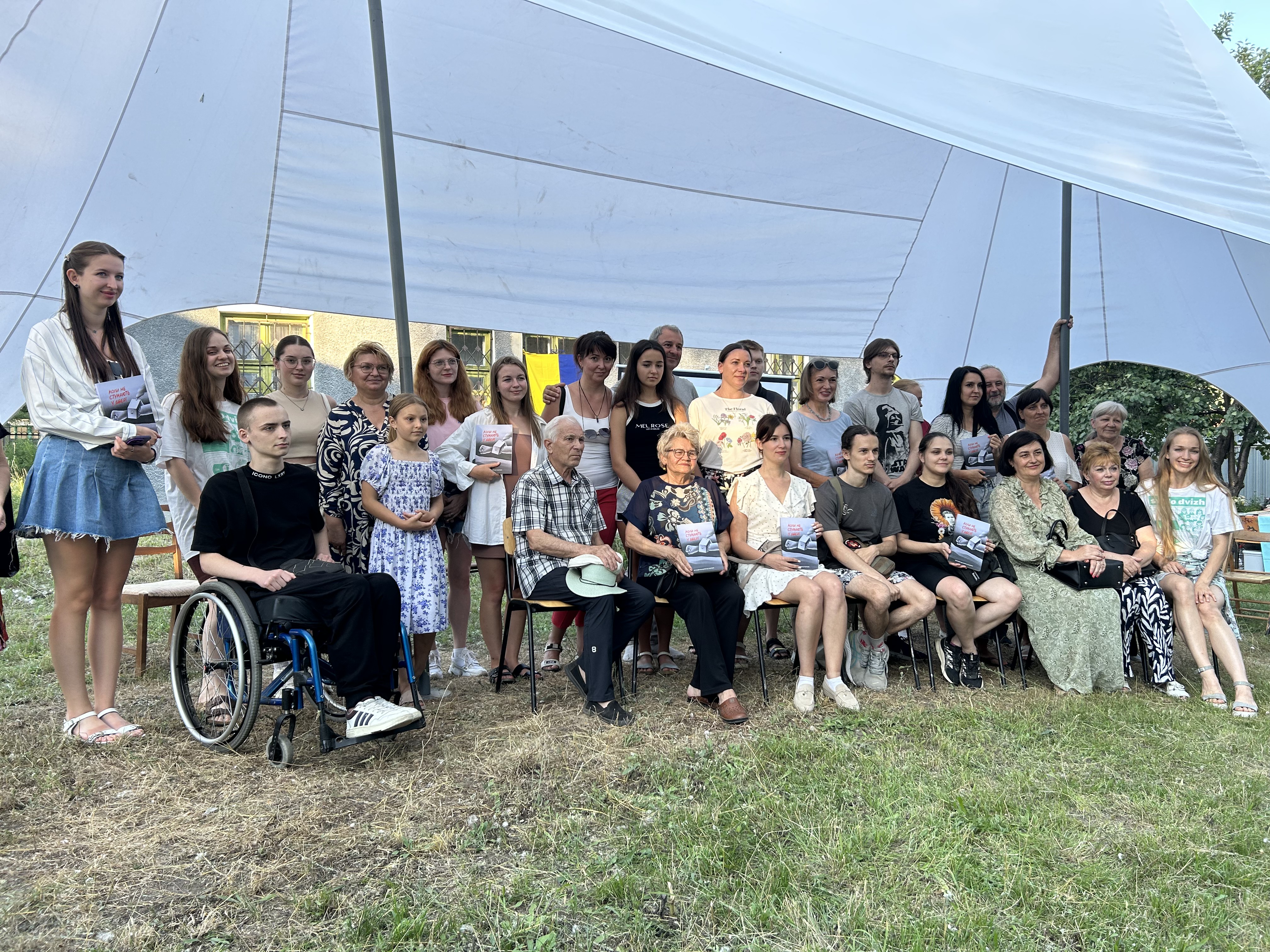
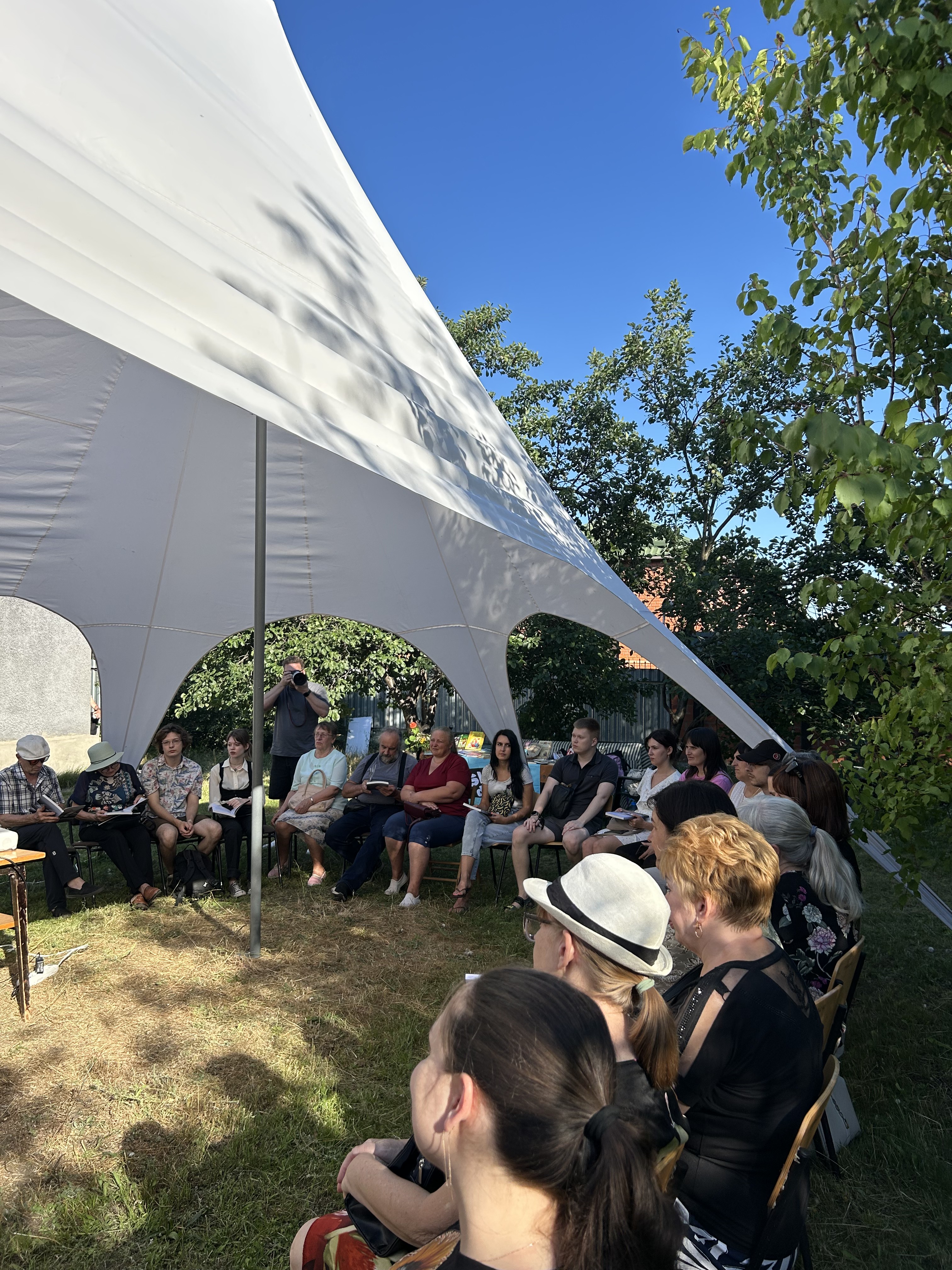
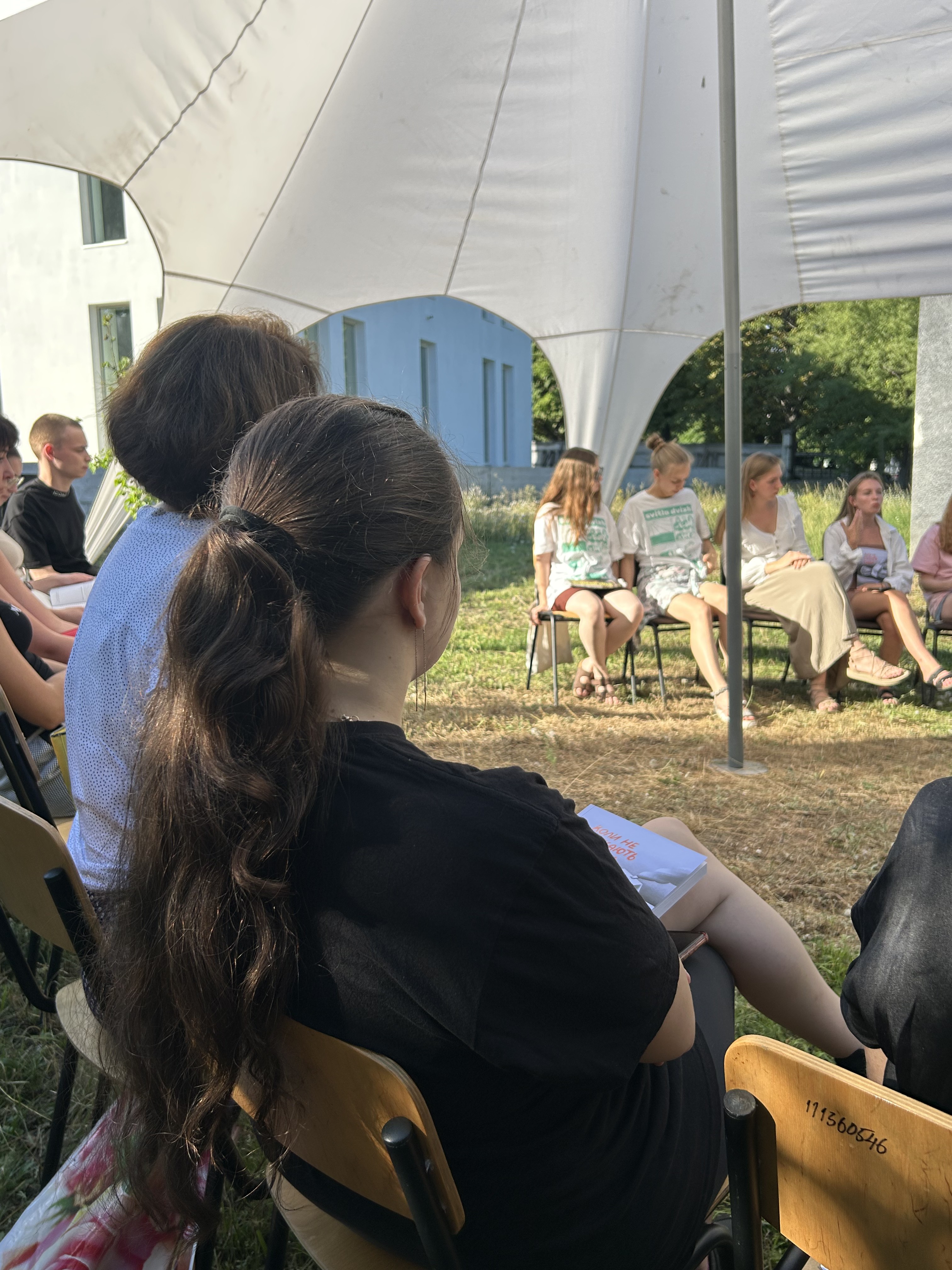
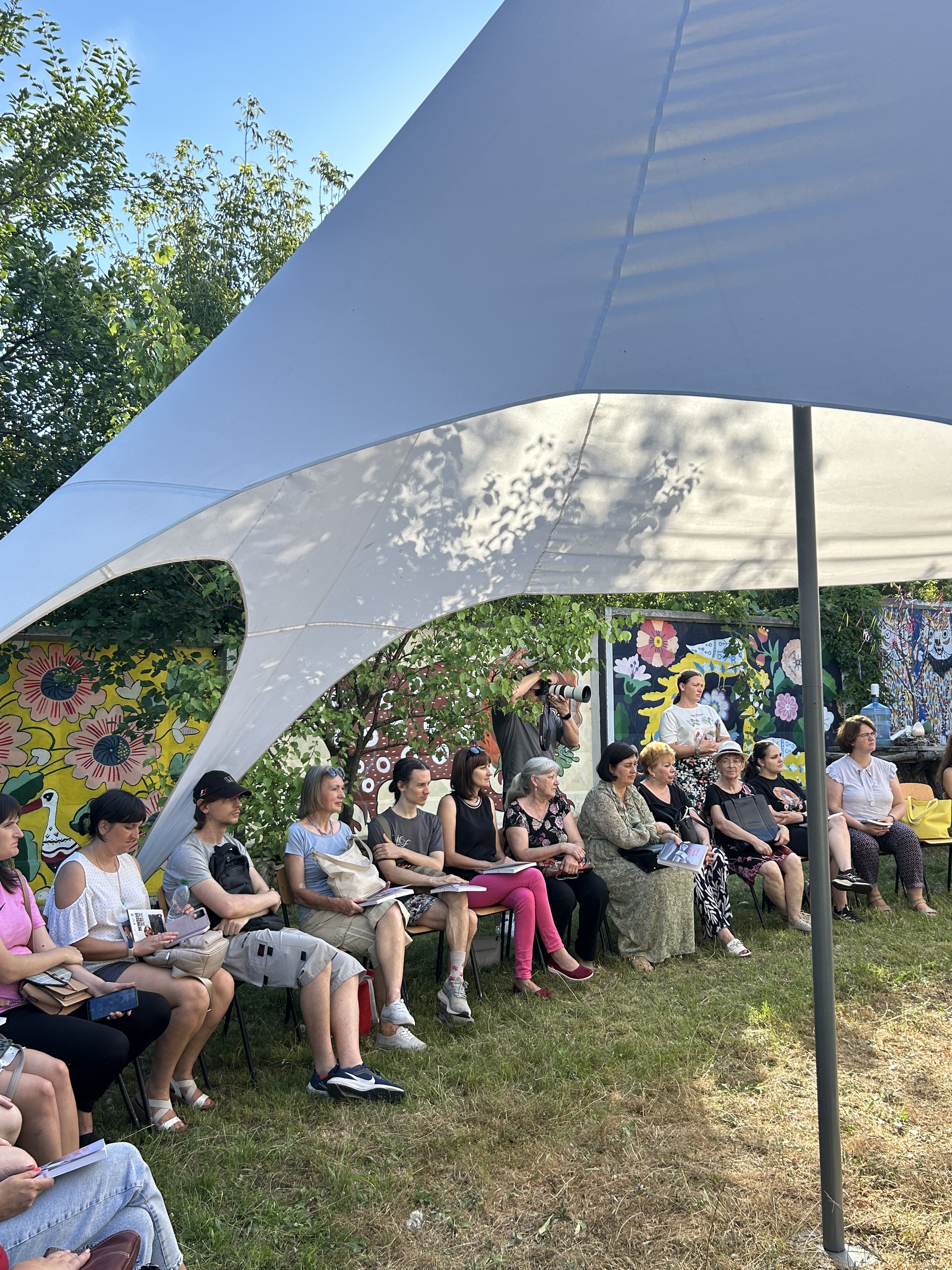
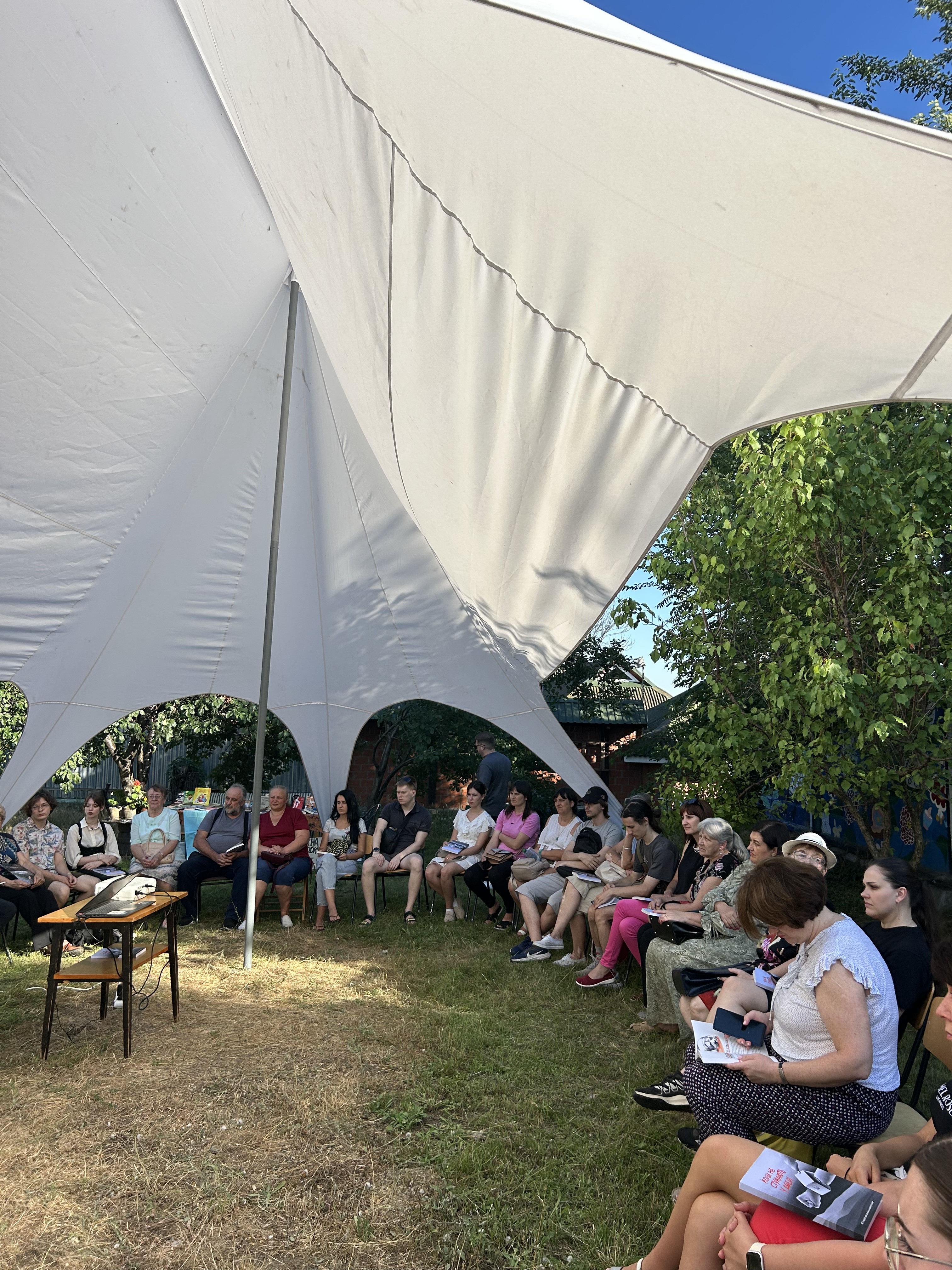
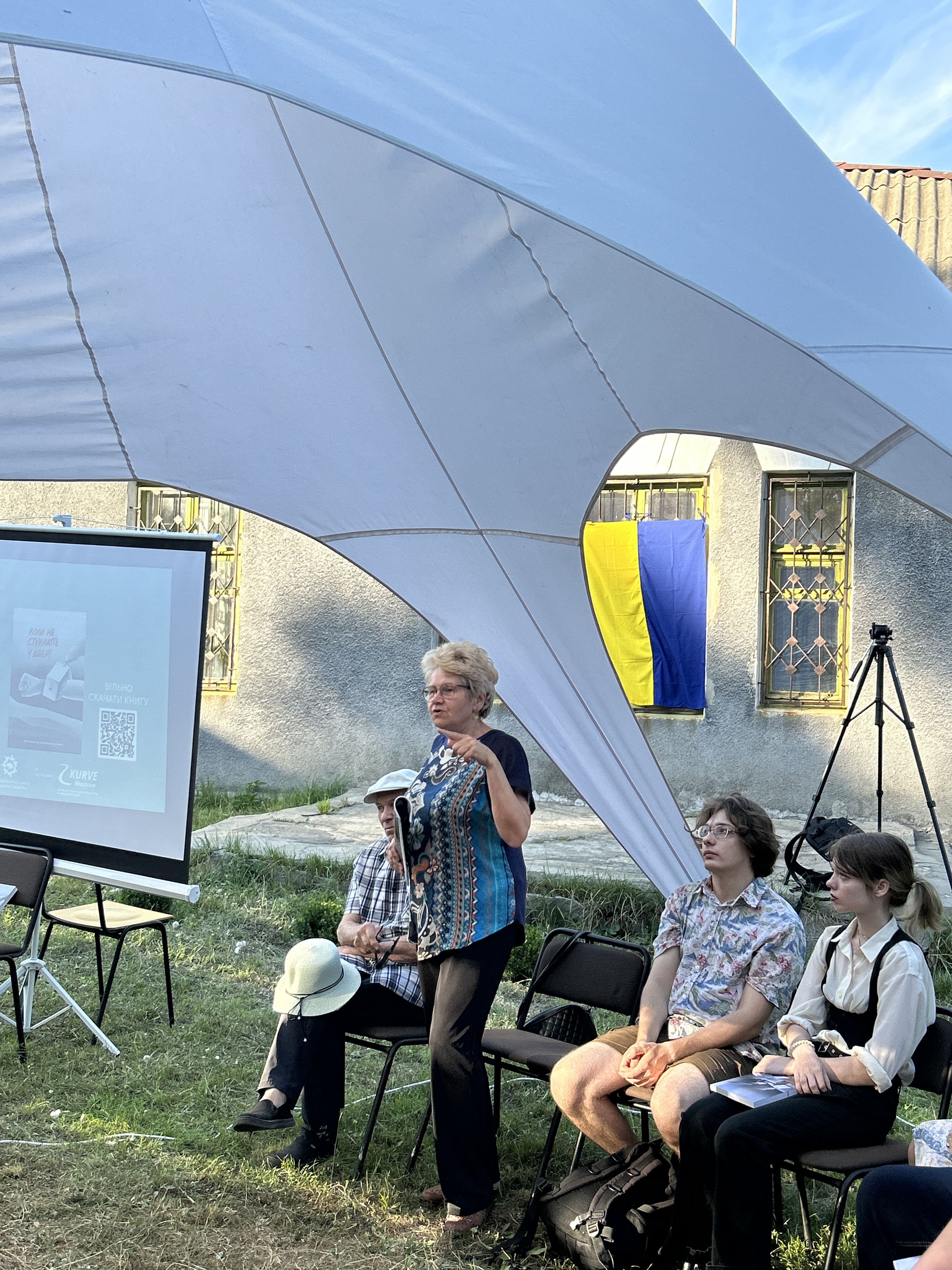
On 24 July, the Eastern Ukrainian Center for Civic Initiative presented the book ‘When There’s No Knocking at the Door: 25 Stories About the Russian Occupation’ at the City Local History Museum in Svitlovodsk.
The book contains 25 different stories of people who survived the Russian occupation in 2014 and 2022. The stories have been written by ordinary Ukrainians who have gone through difficult circumstances caused by the war. The book started with training sessions, where the authors learned how to write down their testimonies using their emotions and experiences.
The event brought together active young people, educators, and community members who seek to understand the war through the eyewitnesses’ experiences.
‘Writing my story for the book was like therapy, at least for me. It was about not being afraid to talk about your emotions,’ shared Tetiana Cherepanova, a language and literature teacher from Berdiansk. She wrote about life in occupied Berdiansk and her leaving the city.
‘When we were at the last 17th checkpoint, artillery shelling began... I hugged my dog and thought, ‘If I die now, it won’t survive on his own’. But you see, I’m here, I manage to flee, so I survived, and we were able to take the dog with us. Unfortunately, there was very heavy shelling in Kyiv this year, and he couldn’t take it.’
Vladyslava, another author, talked about her story entitled ‘The Life that Was Stolen from me’. She described the first days of the occupation of the northern part of the Luhansk oblast in 2022, the shelling, the panic, and her attempt to protect her little niece:
‘I covered her with my body... I whispered in her ear: ‘Sweetheart, I’m here, everything is fine’. And there were explosions all around, and the ground was shaking.’
The presentation was attended by internally displaced persons who had left various occupied regions, and they also shared their stories:
‘There was no physical violence. Morally, it was very difficult to see a child being pointed at with a machine gun.’
‘We went to my parents’ flat, where we left our documents. We were driving, when we saw a tank in front of us. We stopped... It felt like it was the last moment of our lives: the tank was about to run over our car... And we said goodbye to life.’
‘I am in constant contact with my acquaintances, friends, and relatives in Mariupol. I want to say that eight people have already died in our 30-apartment building. Seven more friends and acquaintances have died, and they could have long lives. I am in contact with my doctor, and she says that they are not treating anyone, not even providing assistance to disabled people.’‘
I was not under occupation, I was not held captive. I did not experience that pain, but I am Ukrainian, I live on this land, and these people are important to me, their stories are important to me, and I want other people to know them too. I want your stories to be heard. I want you to be supported, I want the whole world to hear all the stories and know what crimes the Russians are committing,’ said Valeria, representative of the SvitloDvizh project and local organiser of the event.
This book was prepared as part of the project ‘Strengthening Civil Society for the Transformation of the Culture of Memory – Non-Violent Efforts to Counter Russia’s War Against Ukraine’ by the Eastern Ukrainian Center for Civic Initiatives with the support of Kurve Wustrow – Centre for Training and Interaction in Non-Violent Action as part of the Civil Peace Service (CPS) project.
