
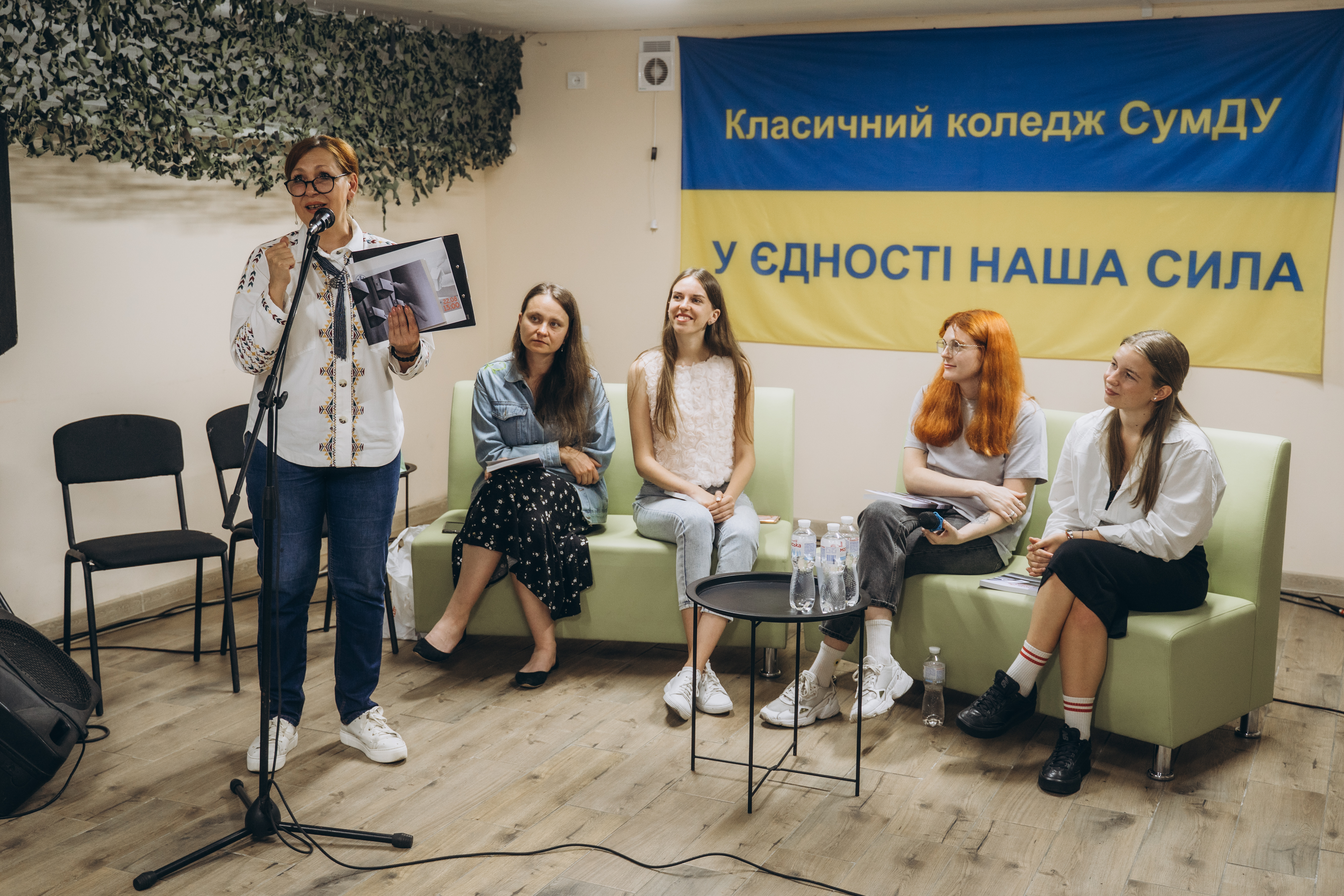
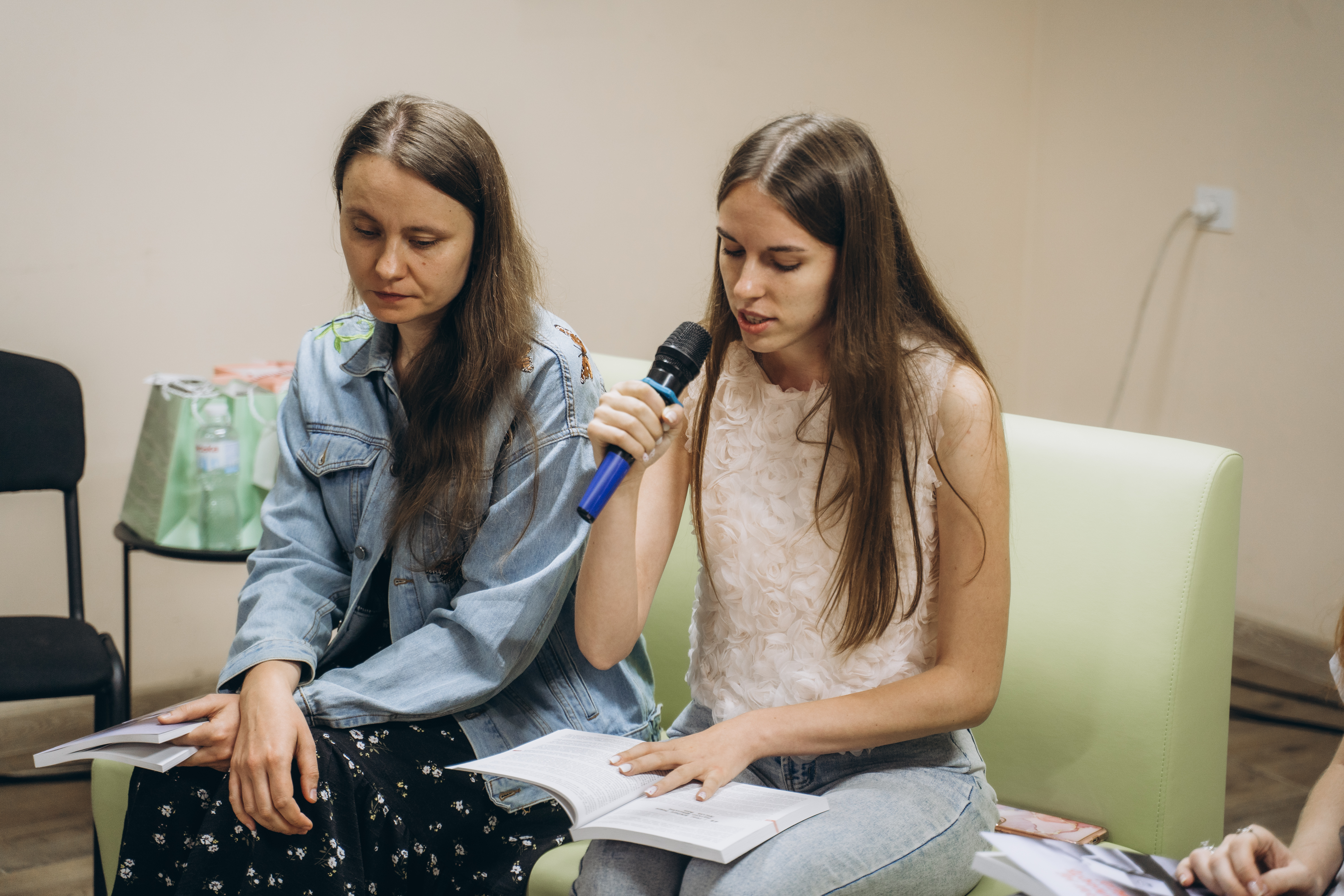
On 22 August, the book ‘When They Don’t Knock on the Door: 25 Stories About the Russian Occupation’, written by eyewitnesses to the events was presented at the Classical Professional College of Sumy State University in Konotop, Sumy region.
The book was created on the initiative of the NGO Eastern Ukrainian Center for Civic Initiatives and contains 25 personal stories of Ukrainians who share their experiences of living under Russian occupation or in condition of its approaching. The book is a document that testifies to the crimes of the Russians and preserves the stories of the modern war as seen by ordinary Ukrainians. It is an attempt to understand why the people of Ukraine are making such immense sacrifices, and why it is important to resist.
‘Since 2014, our organisation has been documenting gross human rights violations: torture, sexual and gender-based violence. This book aims to explain why Ukrainians cannot accept the occupation and to tell the world about it in simple words from eyewitnesses,’ said Maryna Suprun, a representative of the organisation.
Tetiana Cherepanova, an author from Berdiansk, shared her own experience of living under occupation.
‘My story is called ‘The City I Will Never Return To‘. She said that it’s not about losing hope of coming back, but about knowing Berdiansk will never be the same as it was before 27 February 2022. She added that it’s vital to talk about the occupied territories, where people stayed not because they support Russia, but because they chose to live at their homes.
One of the authors, Daria Shvets, said that her story is about the life of an internally displaced person and emphasised that there are no ‘small’ stories of war, every Ukrainian has felt its pain.
‘But in fact, each of these stories has an optimistic ending. And that also unites us. In conclusion, I would like to say that it seems that there are two traits in the genetic code of Ukrainians: love of freedom and resilience. This is our superpower.’
Nadiia Nesterenko, another author and EUCCI representative, noted that her story tells how the war destroyed her family, how she lost loved ones not only from direct effects of war, such as shelling, but also indirectly through chronic stress or indifference. Through the lens of her own family story and many years of work documenting Russian crimes, she drew parallels between current and past crimes and emphasised that Russian aggression is not a situational event of 2014 or 2022, but a deliberate and systemic policy.
‘Every crime must be spoken of. Even if it seems to us to be a minor loss, such as a simple change in our routine, it must also be voiced. In order to prevent human indifference and ignorance, we must speak loudly about what Russia is bringing.’
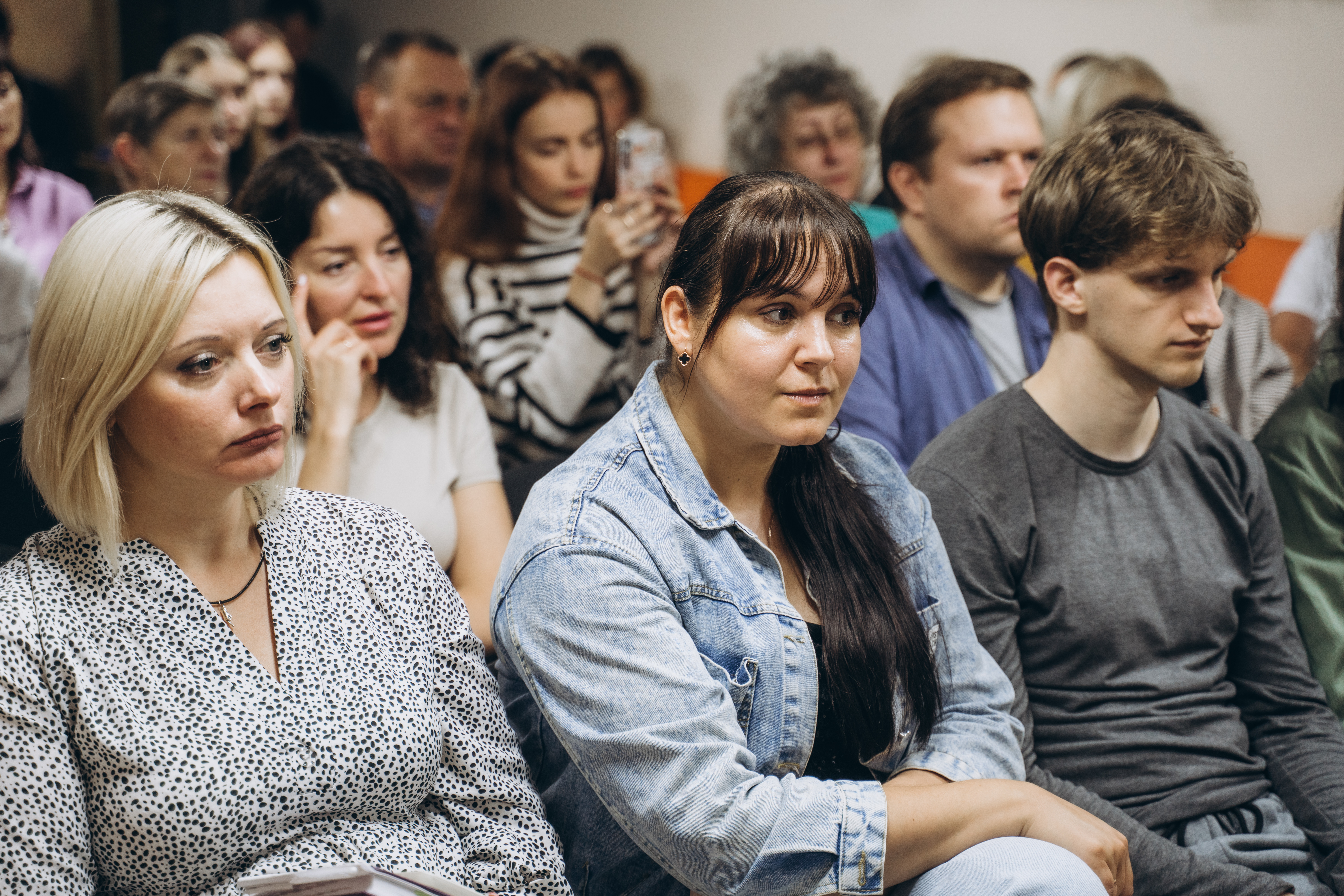
Those present emphasised that such publications are needed both abroad and in Ukraine. These are stories of ordinary people — not fictionalised or rewritten by anyone. Even if the books are burned, they will remain online forever.
The local co-organiser of the event was the Classical Professional College of Sumy State University.



This book was prepared as part of the project ‘Strengthening Civil Society for the Transformation of the Culture of Memory – Non-Violent Efforts to Counter Russia’s War Against Ukraine’ by the Eastern Ukrainian Center for Civic Initiatives with the support of Kurve Wustrow – Centre for Training and Interaction in Non-Violent Action as part of the Civil Peace Service (CPS) project.
