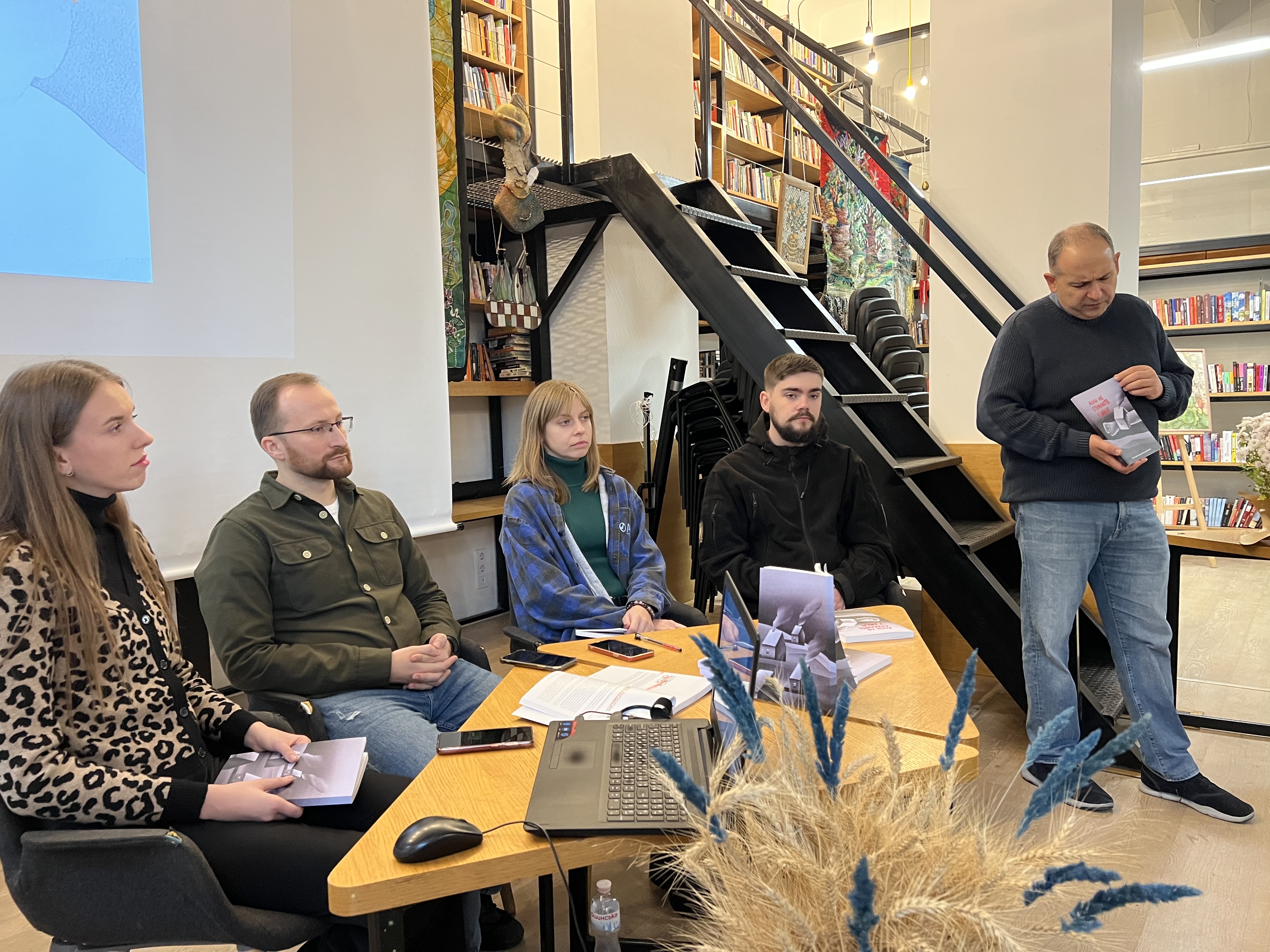
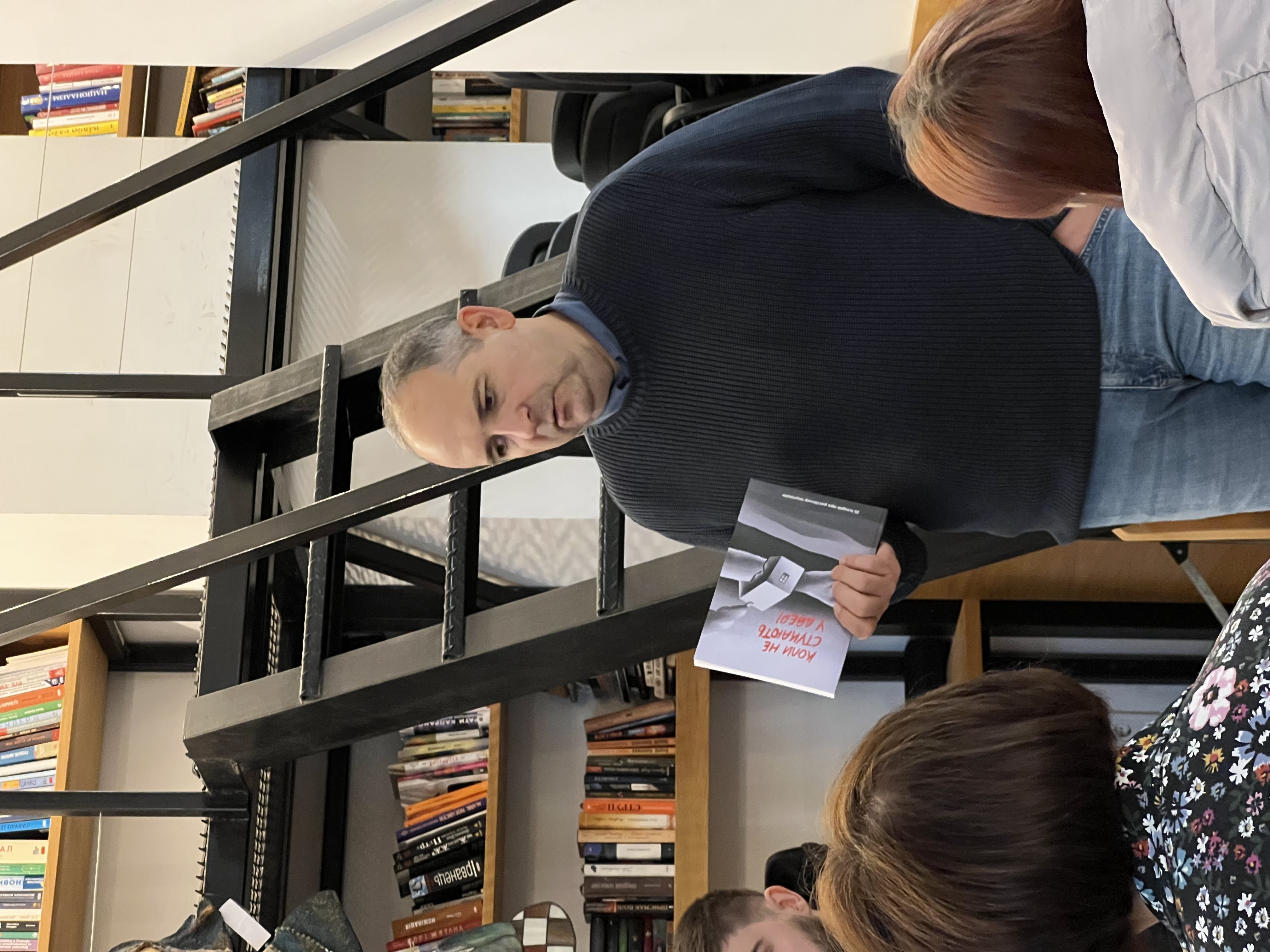
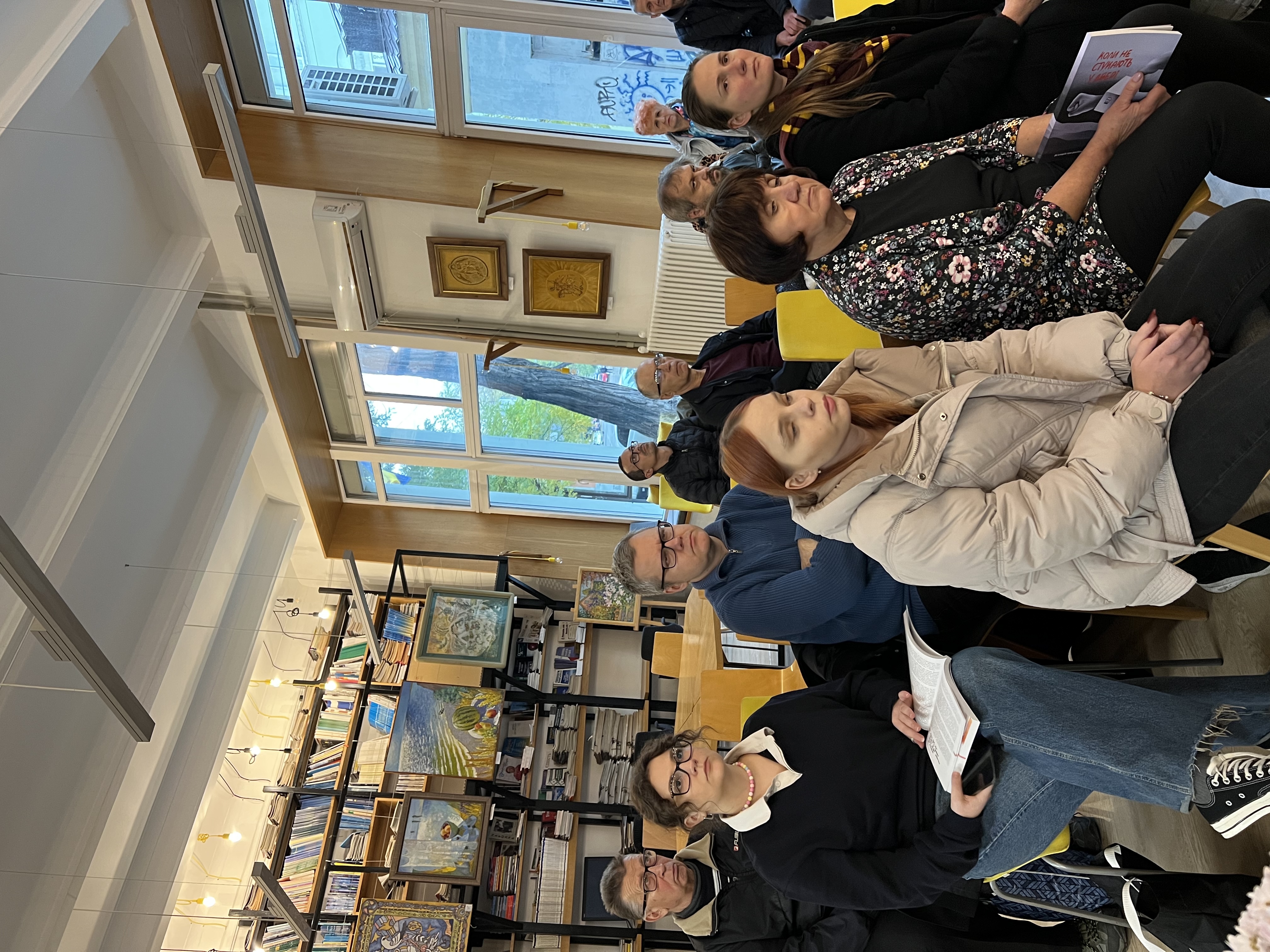
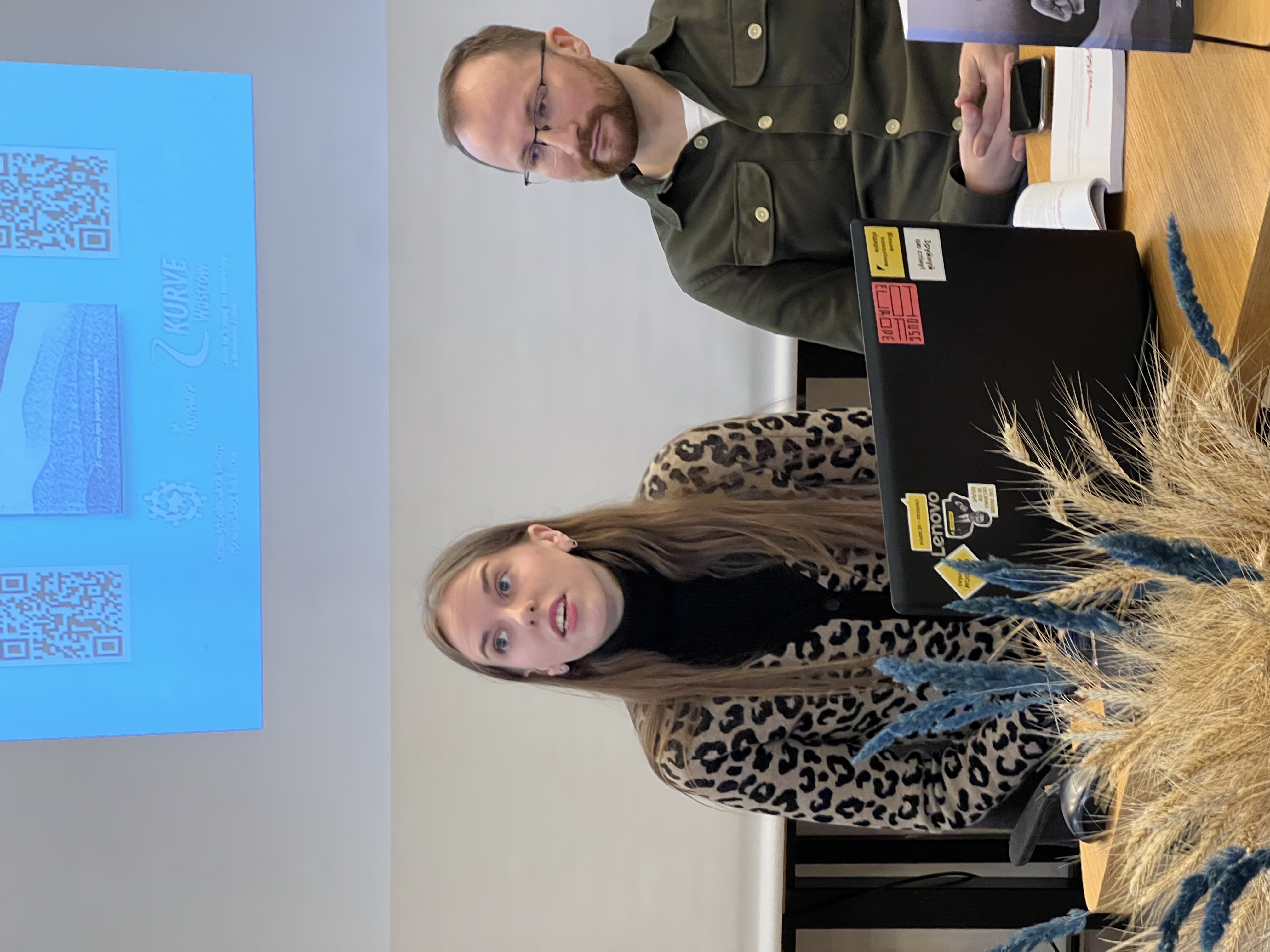
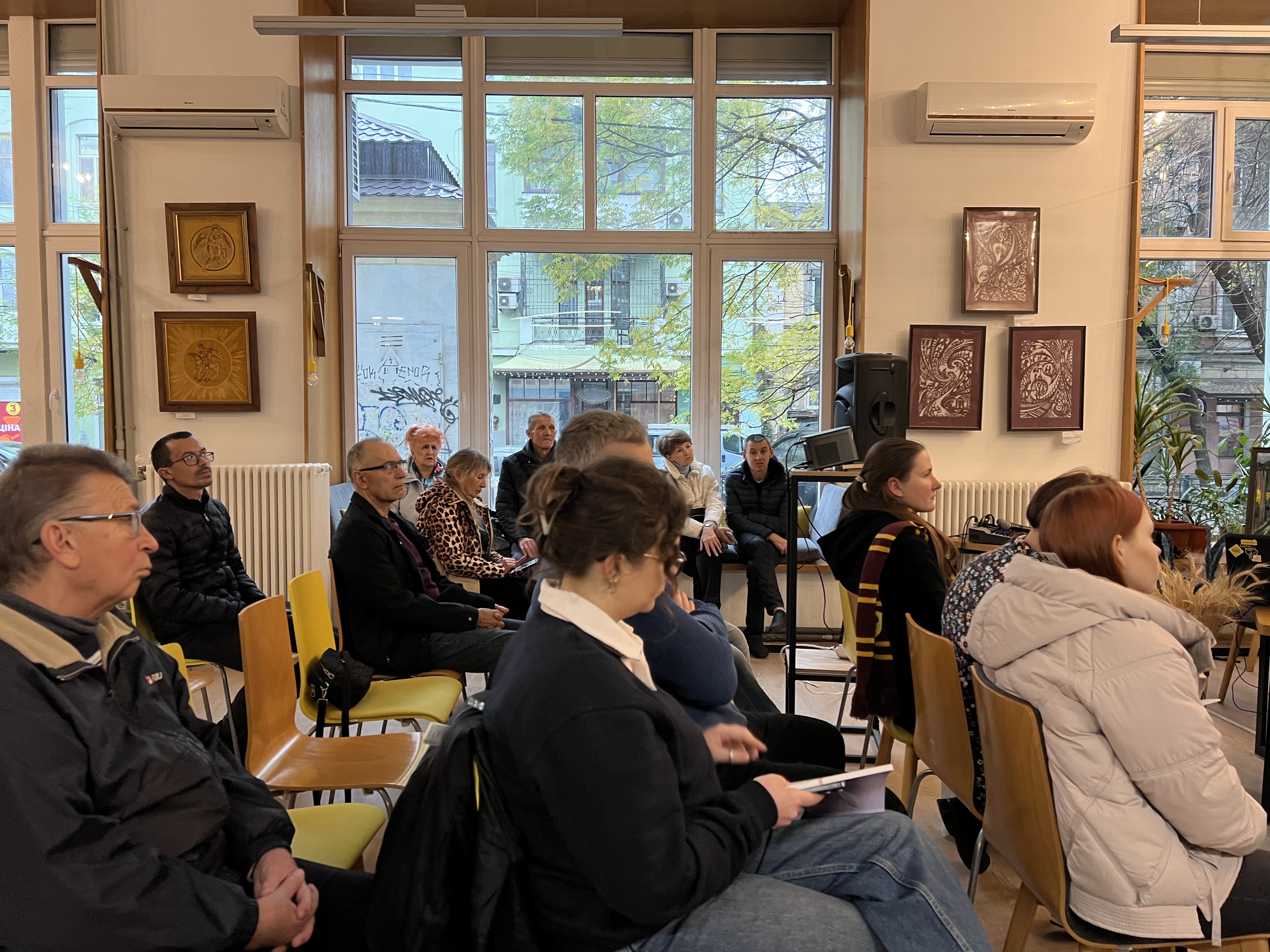
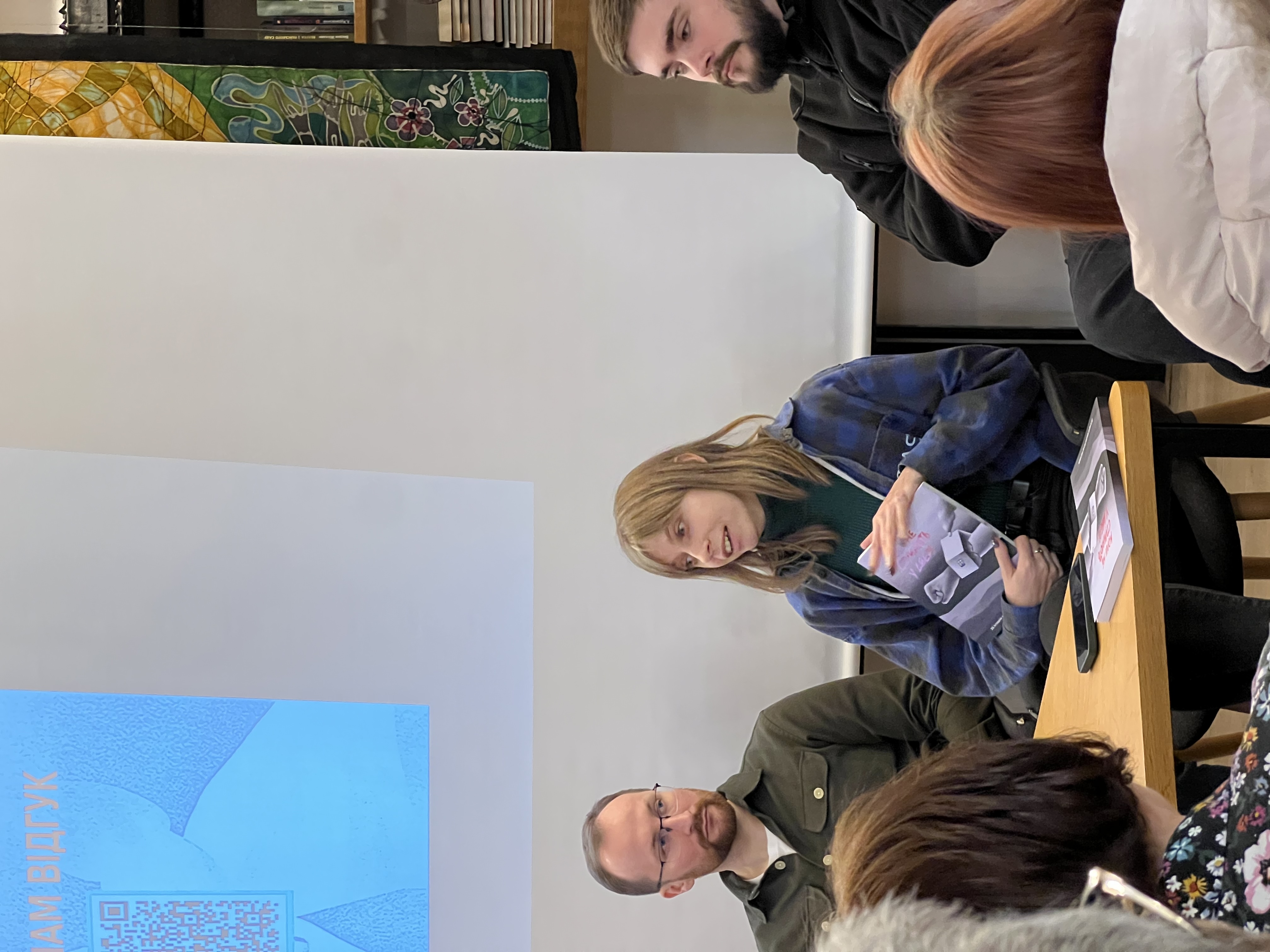
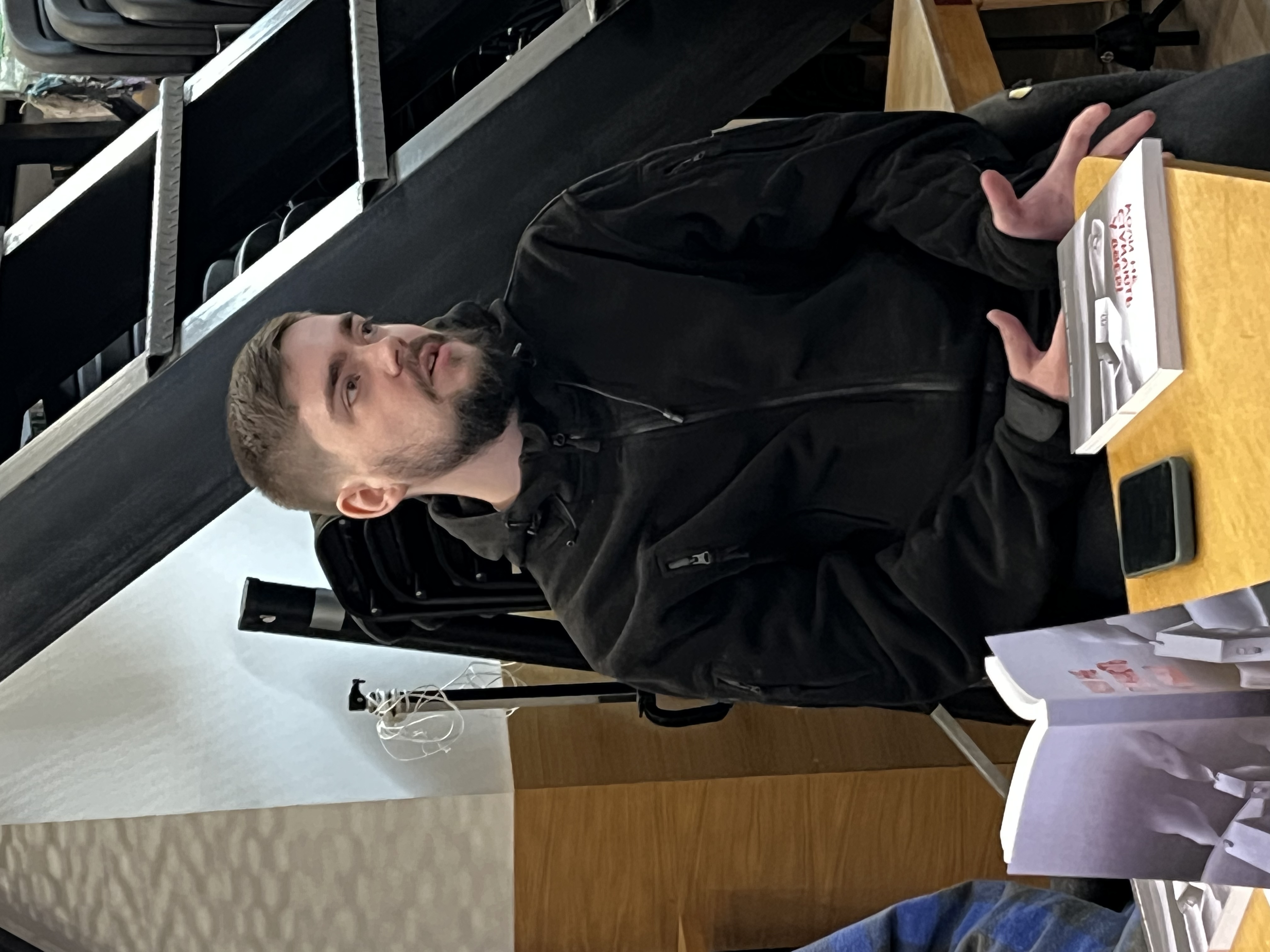
On 8 November, the book ‘When There’s No Knocking at the Door: 25 Stories About the Russian Occupation’, written by the eyewitnesses, was presented in Odesa Oblast Scientific Library named after M. S. Hrushevskyi.
The book was created at the initiative of the Eastern Ukrainian Center for Civic Initiative.
One of the first authors to speak was Yevhen Shliakhtin, a former local government officer in one of the largest industrial centres in Luhansk Oblast, an activist, and now a soldier in the Armed Forces of Ukraine. He recounted how in 2014 the city of Stakhanov (now Kadiivka) was occupied, how people who supported Ukraine began to be detained and tortured, and how activists disappeared. Yevhen was seized by six armed pro-Russian militants and thrown into a basement.
‘They beat me until I lost consciousness. They poured cold water on me so that I came round,’ he recalled.
Yevhen now serves in the Armed Forces of Ukraine: ‘The time had come for me to join. That experience did not pass without a trace.’
Daria Shvets, another author, encountered a full-scale invasion in Kharkiv, and then returned to her native Orikhiv.
‘For the fourth night in a row, I go down to the basement. I read the news about the occupation of neighbouring villages and can't believe it. Could this really happen to me?’ Daria read an excerpt from her story.
She emphasised that the book is not about bare facts:
‘We form a collective memory through our own voices. If we stop telling our stories, they will be rewritten by others.’
‘After two months of occupation, I was able to leave. But then I heard: ‘You weren't raped or killed, so why are you upset?’ said another author, Anastasiia Kozak, who survived the occupation of Kherson.
She emphasised that when you have to leave your whole life and pack it into one little suitcase — that’s a trauma too. Her story is about fear, sleepless nights when she couldn’t turn on the light, and returning for a mug with a black cat, because no tea tasted good until she took it from home.
Another author and a military, Volodymyr Shaloimenko, told the story of his city, Dniprorudne, and its mayor, Yevhen Matvieiev, who was tortured to death by the Russians:
‘He said: Russia is the occupier. I will stay in the city. We will support people.’
After the invasion began, the community organised itself: ‘People without weapons built roadblocks and stopped enemy vehicles. No one fled. It was about dignity, about the fact that we are Ukrainians.’
‘These stories must live on. We must know our heroes and traitors by sight, because this is a history we’re writing in blood,’ was heard in the room at the end.
The participants shared their impressions and engaged in discussion. In particular, one of them asked about the number of pro-Ukrainian people in Stakhanov. This question gave rise to further conversation about public attitudes in eastern Ukraine before 2014, the impact of Russian TV channels, and the transformation of civic awareness following occupation.
Odessa residents who attended the presentation also talked about their experiences of the war:
‘I stood in a crowd in Odessa, seeing my children off abroad. My daughter is now in Dresden, Germany. And she says, ‘Dad, they don't know anything about the war.’ That's why meetings like this are necessary — so that at least someone hears the truth.’
‘We think we’ve got used to the war, but when you hear such stories, you realise that the pain is boundless. And it’s precisely out of that pain that strength is born. I thought that stories about the war are no longer of interest. But today I realised that it is not so. They are necessary because we all have our own unique stories, and each of them is a pain that we have not yet come to terms with,’ said Kateryna, another visitor.

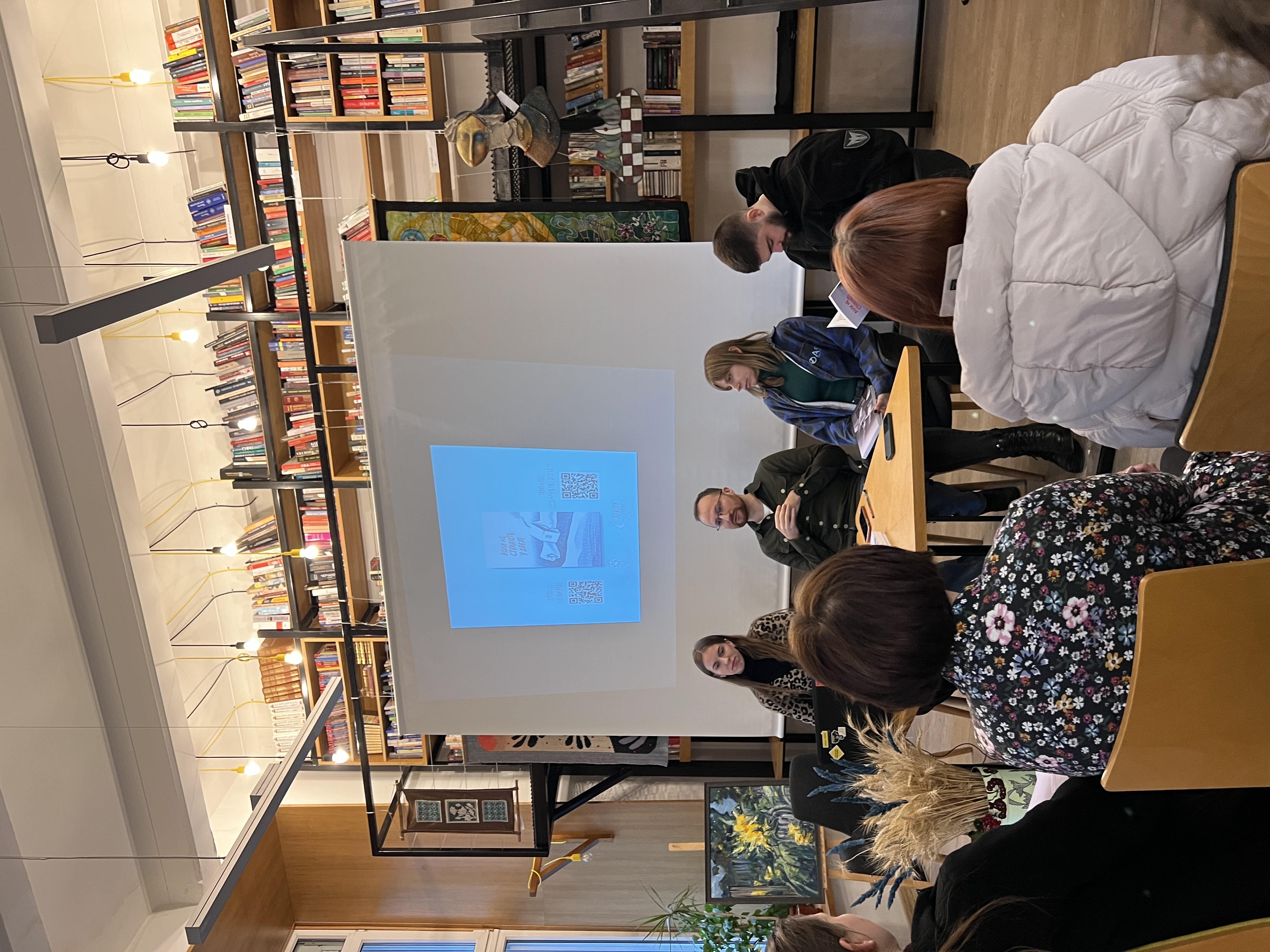
This book was prepared as part of the project ‘Strengthening Civil Society for the Transformation of the Culture of Memory – Non-Violent Efforts to Counter Russia’s War Against Ukraine’ by the Eastern Ukrainian Center for Civic Initiatives with the support of Kurve Wustrow – Centre for Training and Interaction in Non-Violent Action as part of the Civil Peace Service (CPS) project.
