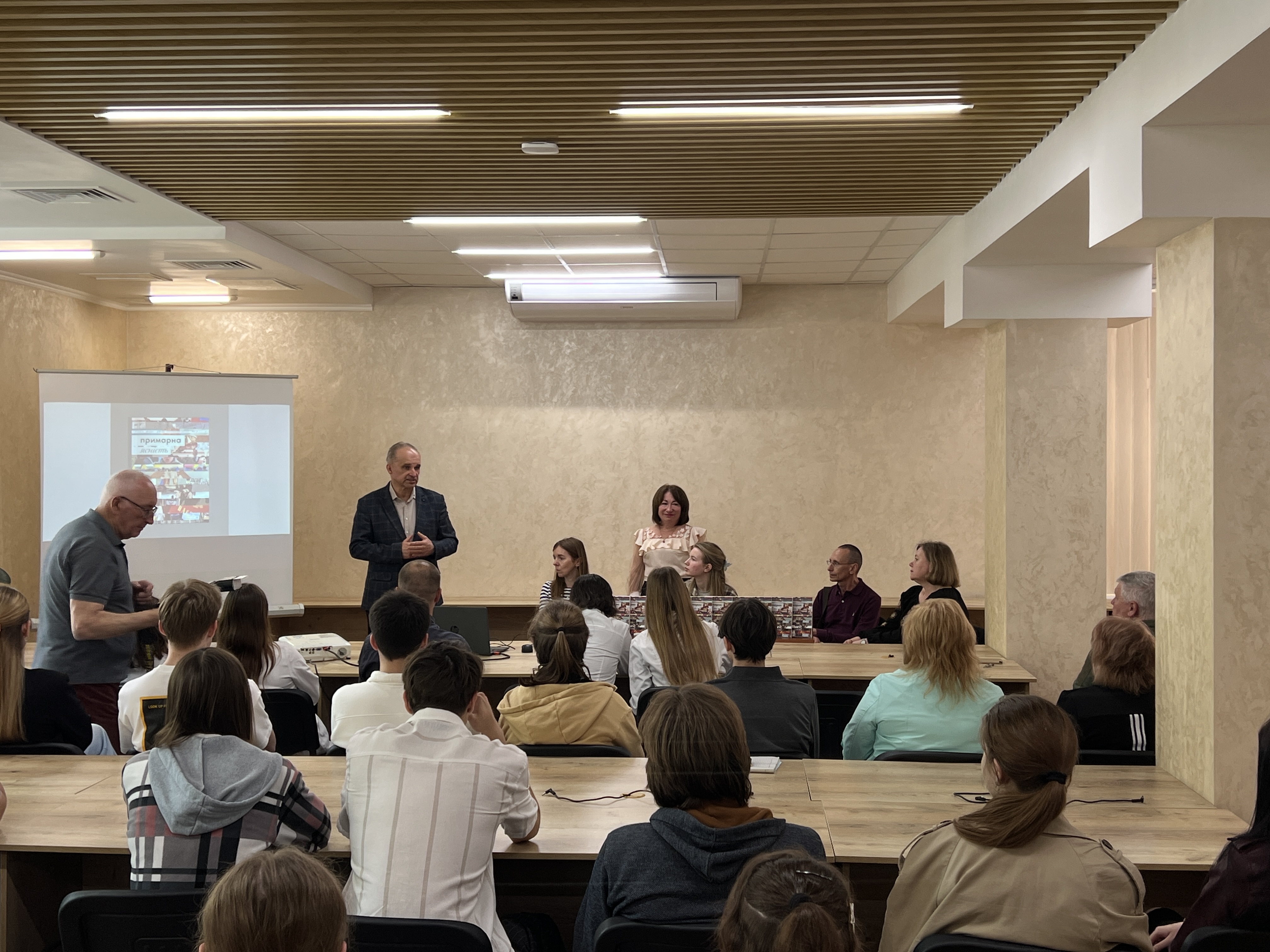
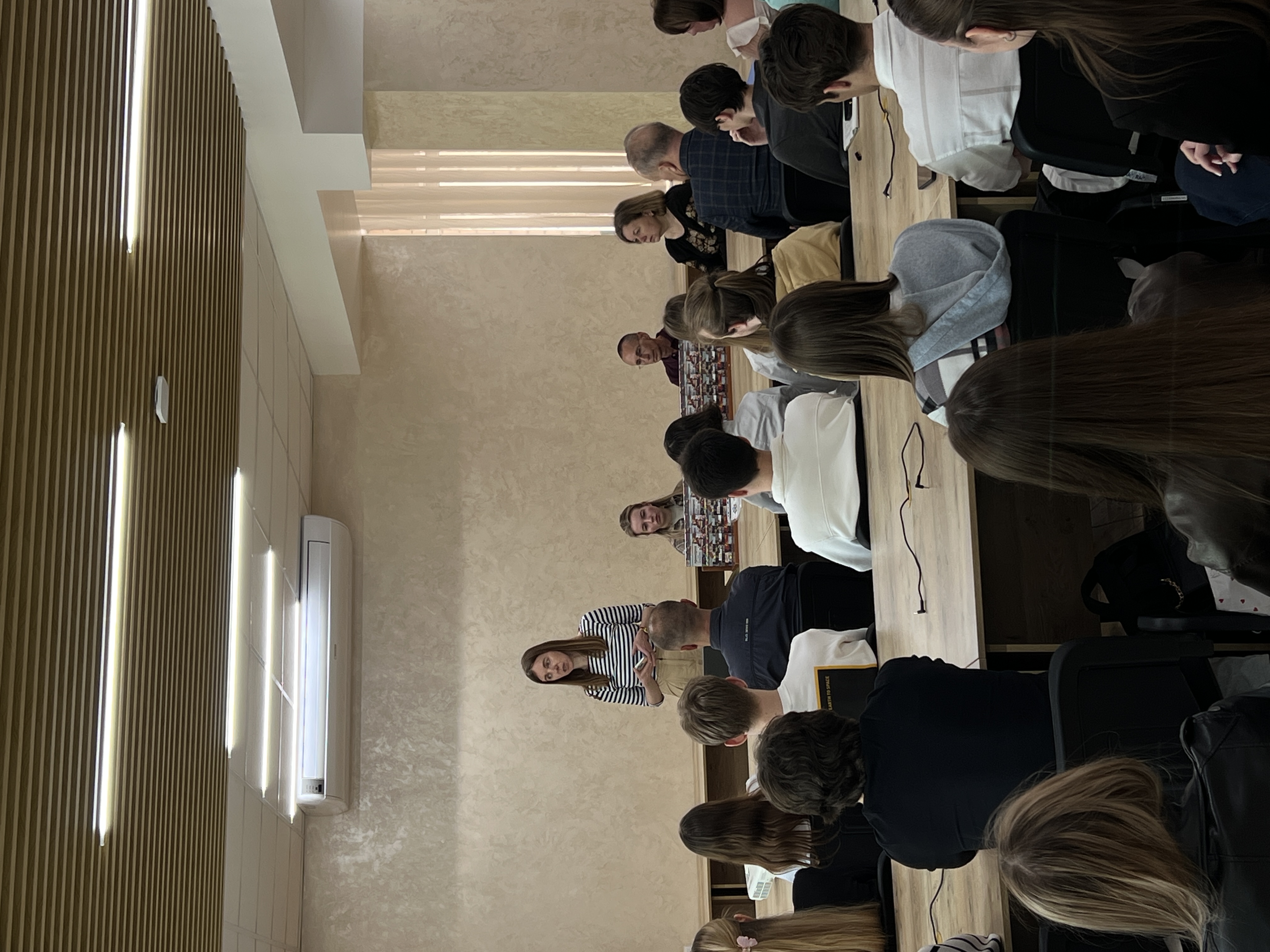
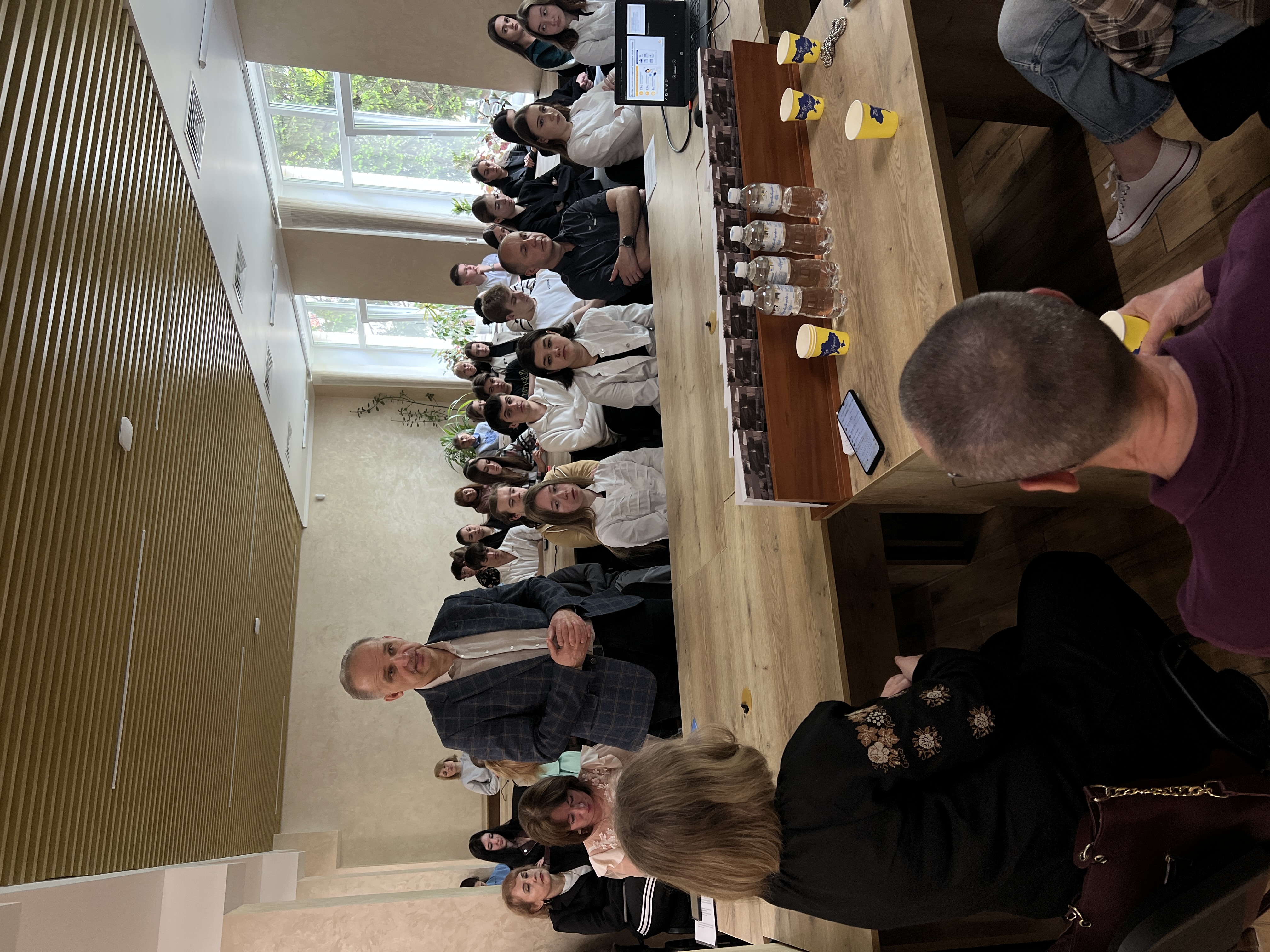
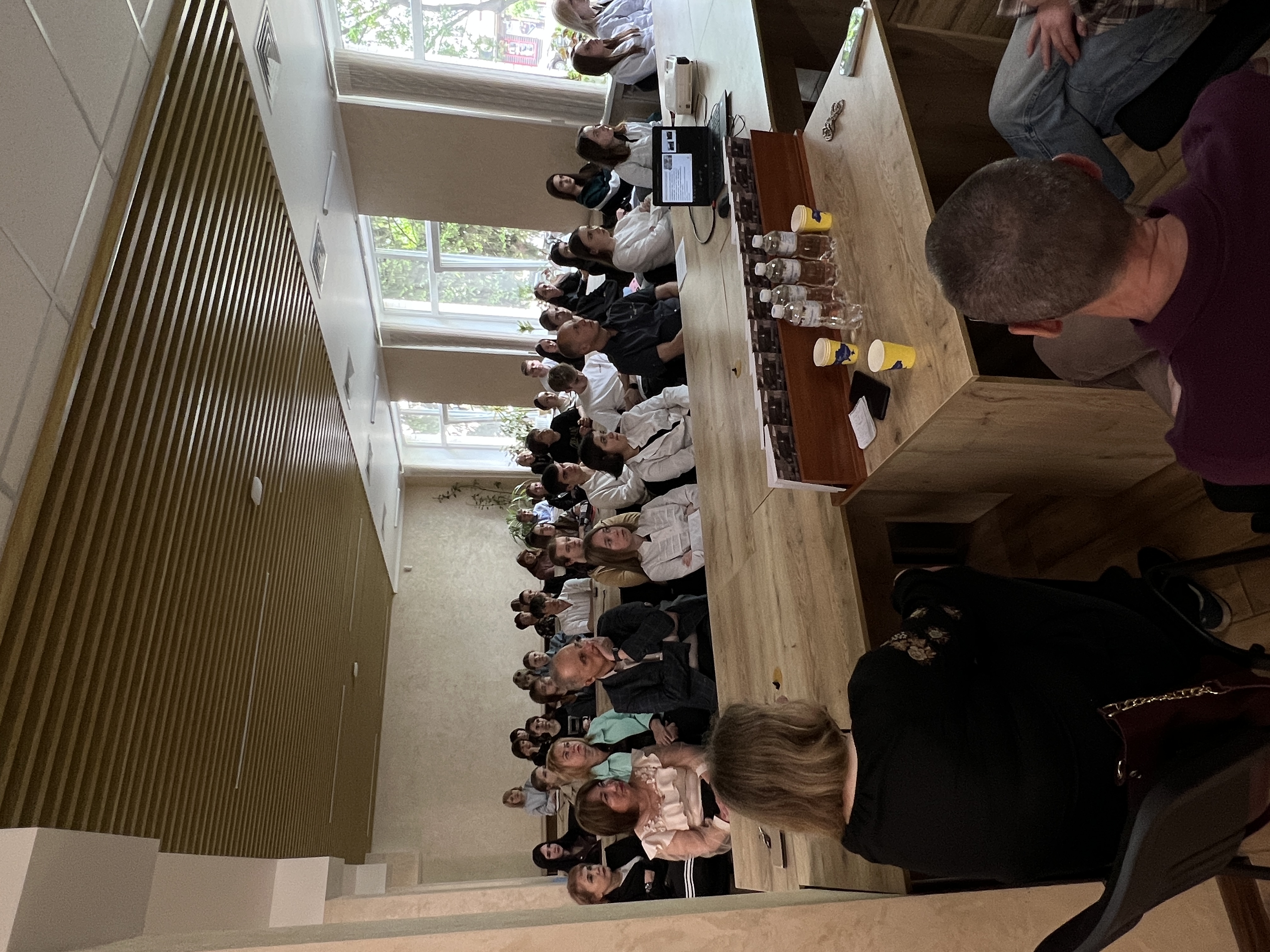
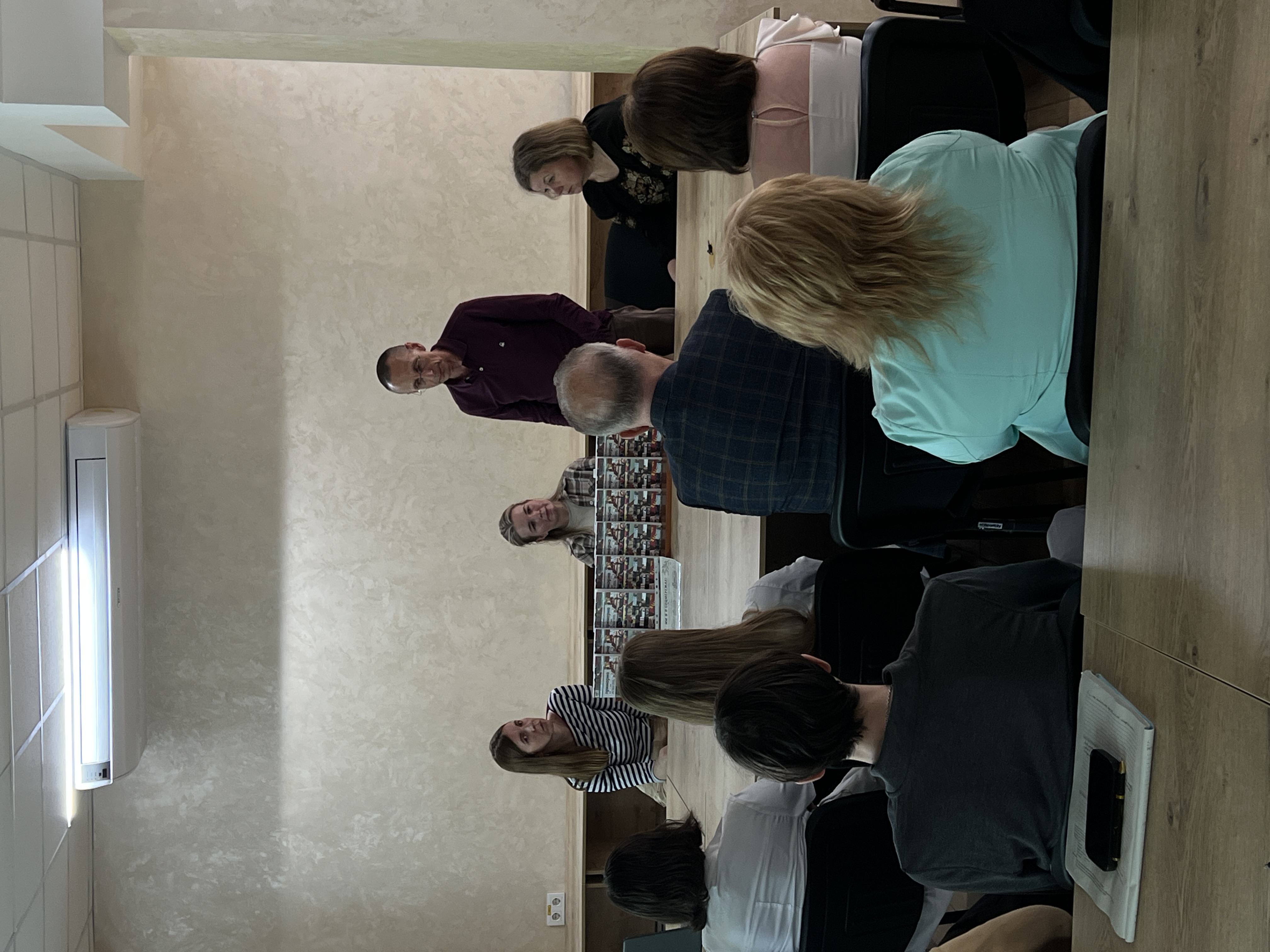
On May 13, the Poltava State Medical University Library (23, Shevchenko St.) hosted a presentation of the book “Unclear Clarities . Myths and Stereotypes About the War and Donbas,” created by the Eastern Ukrainian Center for Civic Initiatives (EUCCI). The event was not just a book presentation, but an open discussion about Russian aggression, the imprisonment of civilians, torture, and the role of medics in helping people who have survived the traumatic experience of war.
The guests of the university were representatives of EUCCI, an organization that has been documenting war crimes, cases of illegal imprisonment, torture, and human rights violations in the occupied territories of Ukraine since 2014, as well as former civilians in captivity.
Opening the event, Valerii Pokhylko, Vice-President for Scientific, Pedagogical, and Educational Affairs, emphasized that today’s struggle of Ukrainian people is not only a war for territories, but also for human dignity and freedom.
“We must show the world that we are a nation that is fighting for its freedom and understands that the main thing for us in the future is to be independent and free. As medics, you and I understand that we have one more mission – to protect the lives and health of our military.”
Yulia Chystiakova, a representative of the Eastern Ukrainian Center for Civic Initiatives and a -co-author of the book, said that the book was in the works even before the full-scale invasion and was intended to overcome stereotypes about the residents of the Donetsk and Luhansk regions.
“We wanted to talk about the problems that existed in the Ukrainian society, those clichés about the residents of the eastern regions. After the full-scale invasion, we realized that these problems have not disappeared, and the enemy continues to very effectively manipulate society and spread its narratives.”
The part of the event where people who survived Russian captivity shared their stories was especially emotional.
Maryna Suprun from the village of Yahidne, Chernihiv Region, recalled how in 2022 the Russian military herded all the villagers into a school basement.
“Our entire village - 367 people - was herded into a cramped school basement and kept there for a month without any amenities. Everyone was there: from a one-and-a-half-month-old baby to elderly people who couldn’t survive those conditions and died.”
Yurii Shapovalov, a doctor from Donetsk, who spent over seven years in captivity, spoke about the "Isolation" torture chamber and the conditions of detention of prisoners.
"I was kept in a basement. There was no natural light, no running water, no sewage, no medical care. We were forced to march in a cell and sing Russian patriotic songs. When the door was opened, we had to kneel and pull a bag over our heads."
Separately, Yurii spoke about the torture that the occupiers used on prisoners. According to him, one of the most common methods of torture was electric current: electrodes were attached to the hands, feet, ears, genitals. After interrogations, people were returned to their cells in an extremely difficult physical and psychological condition. During the meeting, the speakers repeatedly emphasized: the occupied territories are a space of complete lawlessness, where anyone can become a victim.
An important part of the event was a discussion of the role of medics in working with people who survived captivity and torture. Representatives of EUCCI emphasized that medical personnel should be prepared not only to treat physical injuries, but also to work with the psychological consequences of war.
One of the students asked what qualities a doctor should have when working with such patients. In response, the participants of the meeting emphasized the importance of empathy, trust, and the ability not to re-traumatize a person.
“It’s not just about healing bones or organs. It’s also about not harming people with your attitude. It’s very important not to re-traumatize a person – one should know how to ask questions, what words to use, how to show attention.”
The participants of the event emphasized that such meetings are important for preserving historical memory and building empathy in society:
“We all have got to live in this country. We still have a lot of work to do together, so it’s important for us to be thoughtful of each other.”
This book was prepared as part of the project "Strengthening Civil Society for the Transformation of Memory Culture – Non-Violent Efforts to Counter Russia's War Against Ukraine" by the Eastern Ukrainian Center of Civic Initiatives, NGO “Public Committee for Protection of Citizens’ Constitutional Rights and Freedoms”, NGO “Moloda Prosvita Prykarpattia” (Young Educators of Trans-Carpathia), Crisis Media Center “Siverskyi Donets,” with the support of "KURVE Wustrow - Center for Training and Networking in Nonviolent Action" within the framework of the "Civil Peace Service" program (CPS).
