
The Story of One Mayor
I was once the voice of the mayor of Dniprorudne on social media. Currently, he is in captivity, but his voice cannot be silenced. I can’t stand aside and bury my head in the sand like an ostrich, when the person I worked with is being tortured by Russian savages. I broadcasted his thoughts online and now I feel guilty about it. For I can’t feel free while he is enslaved.
Fifteen days of war flashed by like one. Every morning, the cameraman and I streamed the mayor’s live broadcasts on social media, promptly communicating his decisions and the needs of the Dniprorudne community. Now, when I look back, I understand that some days, like frames, are now cemented in my head and memory, forever.
February 24, 2022. In the morning, I was urgently summoned to city hall to write a post about Russia’s armed attack on Ukraine. At that time, the mayor’s account was bursting with messages from the residents of the city. “What should we do?”, “Where is the mayor?”, “Are we going to be bombed?” The myth that “the mayor surrendered the city” was being spread throughout local public accounts.
We decided to broadcast live from the mayor’s page, on which he first called Russia an invader, declared that we didn’t need any help from the Russians, and said that they should get out of Ukraine. There was panic in the city; people were buying fuel; withdrawing cash from ATMs; emptying the shelves of shops and pharmacies. At the end of the day, we refuted several fake stories about the power outage, as well as about the surrender of the city to Russia.
February 25, 2022. The morning started with a broadcast. The night passed peacefully. We kept calm, gradually solving problematic issues. We tried to ignore the loud passage of Ukrainian BUKs and other heavy artillery systems that we heard in the city, but we couldn’t talk about that. We started experiencing problems with shortages: in ATMs; food in stores; medicines in pharmacies. But at the same time, the true spirit of Ukrainian patriotism was being strengthened. The local residents mobilized and rallied to oppose the enemy. The most active ones formed the People's Guard to patrol the city during the curfew. Yes, it was done by ordinary residents, not the police. Only seven police officers, if that, remained in the city. The day ended with a broadcast: “If you hear a siren, go down to the bomb shelters.”
February 27, 2022. After the live daily broadcast, we heard the first explosions. The Russians bombed neighbouring villages and my native Vasylivka. The sirens wailed. Someone sent a message to our site: “Why is the siren on?”. “Because of the alert”, I replied. Everyone temporarily fell into a stupor, numbness. The mayor was sitting, impulsively fidgeting with his fingers and scratching his beard. Everyone was silent. “I won’t surrender the city, I’m going to fight back”, he said after a short pause. We all began to discuss the action plan in case “the invaders with automatic rifles enter the city.”
The majority of staffers supported the evacuation of people and documentation; we decided to leave city hall empty. Our mayor, Yevhen Serhiyovych, said with determination: “I will be in the office, first I will hold negotiations, if we fail to come to an agreement, I’m going to take several invaders with me into the other world.” His deputy scoffed and added: “We may just as well do nothing. What’s so bad about them taking the city?” Back then, we didn’t know yet that that person would later become a Russian minion.
The mayor got a call: “A KAMAZ military truck, carrying Russian personnel, drove through the city.” “What did they want?” “They were looking for fuel.” Later we received the information that the Russians were already robbing a store in a nearby village; the cameraman and the driver from the city hall hurried to the location but by the time they got there, the invaders had already fled.
At 12:30 we heard a loud explosion, we went out to the square near city hall, where residents had already started to gather in the square. Everyone was waiting for guidance from the mayor. Groups holding different views were formed. Some wanted to be radical and pelt the enemy’s vehicles with Molotov cocktails, others intended to do nothing and simply surrender the city. (Later those people became Russian collaborators.) Someone thought of starting a partisan movement. Information was received that about 10, 40, or 170 units of equipment were moving towards the city. The mayor didn’t support the radical approach, because we didn’t have the necessary weapons for defence. Instead, he said, we would negotiate. The main task is to preserve peace and save people’s lives.
It was 1500 hours. We were on the exit road from Dniprorudne, and the railway bridge was above us. The road was blocked by cars. The city residents were ready to stop the invaders with their bare hands, to prevent them from entering the city; the mayor was with them. Suddenly, a man with a box in his hands came out of the forest-steppe area. There were Molotov cocktails in the box. He looked at everyone, surprised: “Oh, I thought there would be no one here, I decided to stop the invaders myself.” The Molotov cocktails were now Plan B.
A car, our civilian reconnaissance, was speeding along the road. It made a U-turn, the wheels rubbing against the asphalt, and making a loud hissing sound. “There, the tanks are coming!”, the driver shouted. We were ready, and the cameraman started a live broadcast. The noise of heavy equipment was getting louder, and the ground began to shake under our feet. We saw tanks. We went to confront them, but the mayor stopped us, saying: “I was elected by you, I am responsible for you, so I will go alone.” He limped because he has a problem with his knee and walked towards the tanks, which have stopped. The muzzle of the first one was aimed at the mayor. A couple of minutes of negotiations ensued. Yevhen Serhiyovych turned around, took a couple of steps towards us, and looked at the sky, apparently thanking God. The tanks backed away. “Well done, Matveyev!” “The mayor drove the tanks away,” shouts were heard from the crowd. People rejoiced, and showed support with applause. They shouted “Glory to Ukraine!”, “Glory to the heroes!” But not for long. The recon team, the car, the sound of wheels again. “There’s infantry, armoured personnel carriers, KAMAZ trucks.” We drove them out together.
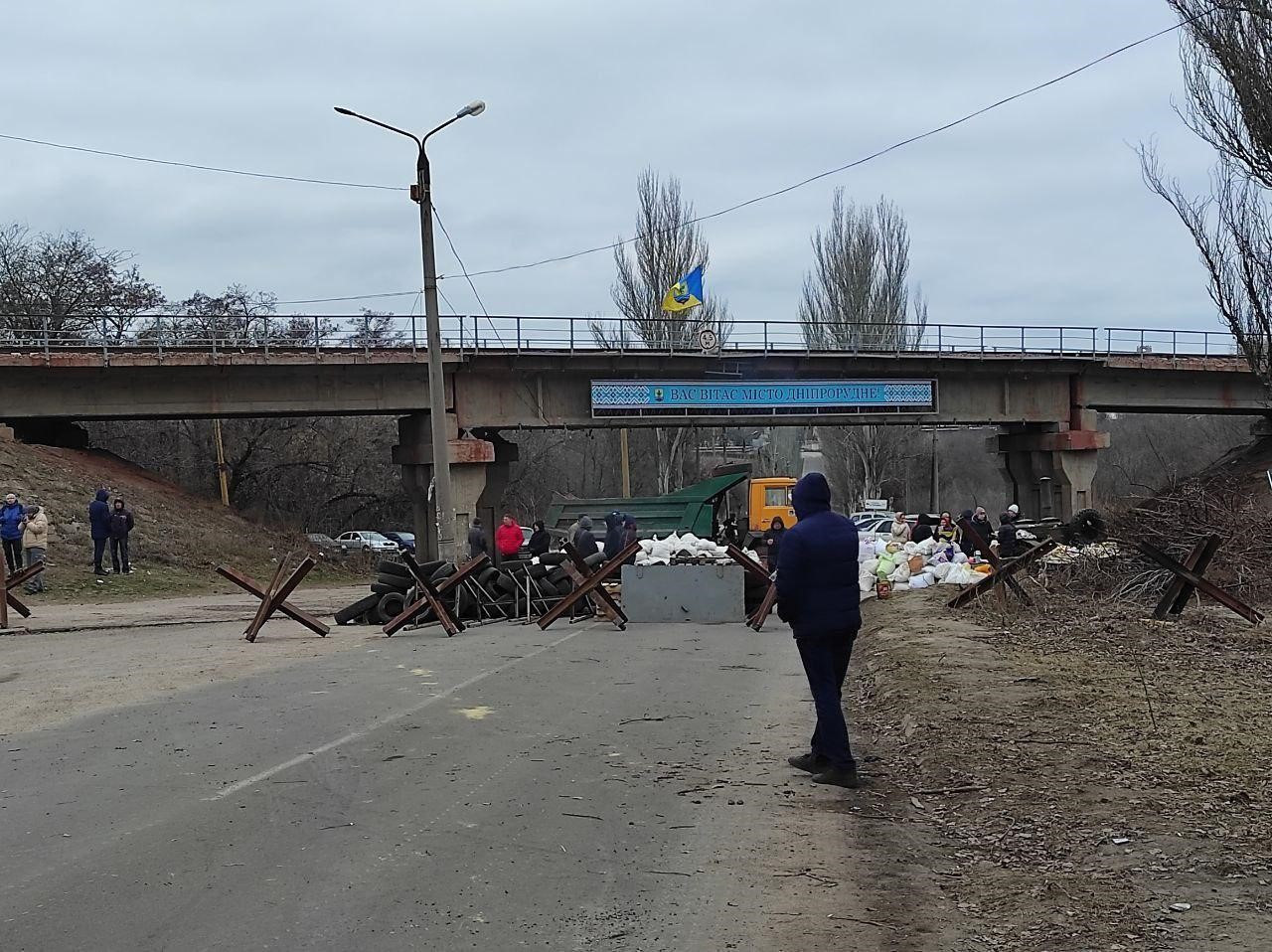
The banner above the roadblock bears the ironic message “The City of Dniprorudne Welcomes You”. Photo: Volodymyr Shaloimenko
February 28, 2022. 02:00. The mayor and the residents, we stood together at the roadblock we set up, warming ourselves by the bonfire. One of the team members threw tires into the fire from time to time. We talked about life and death. Young people started talking more about death and the fear of dying without dignity. The mayor reassured them: “I’m the one who has already lived, and you have your whole lives ahead of you.” As if preparing to throw himself under some Russian BTR. “How can you say that? We’ll stand with you through thick and thin,” one resident said. The mayor cheered him up by saying, “Just kidding, we all still have long lives to live.”
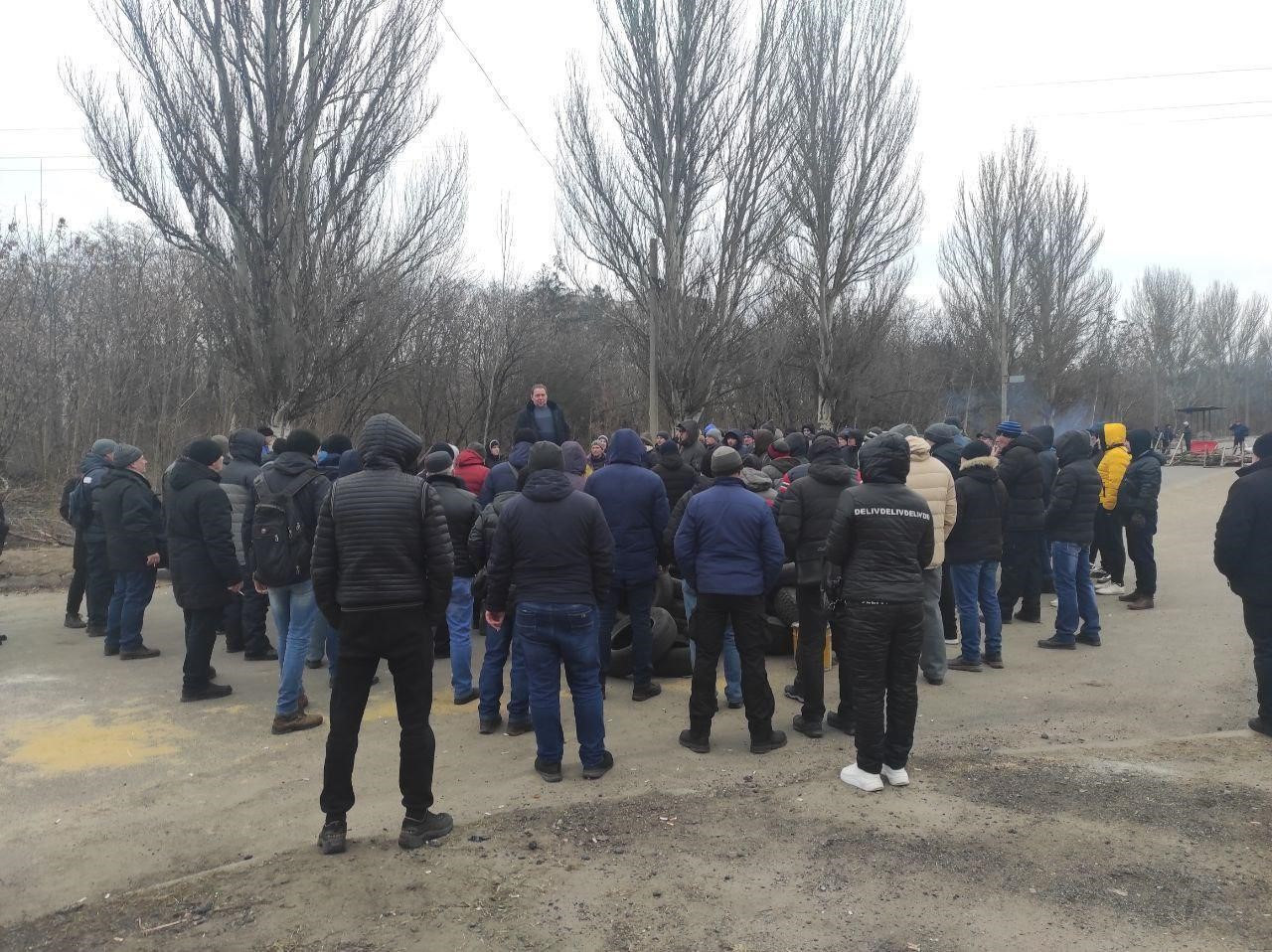
March 1, 2022. The mayor's speech focussed on the value of life, resilience, raising morale, and community support. Everyone continued to stand at the barricades. The mayor manned his post, next to the people. We are Ukrainians, we stand for Ukraine.
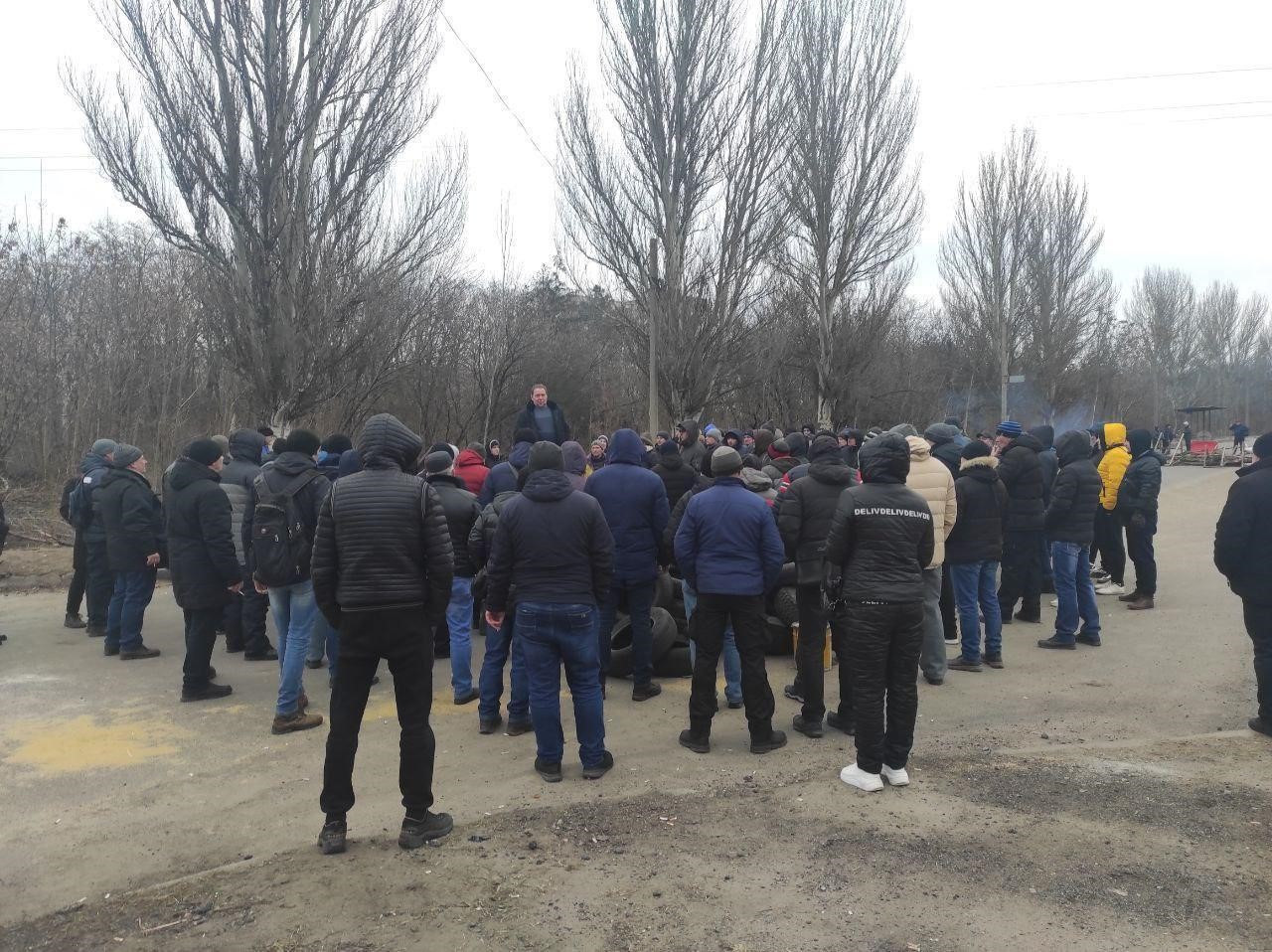
Yevhen Matveyev, the Mayor of Dniprorudne, is telling the residents about the value of life. Photo: Volodymyr Shaloimenko
August 2022. Our mayor has been in captivity for six months now. That’s all that we know about him. Everything else is rumours. Some rumours are: that he has already been released and is vacationing with his daughter on the Black Sea coast in Crimea; that collaborators come to him every now and then for advice on how to govern the city; or that he is simply hiding abroad. Another rumour is that after his release, he was walking on the roadside towards the city, away from the place of his imprisonment, was killed by friendly or hostile fire, and now his tortured body is rotting somewhere in the forest-steppe. And the most absurd thing I’ve heard was that he staged his own kidnapping, to become a colonel with the Russian Federal Security Service, to secretly rule the city. However, all those turned out to be speculations. The mayor was taken to the shared women's cell at the Dniprorudne city detention centre. The women were brought there for shouting the slogan “Glory to Ukraine!”, for a social media post in support of Ukraine, and arrested because a neighbour snitched on them. Or perhaps the women simply gave the invaders an unfriendly look.
By chance, I found out about Yevhen Serhiyovych’s imprisonment through an acquaintance. From March 14 through July 30, he was kept in solitary confinement in the city of Melitopol, fed one can of rice and goulash from the Russian Army ration packs per day. Although, he was in a depressed psychological state and in an information vacuum, he worried whether other prisoners had bread and water. During the six months of occupation of the city, he didn’t receive any information. Once a handsome man, he lost a lot of weight, he grew out his hair and beard. He was still wearing winter clothes and shoes (in fact, in the middle of summer he was wearing what he had been abducted in). He was very impressed by the availability of food (hot dogs, pizzas) that family members brought for the imprisoned girls. The next day, he was taken to an unknown destination.
March 12-13, 2022. Every now and then I think of the night I sent him a final message before his capture. It was the information from the Zaporizhzhia Regional Military Administration that the Russians had blown up a bridge in Kamyansk, and it was precisely through this bridge that our drivers from Zaporizhzhia, who were evacuating the residents, were supposed to return. We were worried about them. Yevhen Serhiyovych didn’t read the message. I called him and told him about the bridge. He became upset, and said: “That’s bad,” but from his words I understood that he was already looking for the right solution. It was 3 a.m., so we agreed to coordinate in the morning.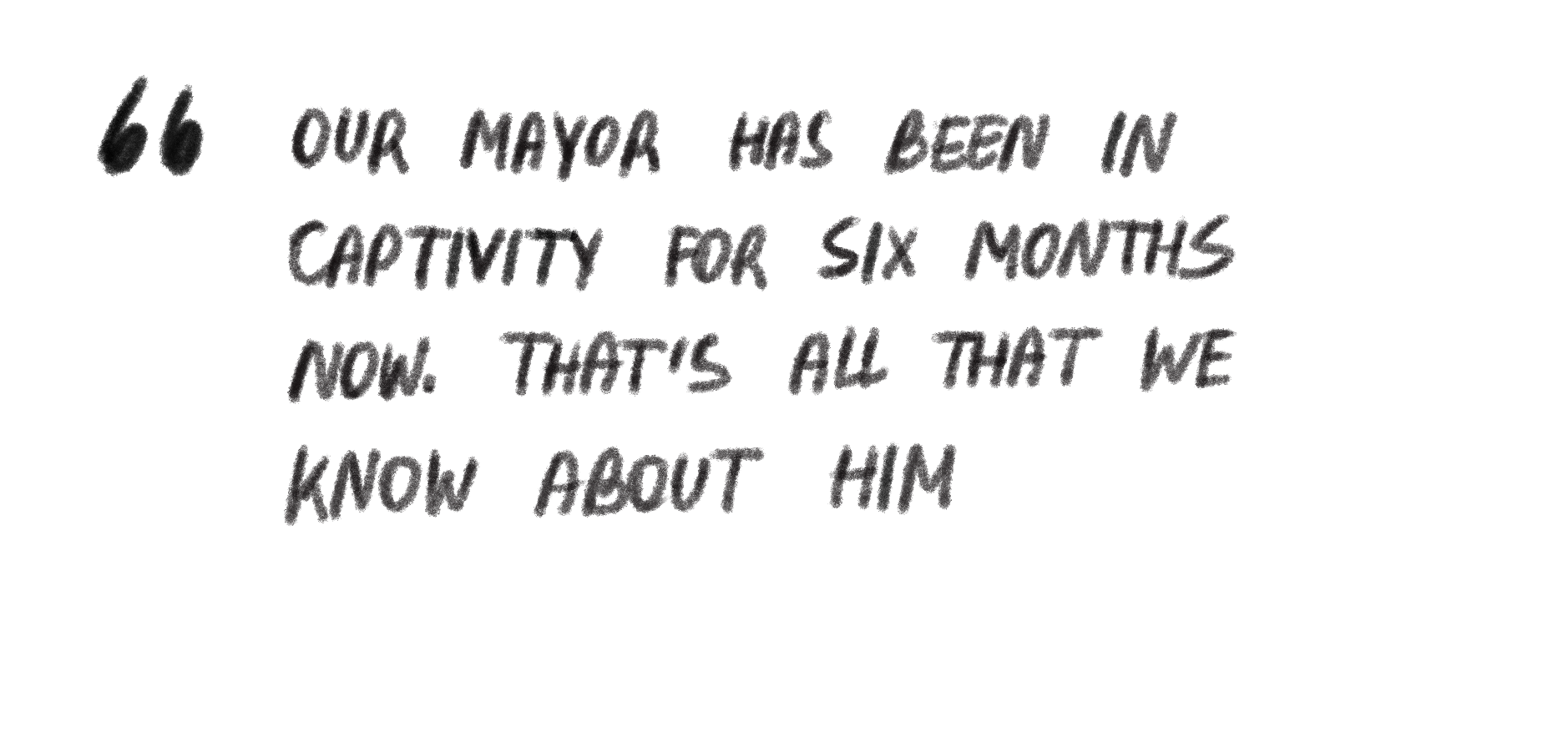
From my apartment window, I didn’t see his government car parked in front of city hall in the morning, and I had a bad feeling about it. That bad feeling turned out to be well founded. Yevhen Serhiyovych Matveyev, the mayor of the city of Dniprorudne, was abducted by the Russian invaders. Later, in the afternoon, my night message was read, not by the addressee, but by a torturer who was probably trying to find evidence of a “terrible anti-Russian position” in it.
Anxiety tightened my chest, fear for my family and myself kept growing. I was afraid I would be next, because only I had access to all the official sites of the mayor and city hall. My muscles began to twitch nervously, and I felt terribly tired almost all the time. Going to work was difficult. I tried to communicate information remotely. Writing is my purpose in life, writing means working with my brain. I don’t know if I could survive physical torture. The impact of the Russians’ presence, the fear of losing my sanity affected my morale. It was a month of constant stress. The invaders said they wouldn’t enter the city, yet they drove through every day. On one of the days of the occupation, I was walking down the street towards home and at first I didn’t see a tented KAMAZ truck with Russian soldiers passing by. One of the invaders with a rifle in his hands looked and smiled at me contemptuously. I looked at him and wanted to spit at him, I thought they’d shoot me, but luckily the truck drove on.
April 2022. I evacuated at the beginning of the month, after another Russian rotation. The route ran through 4 Russian roadblocks: first by cab to Vasylivka; then by bus to the blown-up bridge in the village of Kamyanske; then by minibus through shell craters and unexploded missiles on the highway to Zaporizhzhia. After that, it was by train to Ivano-Frankivsk, and finally to Lviv. Only now I’ve realized that I’ve lost everything that I had in Dniprorudne...
At the first Russian checkpoint, the invader who was checking my ID noted with joy in his eyes how nicely our apricot trees were blooming and that it would soon be time to harvest them. I was disgusted to hear that. At the last check point, they wished us a “Happy journey and a peaceful sky!”, while artillery shells from Grad systems flew after us. The experienced minibus driver shouted “Turn off your phones and close the windows!” He sped along the highway towards Zaporizhia...
At the end of the month, the cameraman who remained in the occupied city contacted me and said that they were looking for me, but he didn’t snitch on me. During the “police” interrogation, when asked “Do you know the person who put together news reports and wrote social media posts”, he answered that he had only handed over the recorded video materials and didn’t know anyone, though we were friends. It’s good that he and his family managed to get away from the occupation...
End of March, 2023. The mayor’s number appeared on the instant messenger Viber. That’s how I realized that a year had passed, and his number had already been sold to another person. He, the person who defended a Ukrainian city, is beginning to fade into oblivion. He is somewhere, in an unknown location, without any means of communication. Is he even alive? Unfortunately, this question remains unanswered.
P.S. At the end of 2024, the Head of the Zaporizhzhia regional military administration Ivan Fedorov reported that the mayor of Dniprorudny, Yevgeny Matveyev, was tortured by the occupants. In December 2024, the body of the deceased was returned to Ukraine.